Temperatures across Indiana averaged 2°F below normal during the past 30 days (April 28–May 27) (Figure 1).
Temperatures across Indiana averaged 2°F below normal during the past 30 days (April 28–May 27) (Figure 1).

Recent rounds of thunderstorms have brought highly variable rainfall totals across Indiana, continuing a familiar spring pattern of “haves and have-nots” when it comes to precipitation.

Multi-state study examines whether AI and satellite-guided scouting and recommendations can improve yields and profits.
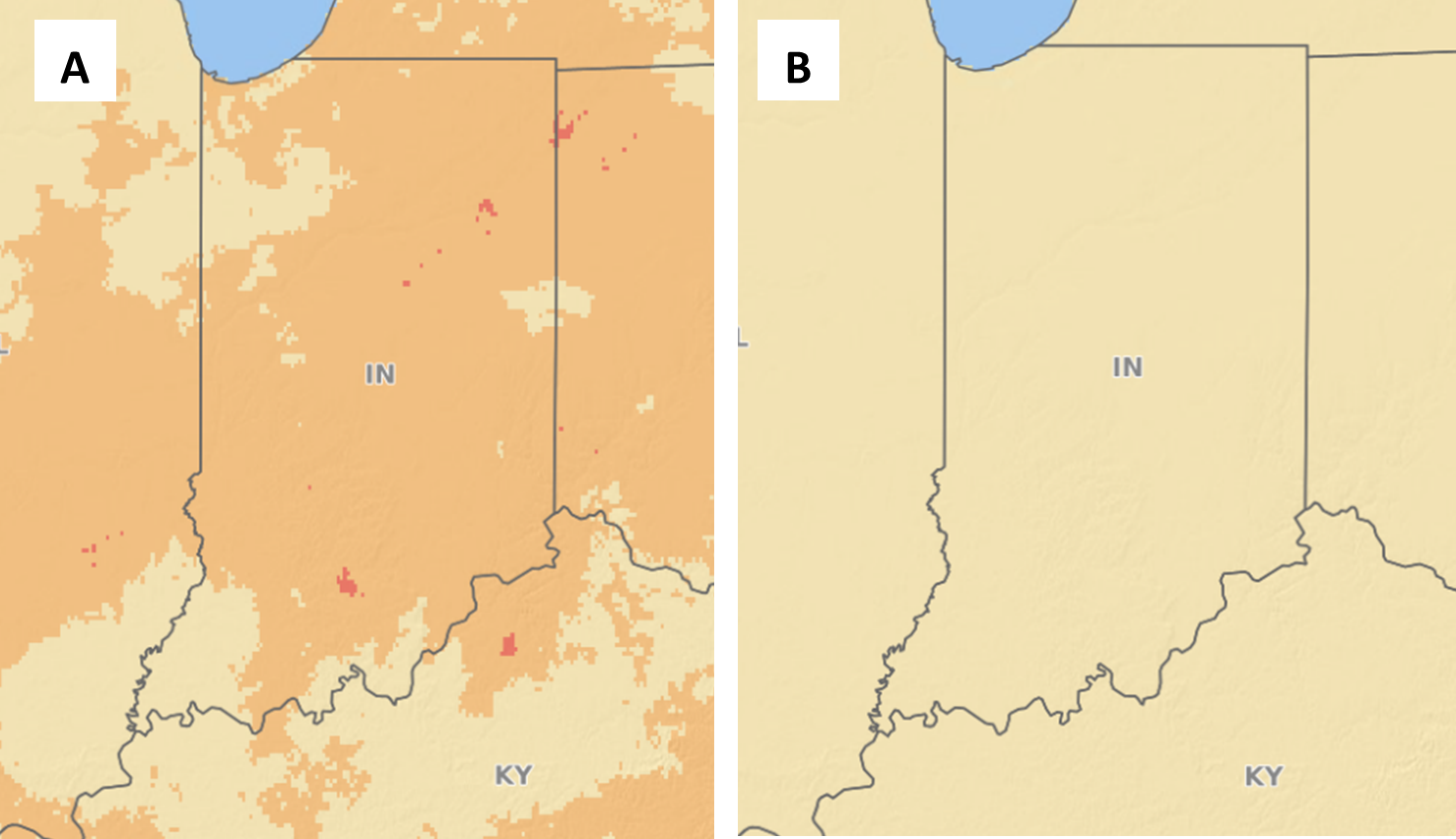
Wheat development continues across Indiana. In central Indiana, wheat is currently flowering (Feekes 10.5), while wheat in our southern Indiana research plots has advanced to the dough stage (Feekes 11.2).

Reports from eastern Indiana and Ohio suggest indicate some recent impressive black cutworm pheromone trap catches, reminding us that it is time to start thinking about this pest in certain situations.

In the center of this photograph, see an aerial view of true armyworm damage of forage. (Photo Credit: Alex Helms, Assistant Director of Purdue Agricultural Centers)
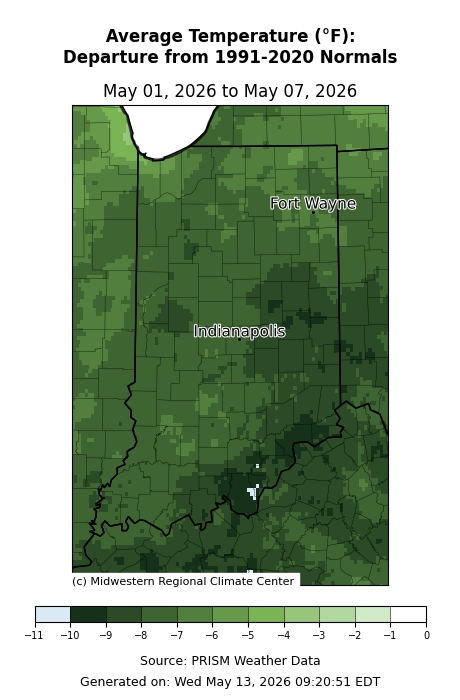
The first week of May certainly didn’t feel like May as temperatures ended up 5-10 deg F below normal across the state (Figure 1).
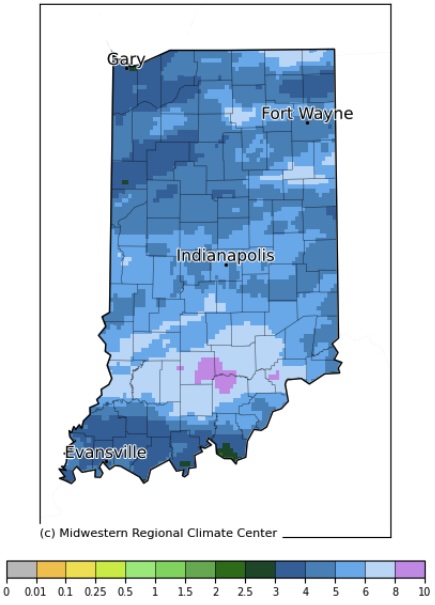
After another rainy start to the week, some of you may be ready for a few dry days to get out in the garden or field to start planting.

North central entomologists, led by Dr. Anthony Hanson at UMN, have developed a survey to assess the needs for future alfalfa weevil applied research and extension topics. Pyrethroid resistance is a concern and one of the topics we are trying to assess with this survey. If you haven’t already, please click the link or scan the QR code below and add your input. It takes only a couple of minutes and will be used to guide our efforts on applied research! Take the survey
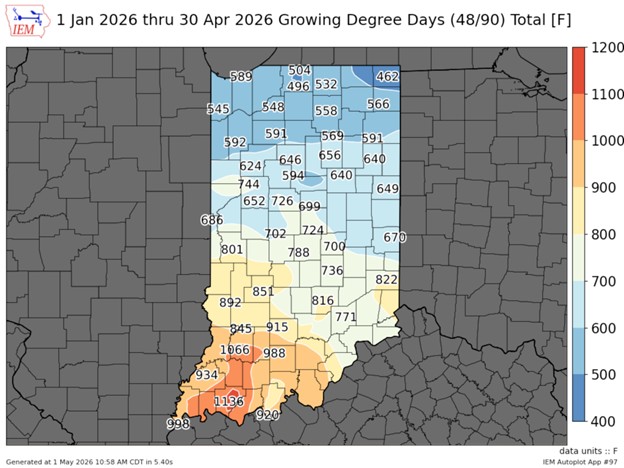
Although we are in a cool weather period and many crops have not yet been planted, alfalfa weevil are active and feeding. Pest managers throughout the state should be watching for this pest and preparing to treat if necessary. They are highly cold tolerant, so these cool nights will not slow them down. As I wrote here about a month ago, rotating insecticides is highly recommended as well as doing a post-spray survey (i.e. Did it work? Are the larvae dead?). Even varying the pyrethroid of choice is better than doing the same thing every year. There are also non-pyrethroid options for control of this pest. See the alfalfa weevil management recommendations, here. Producers can manage this pest most effectively by utilizing heat unit accumulations data (base 48°F) to determine when sampling should begin and when an action should be taken. The map below, current as of May 1, 2026,[Read More…]
© 2026 Purdue University | An equal access/equal opportunity university | Copyright Complaints | Maintained by Pest&Crop newsletter
If you have trouble accessing this page because of a disability, please contact Pest&Crop newsletter at luck@purdue.edu.