- Trap catches high in eastern Indiana and Ohio
- Prioritize weedy fields, high-risk fields should be scouted now
Reports from eastern Indiana and Ohio suggest indicate some recent impressive black cutworm pheromone trap catches, reminding us that it is time to start thinking about this pest in certain situations.
A quick reminder on the biology of this insect (for a much more detailed biology lesson, please check the Purdue Field Crops Extension website here)
Adult moths are attracted to early spring vegetation, such as winter annual weeds – particularly chickweed. They mate and lay eggs in this vegetation. Other risk factors that increase the likelihood of black cutworm attacks include corn following soybeans, late planted corn, or minimum tillage.
Larval infestations usually appear first in formerly weedy areas of fields. Newly hatched larvae feed on weeds and then young corn plants if present. This is the time to apply treatments if damage is found. Larger larvae may notch the stems of seedlings immediately below the soil surface, which can cause plants to wilt and die. They may also completely cut through stalks, which can result in severe stand reductions.
Black cutworms usually feed at night or during overcast days as they prefer to avoid being seen and eaten by birds. They sometimes drag cut plants under dirt clods or into small holes in the soil to continue their feeding during the daylight hours.
Primarily Leaf Feeding – Control may be needed if 3% to 5% of the plants show leaf feeding and 2 or more cutworms can be found per 100 plants. Cutworm control is generally most effective at this time; large larvae that are already cutting plants are much more difficult to kill.
The bottom line: during the upcoming (maybe) wet period for the state, scout high-risk fields for cutworm corn leaf feeding and/or cutting – overcast and rain won’t slow their feeding. Don’t be overly reliant on seed-applied insecticides or traited corn to protect your stand, they will not withstand severe pressure.
Final Thought: Fields yet to be planted to corn are especially prone to damage, as the cutworms are likely established and feeding on weedy growth as you read this.
Happy Scouting!

Black cutworms sometimes drag cut plants under dirt clods or into small holes in the soil to continue their feeding. Earthworms also exhibit this behavior, so dig and confirm BCW before treatment.
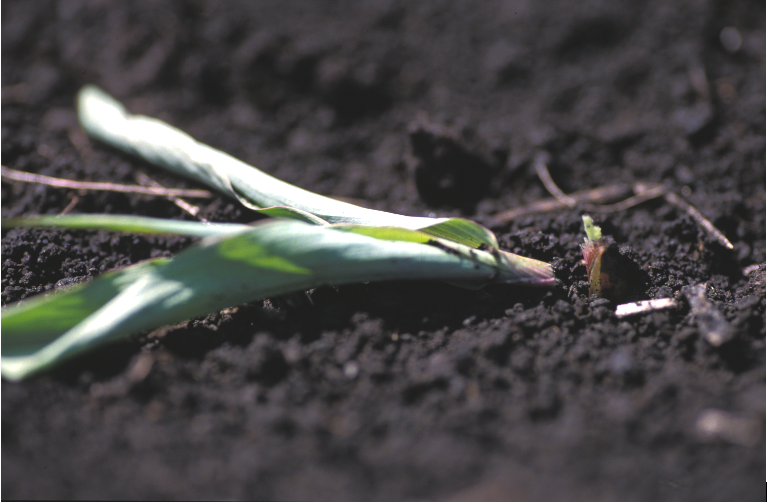
Cutting is done only by larger larvae; smaller instars notch leaves.
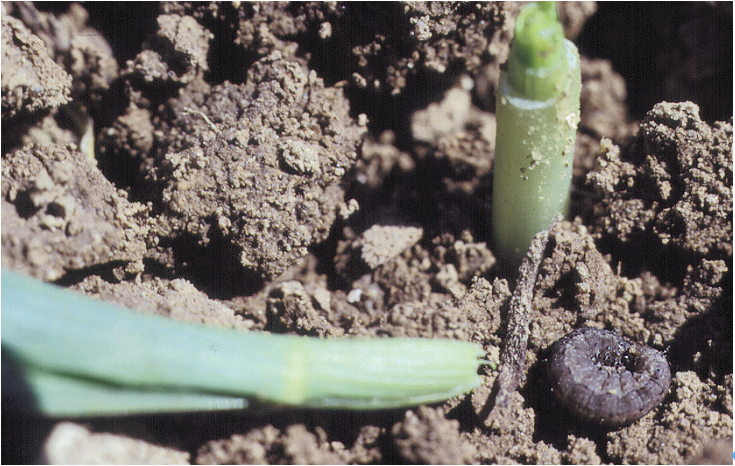
Cutting is done only by larger larvae; smaller instars notch leaves.