Recent rounds of thunderstorms have brought highly variable rainfall totals across Indiana, continuing a familiar spring pattern of “haves and have-nots” when it comes to precipitation.
Recent rounds of thunderstorms have brought highly variable rainfall totals across Indiana, continuing a familiar spring pattern of “haves and have-nots” when it comes to precipitation.

Multi-state study examines whether AI and satellite-guided scouting and recommendations can improve yields and profits.
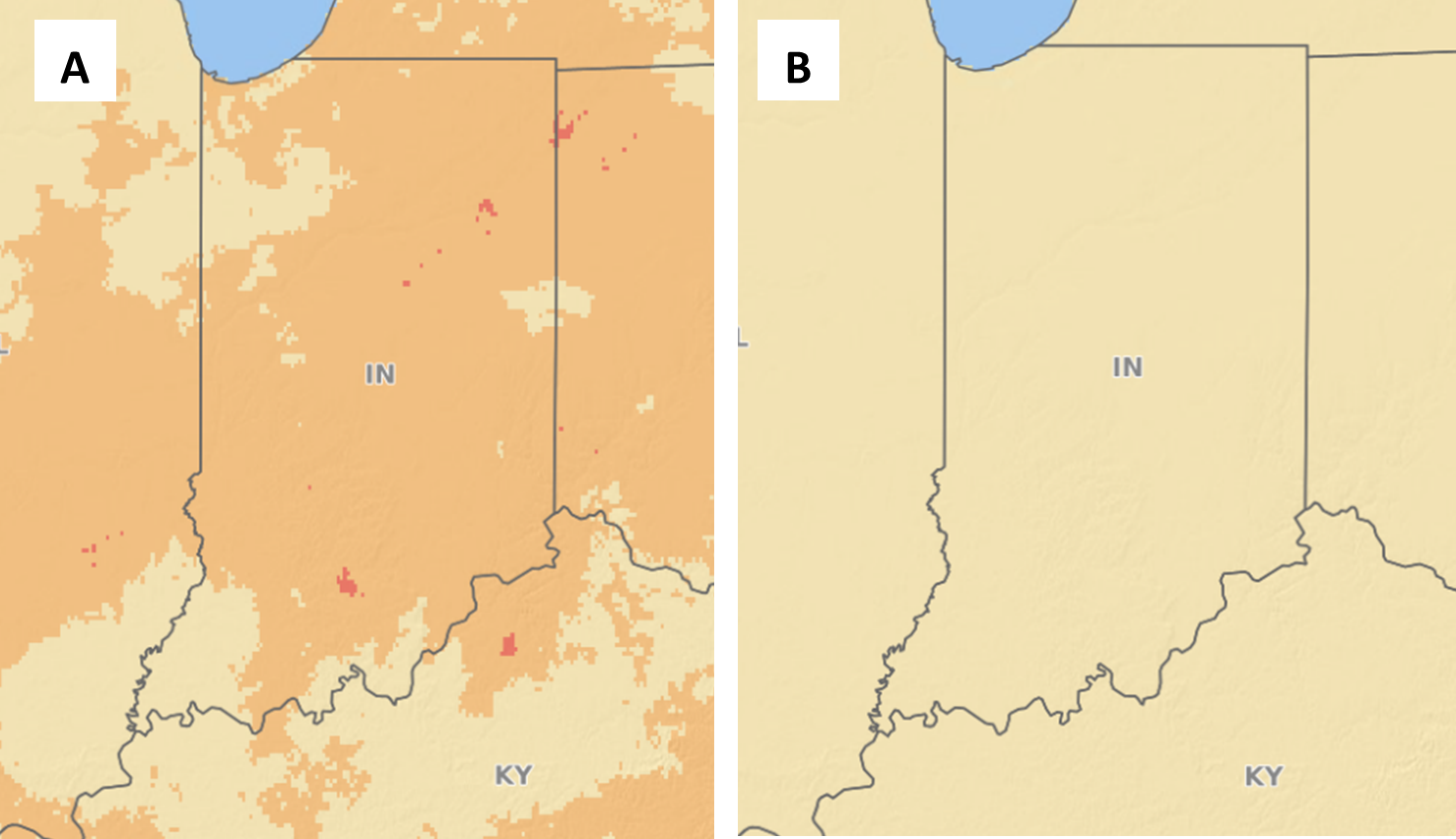
Wheat development continues across Indiana. In central Indiana, wheat is currently flowering (Feekes 10.5), while wheat in our southern Indiana research plots has advanced to the dough stage (Feekes 11.2).

Reports from eastern Indiana and Ohio suggest indicate some recent impressive black cutworm pheromone trap catches, reminding us that it is time to start thinking about this pest in certain situations.

In the center of this photograph, see an aerial view of true armyworm damage of forage. (Photo Credit: Alex Helms, Assistant Director of Purdue Agricultural Centers)
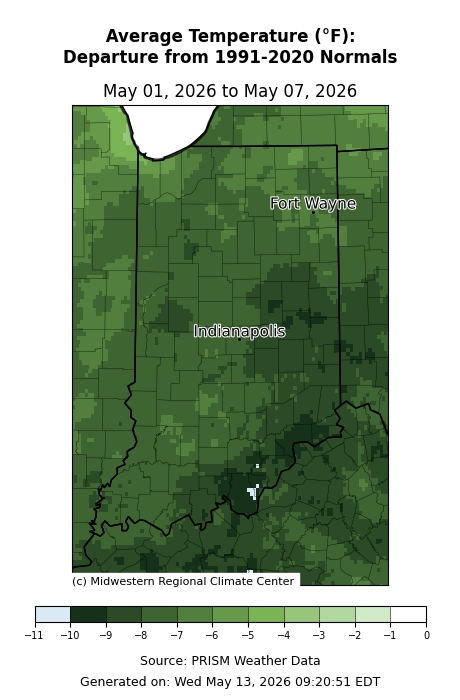
The first week of May certainly didn’t feel like May as temperatures ended up 5-10 deg F below normal across the state (Figure 1).

Indiana saw a lot of precipitation the early part of this past week with rainfall totals ranging from 0.5” or greater in the northern and far southwestern counties to over 5” in south-central Indiana. In fact, an observer just south of Bedford, IN reported a combined total of 5.80”! Figure 1 shows the 2-day total amounts from volunteer CoCoRaHS observers – illustrating how valuable their contributions are to precipitation monitoring. CoCoRaHS – which stands for Community Collaborative Rain, Hail, and Snow network – is a volunteer, citizen science program where anyone with interest in the weather and providing data to a larger community can sign up to take daily precipitation observations and report findings online or through a mobile map. Data is then collected nationally and made publicly available for the public to see and use. Programs such as the National Weather Service, state climatologists, emergency managers, and local communities[Read More…]
© 2026 Purdue University | An equal access/equal opportunity university | Copyright Complaints | Maintained by Pest&Crop newsletter
If you have trouble accessing this page because of a disability, please contact Pest&Crop newsletter at luck@purdue.edu.