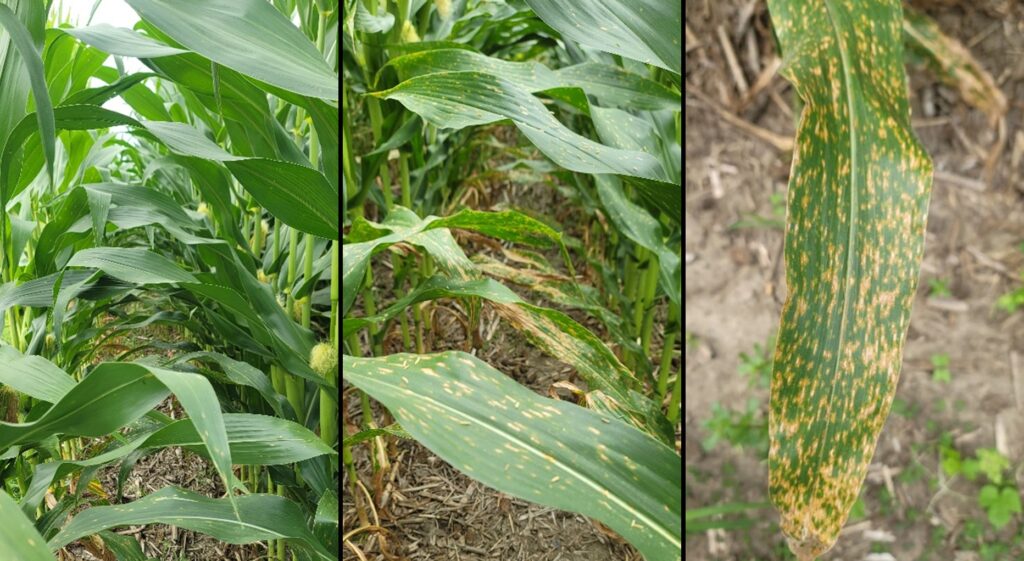
Foliar diseases are becoming increasingly evident in corn fields across Indiana, with gray leaf spot emerging as the most prevalent disease thus far this season.
Foliar diseases are becoming increasingly evident in corn fields across Indiana, with gray leaf spot emerging as the most prevalent disease thus far this season.
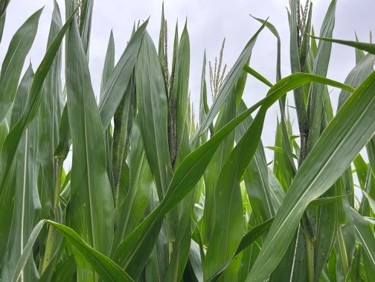
Calls and observations from both north-central and eastern Indiana indicate populations of aphids that are so high they are covering the upper leaves of plants.
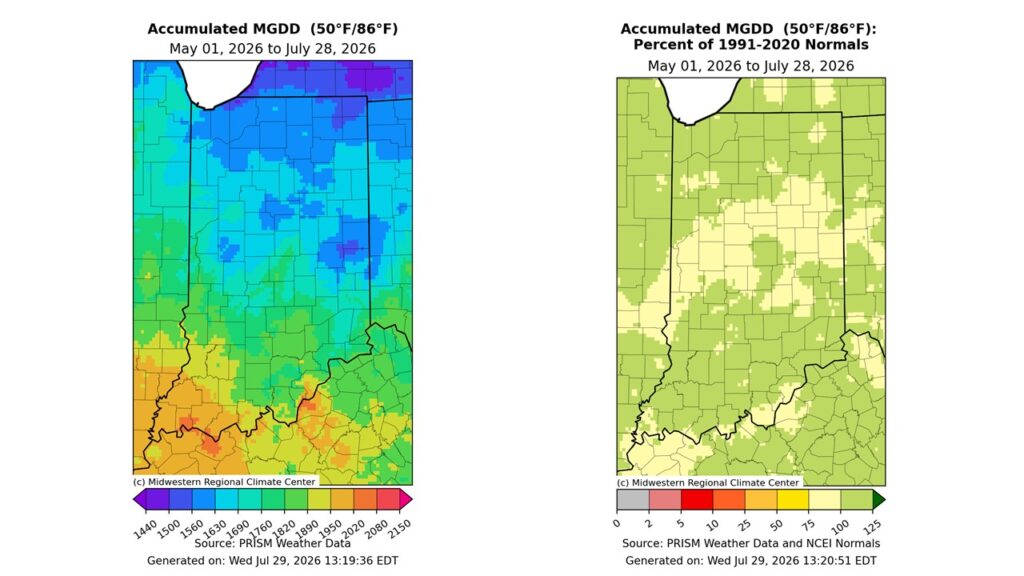
By late July, Indiana had settled into a typical midsummer pattern. Warm, humid days with warm overnight temperatures were common, and scattered thunderstorms left a patchwork of rainfall across the state.
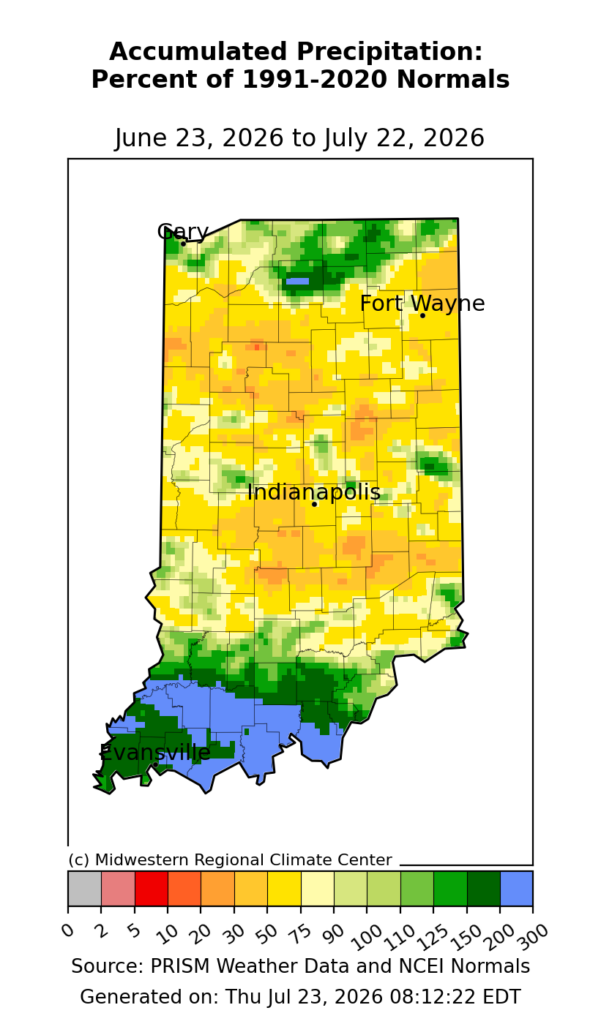
Aside from southern and far northern Indiana, the rest of the state has generally received below normal precipitation over the past 30 days (Figure 1). While only a few localized areas show percentages below the 30 percent-of-normal level (one of the factors considered to recommend the Abnormally Dry (D0) classification to the U.S. Drought Monitor authors), other factors are suggesting something may be developing. A challenge has been the very spotty nature of heavy precipitation events in the broad region that has caused localized flooded areas nearby areas that seem to keep missing out. The Indiana state drought monitoring team has also been looking at other factors such as evapotranspiration, soil moisture, stream and lake levels, and groundwater levels. Several of those factors did suggest the area was already abnormally dry so without significant additional precipitation most of Indiana is likely to enter the D0 category soon. Rumors will start[Read More…]
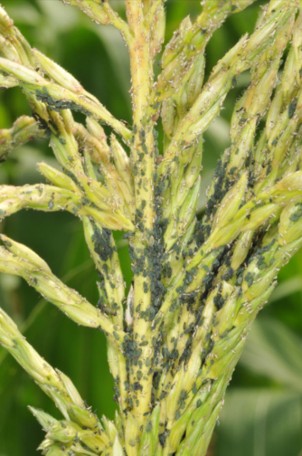
Corn leaf aphid (CLA), is typically an occasional presence in cornfields within the Midwest. They are a common sight late in season, in September and October, when corn is starting to senesce and they can’t have much impact on yields. They are frequently seen on corn stalks close to the ground at this time and can reach very high numbers, with black sooty mold covering some plant parts. Since corn plants are effectively “shutting down” at this time in terms of photosynthesis, they are not a pest of concern at that time.
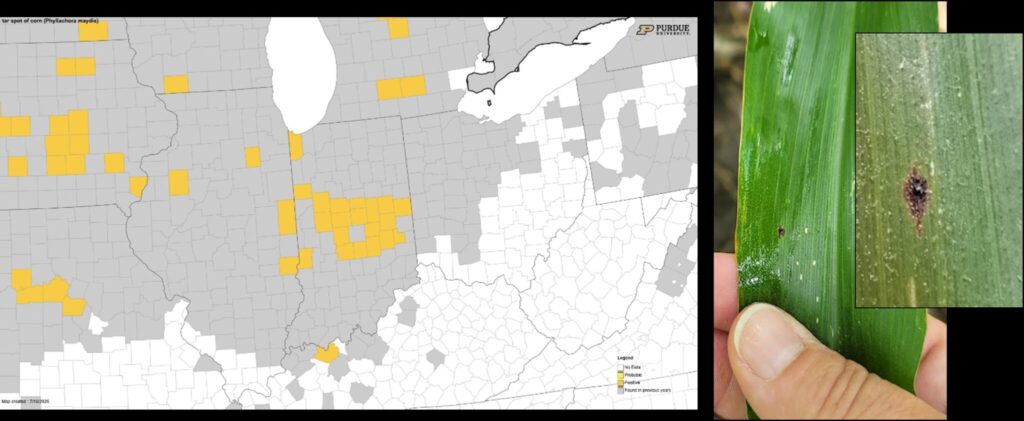
Continued scouting of both corn and soybean fields remains critical for making timely and informed disease management decisions.
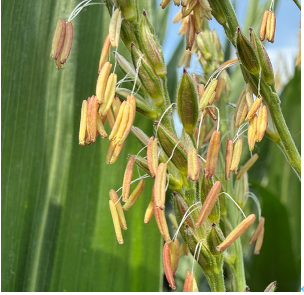
Throughout July in Indiana, tassels begin to emerge above the corn canopy, signaling the start of pollination. Although pollination lasts only about one to two weeks, it is one of the most critical stages of corn development because it determines kernel set and largely establishes the crop’s yield potential. Corn is also highly vulnerable during this period, often experiencing its greatest yield loss per day when exposed to stresses such as drought or hail. Corn is a monoecious species, meaning each plant produces both male (tassel) and female (silks) flowers. Therefore, successful pollination depends on pollen being released from the tassel and reaching receptive silks at the right time. Any stress that disrupts the synchronization between pollen shed and silk emergence can reduce kernel set and ultimately decrease grain yield. One of the most recognizable structures during corn pollination is the anther or the small, dangling structures that hang from[Read More…]
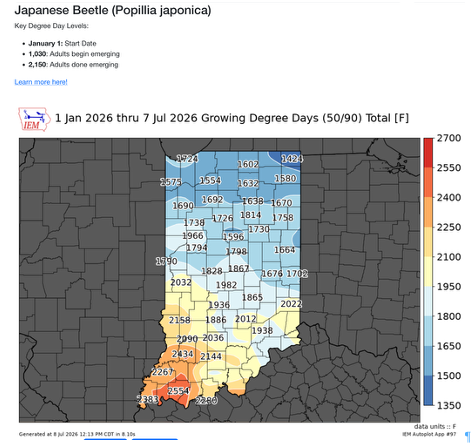
As shown by the degree-day accumulations below, Japanese beetle adults are emerging throughout the state and the first few traces of feeding can be found in soybeans and corn.
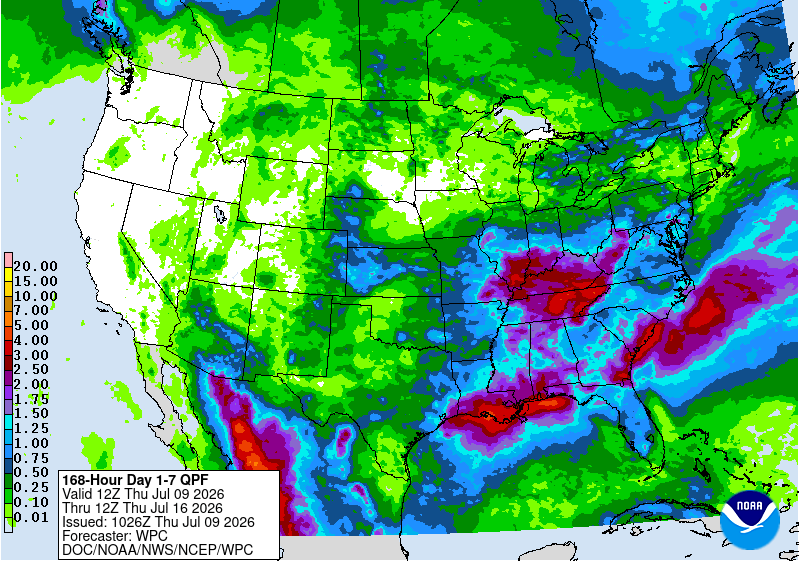
After the brutal heatwave hit us as June transitioned to July, any future above-normal temperatures may seem normal for this time of year.
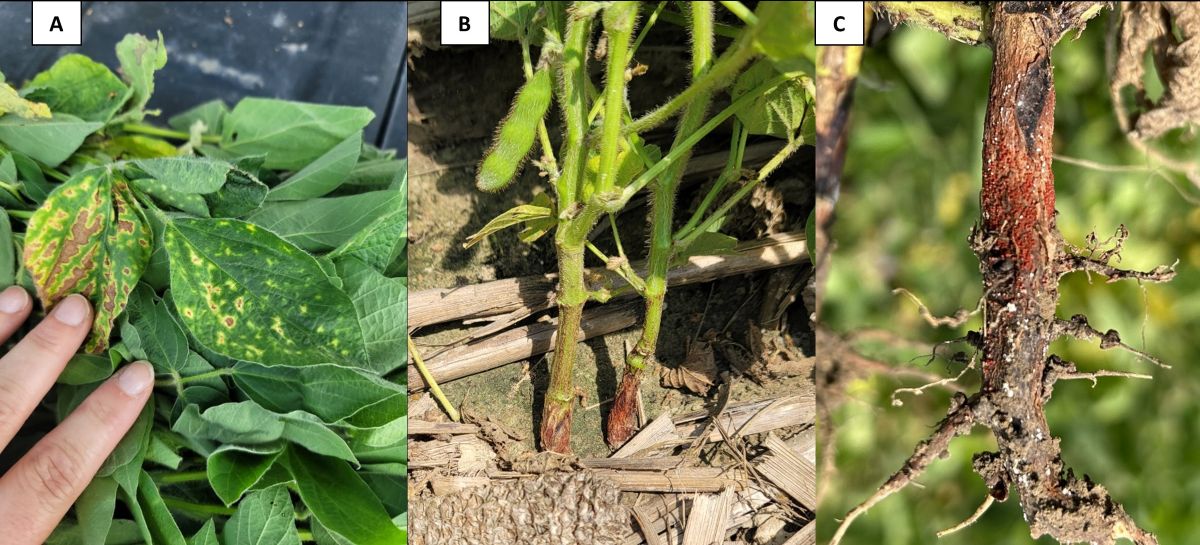
Red crown rot of soybean, caused by Calonectria Ilicicola, continues to be a concern in Indiana.
© 2026 Purdue University | An equal access/equal opportunity university | Copyright Complaints | Maintained by Pest&Crop newsletter
If you have trouble accessing this page because of a disability, please contact Pest&Crop newsletter at luck@purdue.edu.