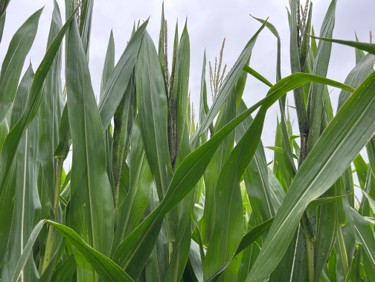
Calls and observations from both north-central and eastern Indiana indicate populations of aphids that are so high they are covering the upper leaves of plants.
Calls and observations from both north-central and eastern Indiana indicate populations of aphids that are so high they are covering the upper leaves of plants.
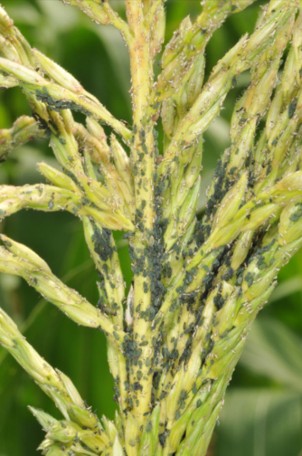
Corn leaf aphid (CLA), is typically an occasional presence in cornfields within the Midwest. They are a common sight late in season, in September and October, when corn is starting to senesce and they can’t have much impact on yields. They are frequently seen on corn stalks close to the ground at this time and can reach very high numbers, with black sooty mold covering some plant parts. Since corn plants are effectively “shutting down” at this time in terms of photosynthesis, they are not a pest of concern at that time.

Corn leaf aphid (CLA), is typically an occasional presence in cornfields within the Midwest – they can be found in most fields closer to harvest time, when corn is starting to senesce and they don’t/can’t have much impact. They are typically not a pest of concern during the summer months. This year is different! In Indiana and throughout the Midwest, this aphid has made its presence known this year. We don’t know all the reasons why this year’s populations have been so much worse, but it is very likely progression of remnants of Hurricane Beryl from south to north (July 8 and 9) distributed winged aphids throughout our region; this is a common route of aphid transport. Since last week’s Pest&Crop article, winged aphids have been found on multiple plants/crops, including many that CLA are unable to feed on. This morning while running the dog in the yard, John Obermeyer[Read More…]
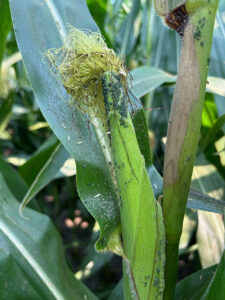
The vast majority of cornfields in the northwestern counties of Indiana have reached or have passed pollination.
© 2026 Purdue University | An equal access/equal opportunity university | Copyright Complaints | Maintained by Pest&Crop newsletter
If you have trouble accessing this page because of a disability, please contact Pest&Crop newsletter at shidler@purdue.edu.