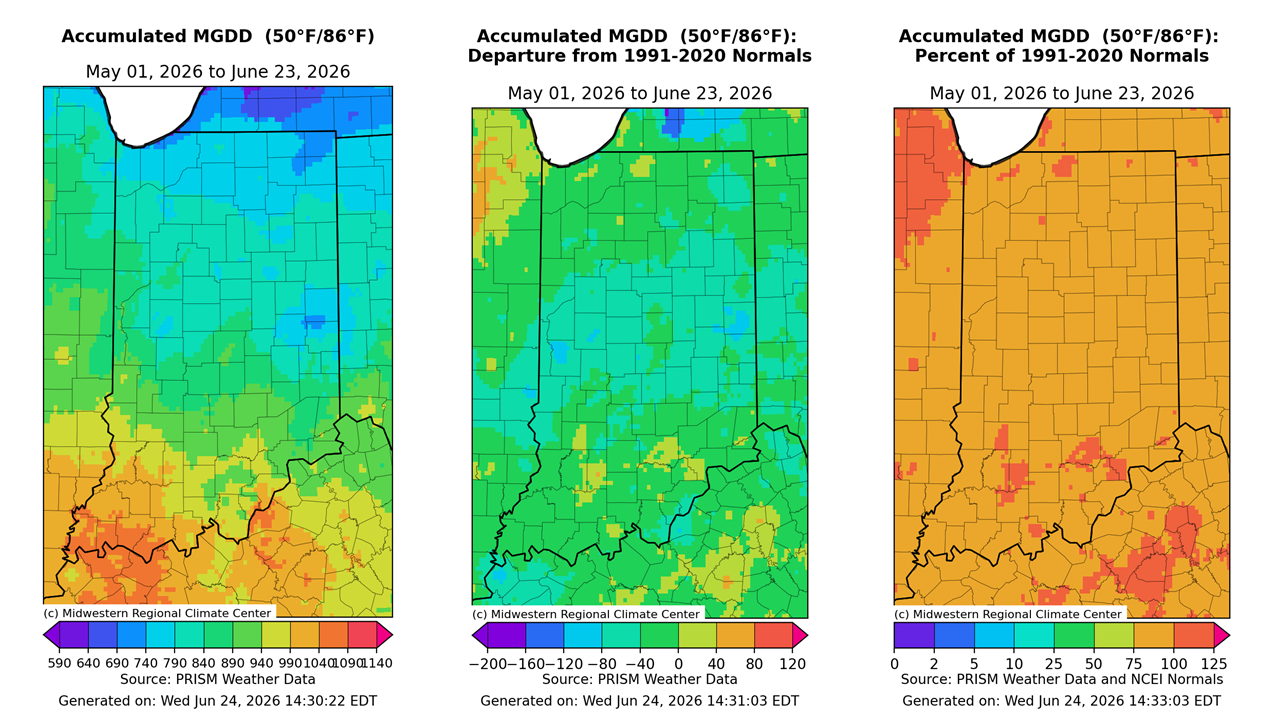
The average spring (March–May) temperature in Indiana was 55.9°F, which was 4°F above the 1991–2020 normal.
The average spring (March–May) temperature in Indiana was 55.9°F, which was 4°F above the 1991–2020 normal.
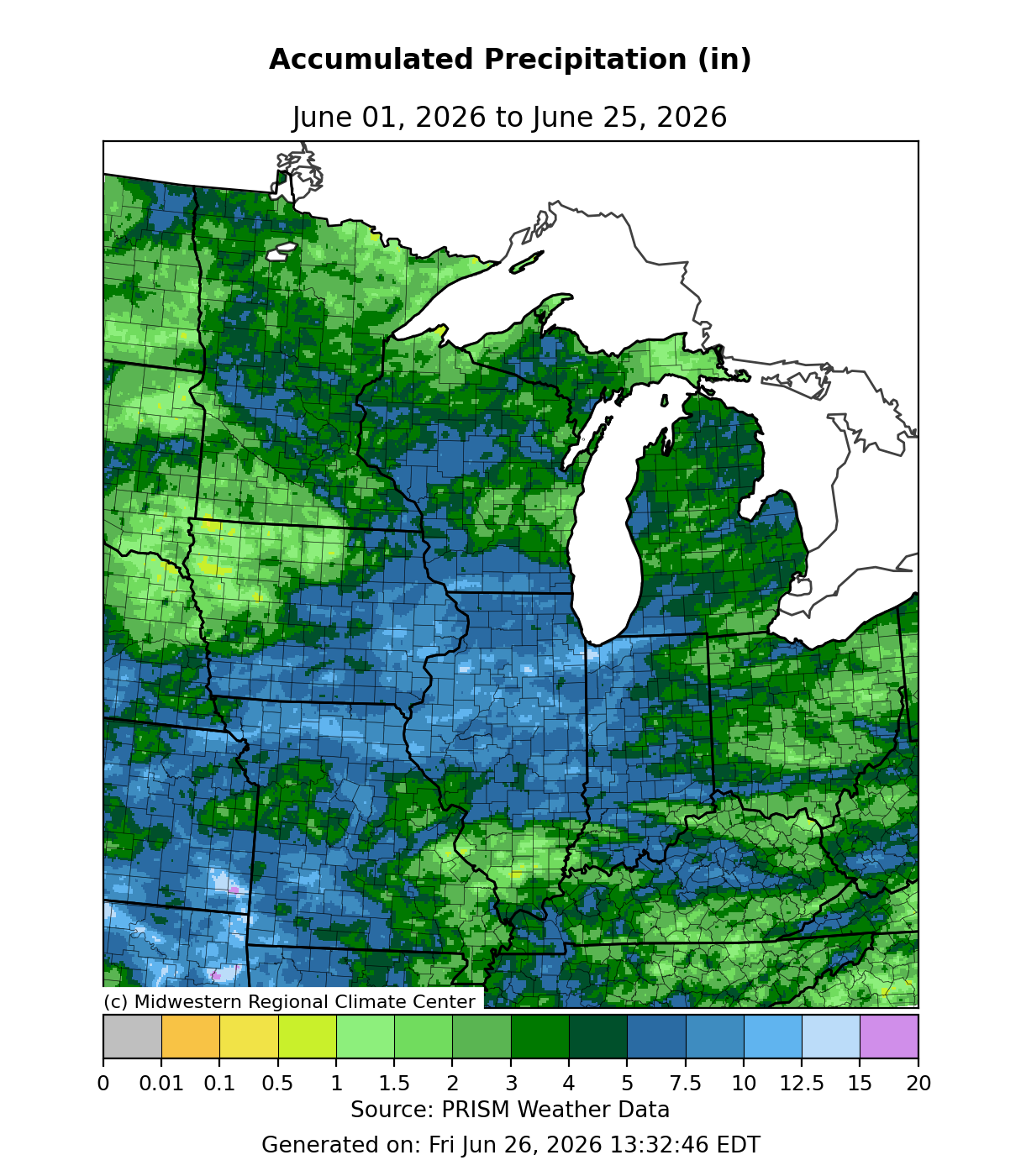
Southern Indiana experienced wet feet for much of May with totals from 6 to nearly 12 inches.
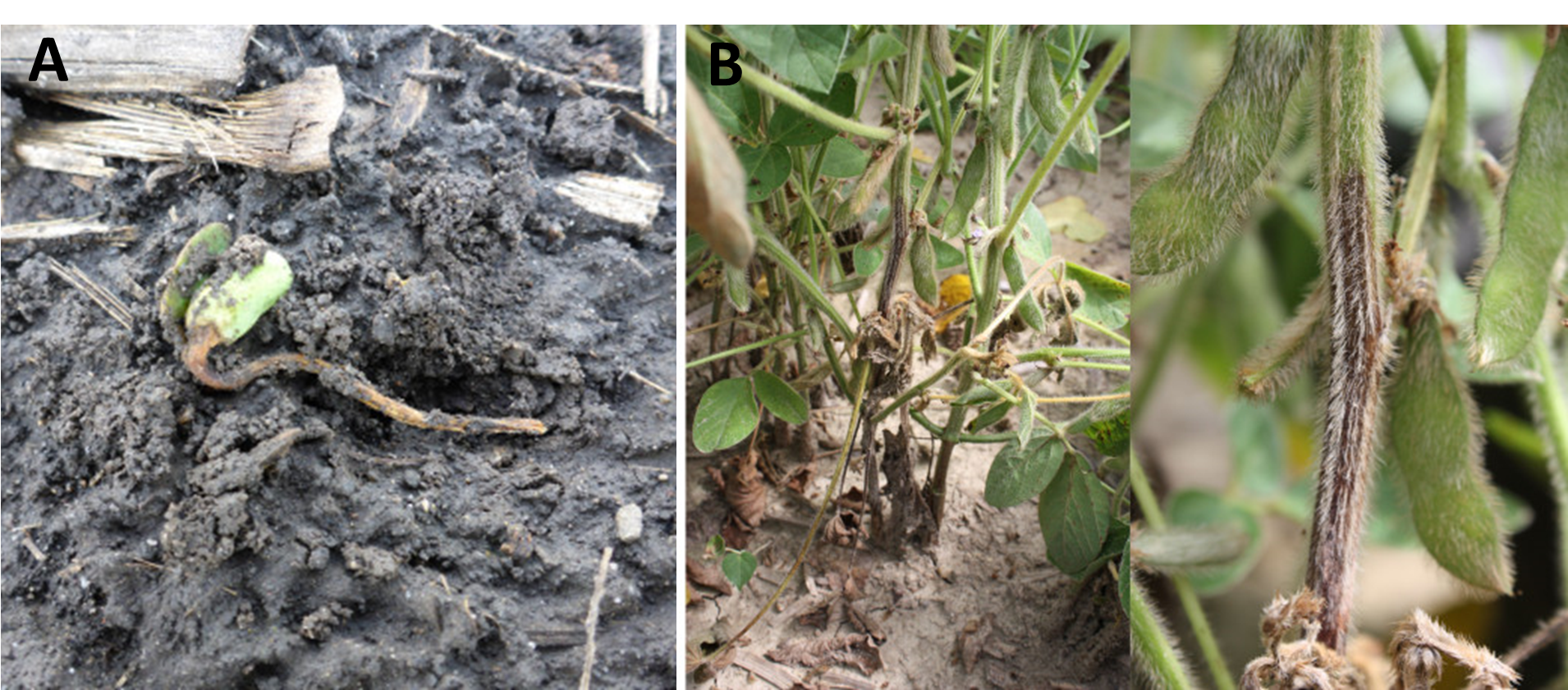
Indiana has received quite a bit of rain in the last few months, and fields are flooded throughout the state. How can you determine if you just have a flooding injury or a seedling disease has taken hold? Standing water leads to root suffocation as roots are oxygen-deprived and CO2 builds up. Digging up a few plants in the area can help determine the issue. If the outer root tissue sloughs off and reveals the white hair-like core of the root, then there may only be a flooding injury. If the roots appear rotted, brown and mushy, then a root rot may have infected the stressed plants. Flooding also kills the nitrogen-fixing bacteria, so you can cut open the soybean nodules to see if they have lost their healthy pink color. In contrast, seedling diseases, such as Phytophthora root and stem rot, can leave the roots brown and rotted, but[Read More…]
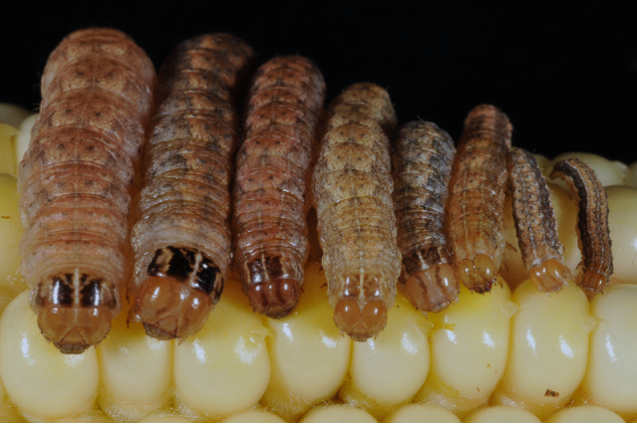
Although not a pest in all of the state, the Western bean cutworm (WBC) has been in an issue for Indiana producers for 20 years – the first recorded adult capture was documented in the Pest&Crop newsletter on July 7 2006 both in pheromone traps and black light traps, at PPAC in Wanatah, and NEPAC in Columbia City, respectively.
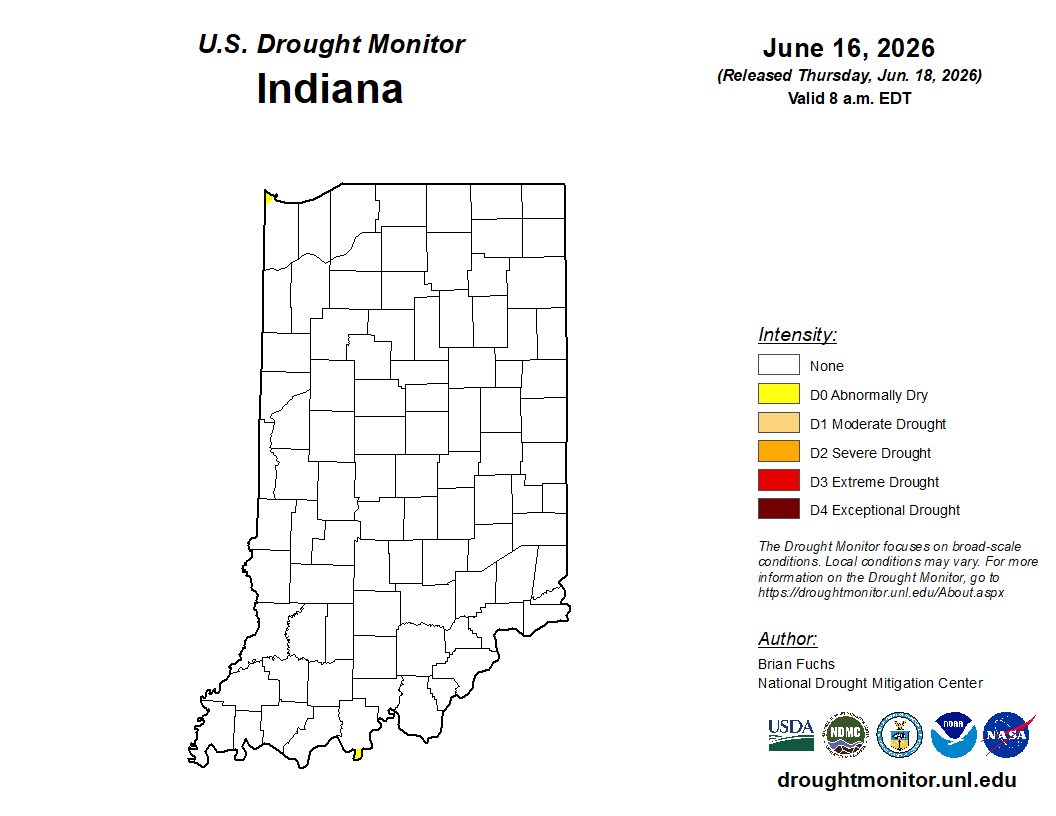
Indiana has seen several rounds of severe weather, and many are likely ready for a break.
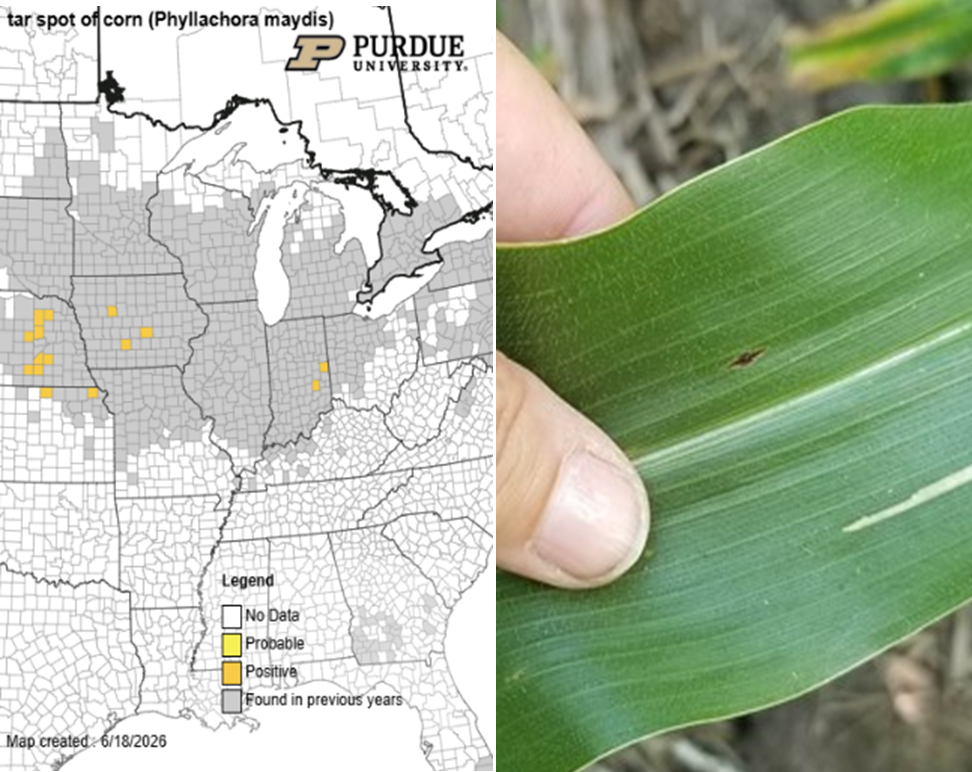
We are continuing to track the activity of tar spot.
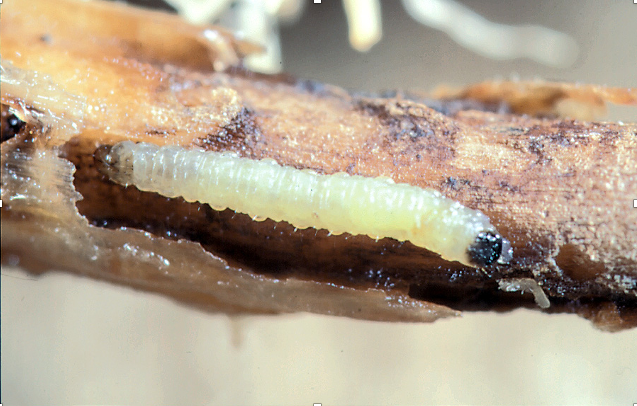
The recent heavy rains throughout much of Indiana have resulted in some flooded fields.
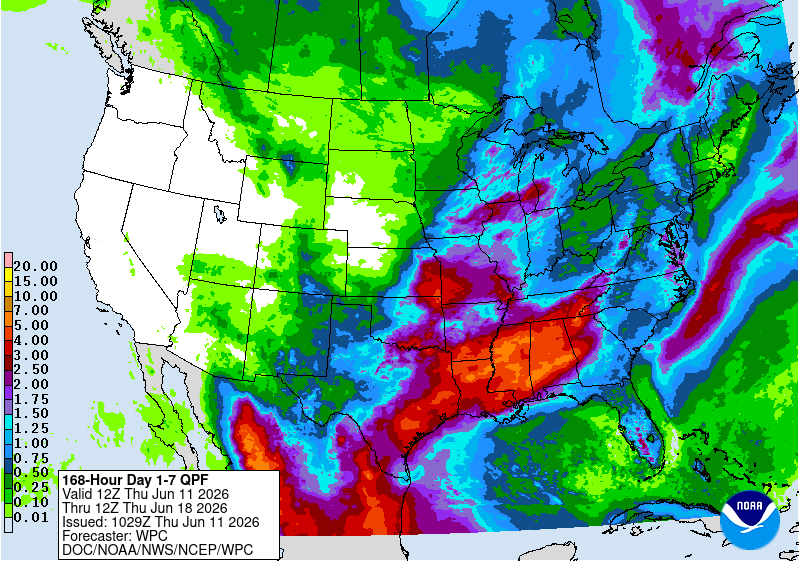
Since last Friday, many parts of Indiana have seen a significant amount of rain (Figure 1).

Come on out to join us for our annual Purdue Weed Science Field Day!
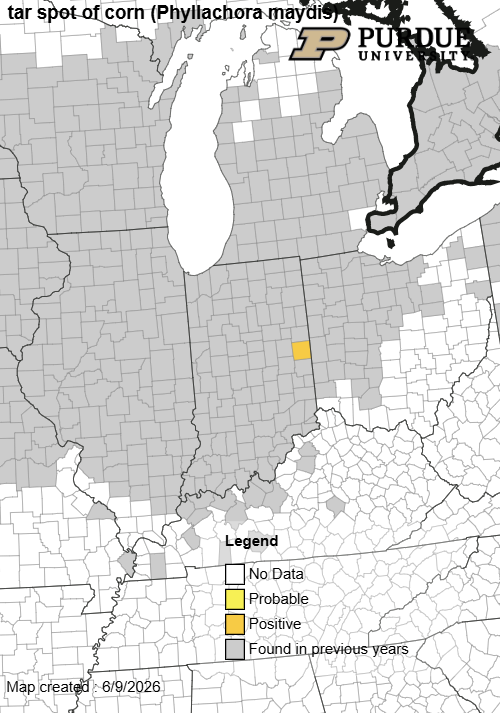
Questions about tar spot management were already beginning to surface as corn planting nears completion across Indiana.
© 2026 Purdue University | An equal access/equal opportunity university | Copyright Complaints | Maintained by Pest&Crop newsletter
If you have trouble accessing this page because of a disability, please contact Pest&Crop newsletter at luck@purdue.edu.