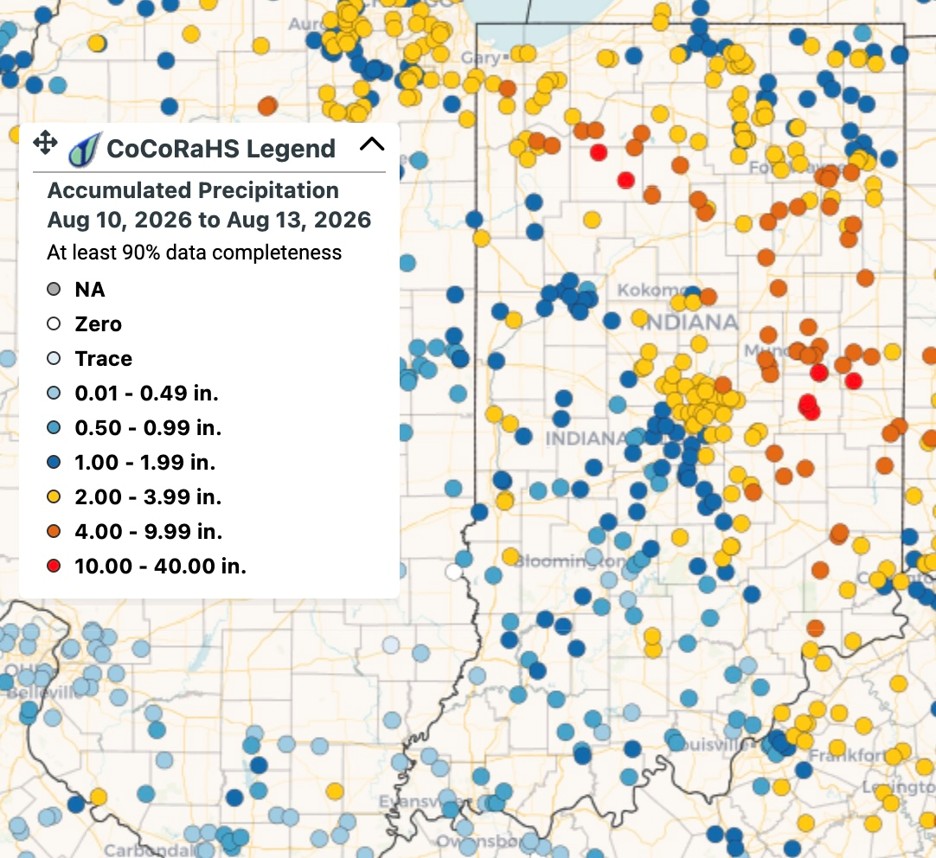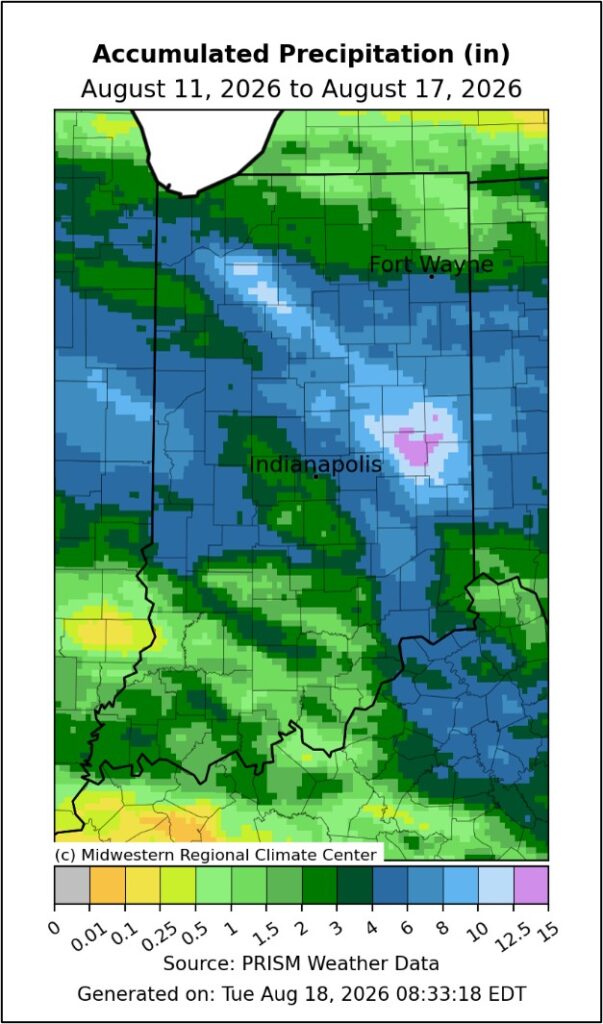
During the week of August 11, much of Indiana received excessive to record-setting rainfall (Figure 1). Portions of eastern Indiana, for example, received more than 13 inches of rainfall, setting local rainfall records and producing conditions rarely or ever experienced in the region. The 2026 growing season continues to be characterized by highly variable and extreme weather events, particularly during the latter half of the growing season. These conditions have introduced questions about how excessive rainfall, saturated soils, and also extended cloudy weather may influence corn grain fill, yield, stalk quality, and harvestability. Therefore, this article helps to provide insights on the late-season impacts of these weather events and also what Indiana corn farmers should be paying attention to as harvest season approaches. Excessive Rainfall and Saturated Soils One small sliver of hope is that corn is generally less susceptible to waterlogging and saturation during reproductive development than during early[Read More…]