9 articles tagged "August".

thumbnail image

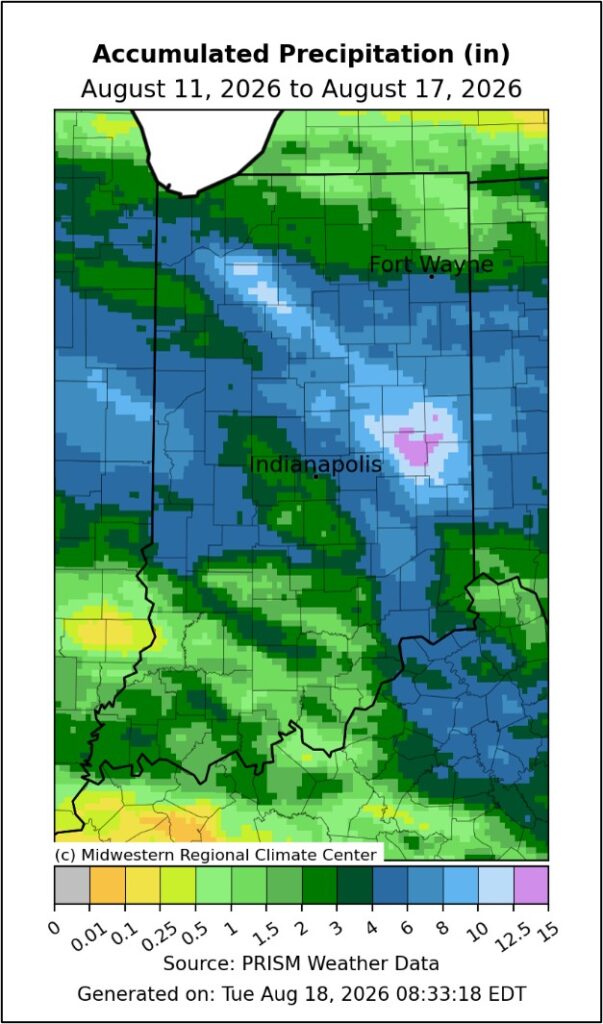
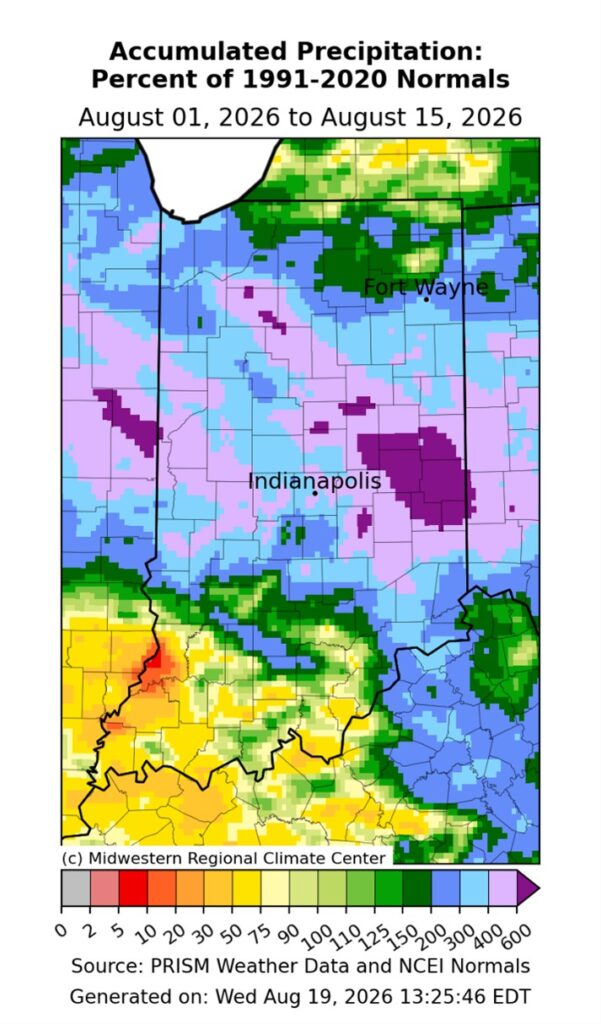
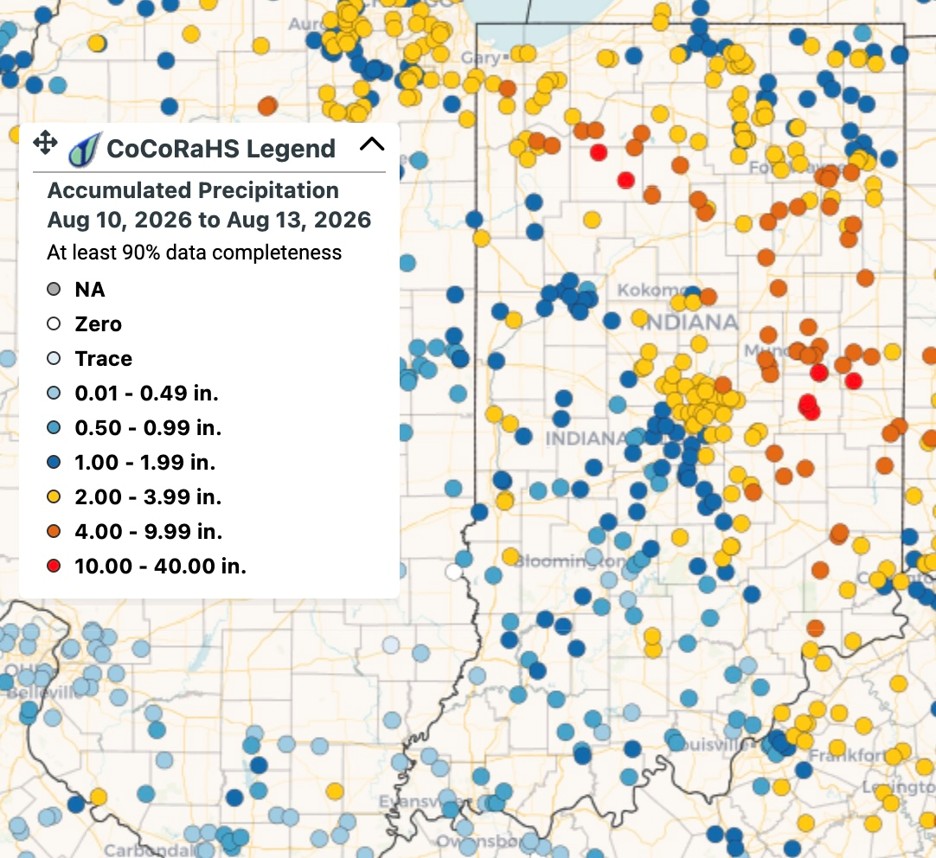
There was a period earlier this year when southern Indiana was getting all the rain.  Flooding was a concern. The rest of Indiana was hoping for their share. Then this week happened. A lot of rain has fallen almost everywhere but southern Indiana.  Perhaps this will provide some time for those down south to assess if things have returned to normal, or if there are now visible indicators of abnormally dry or even moderate drought developing.  There is still some rain (not a lot) expected in these regions so hopefully that will keep either moisture extreme (drought or flooding) from happening. Then, there’s the rest of Indiana.  Locations in eastern Indiana have reported over 6 inches of rain within 24 hours!  Over the past few days, amounts across northern and eastern Indiana have totaled from 3” to almost 10” (Figure 1).  There are several locations (e.g., Delaware County) that reported[Read More…]


thumbnail image

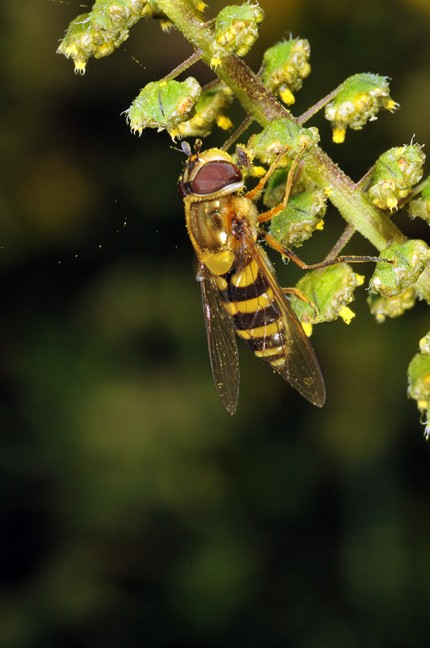
Going back to about 2016 or so, a species of hover fly (and their larvae) have become increasingly common in and near Indiana cornfields. Last weekend I attended a picnic where they were a topic of conversation because they were landing on everyone and everything. They are harmless but annoying. They have no stingers and cannot bite. These are syrphid flies in the genus Toxomerus (likely Toxomerus politus), and mimic bees and wasps with their yellow/orange and black striping. These flies are common in and around cornfields because the larvae feed on pollen. Each corn plant produces hundreds of thousands of surplus pollen grains, many of which end up in leaf axils. That’s where many of the maggots, fly larvae, can be found. They are taking advantage of a free, reliable protein source. Many syrphid fly larvae are beneficial predators, feeding on aphids, whiteflies and other soft-bodied pest insects. For[Read More…]


thumbnail image

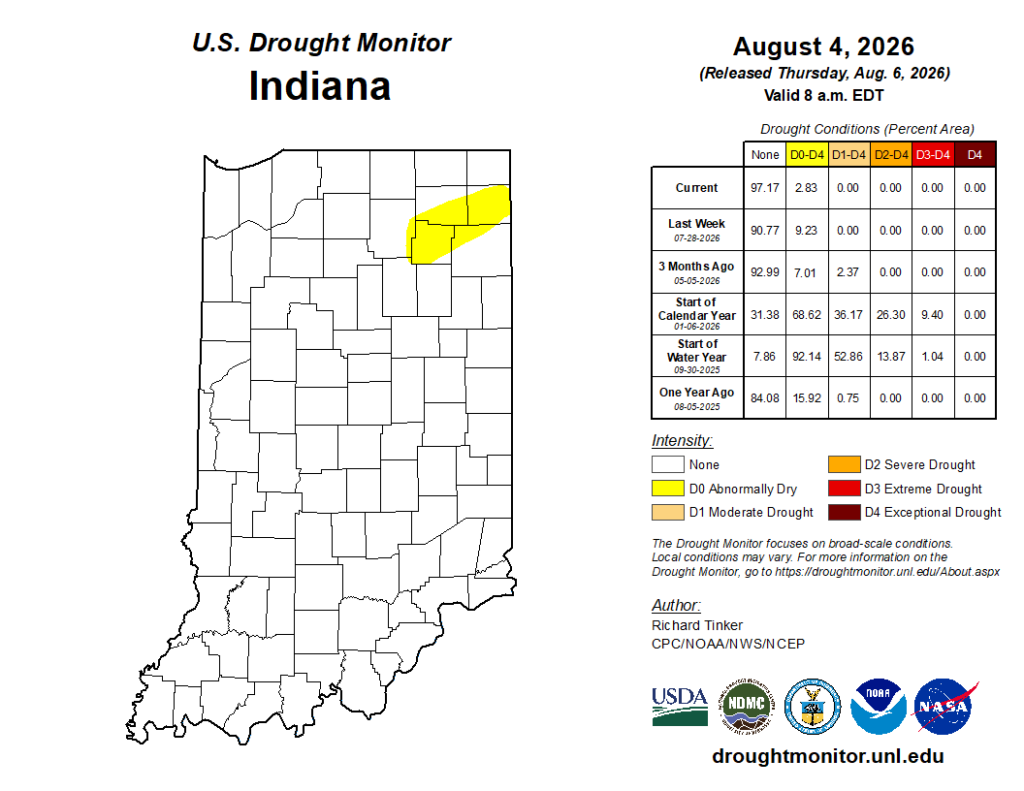
Abnormally Dry (“D0” in the U.S. Drought Monitor [USDM]) conditions were starting to develop in several areas across northern Indiana by the end of July.  However, intermittent, spotty rain events as July transitioned to August seemed to occur in many of those places suggesting conditions were returning to normal.  Therefore, the only area of the state that is still considered Abnormally Dry is in the northeastern counties (Figure 1).  Periods of dryness are not uncommon, particular over the summer when warmer temperatures can accelerate evapotranspiration.  The challenge becomes assessing whether the drier periods are normal or abnormal.  For now, most of Indiana seems to be more normal.  Will this last? The rain forecast over the next 7 days (through August 14th) is predicting a chance of rain every day.  Those chances may range from 10% to over 80%.  This is often tricky to interpret.  If it does not rain in[Read More…]


thumbnail image

I was asked to come to a field in early April many years ago by a young producer. The producer and the seedsman that sold the alfalfa to the producer met me at the field. The cause of concern was that there was an expectation of green alfalfa growing after breaking winter dormancy in Mid-March. Instead, what was seen at my height of 5’ 10” was light brown soil; not a trace of green from anything was seen. I dropped to my knees and got my eyes within 12 inches of the soil surface. What I saw was what had been an outstanding stand of alfalfa seedlings, at least 24 dead alfalfa seedlings per square foot, no more than 1-inch in height that were the same color of the soil. I asked the producer when he seeded the field. He replied, “October 7”. The “Best Management Practice” would have been[Read More…]


Pest&Crop newsletter - Department of Entomology Purdue University 901 Mitch Daniels Blvd West Lafayette, IN 47907

© 2026 Purdue University | An equal access/equal opportunity university | Copyright Complaints | Maintained by Pest&Crop newsletter

If you have trouble accessing this page because of a disability, please contact Pest&Crop newsletter at luck@purdue.edu.