Split Applications Of Soil Residual Herbicides In Corn
Split Applications Of Soil Residual Herbicides In Corn
2020 Western Bean Cutworm Pheromone Trap Report
I was asked to come to a field in early April many years ago by a young producer.
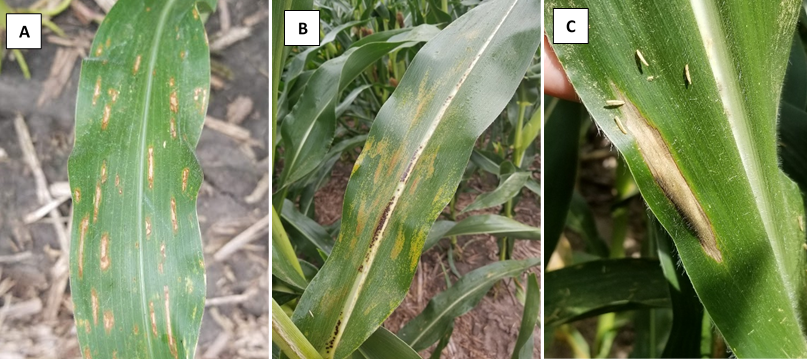
It is important to continue to scout for diseases in both corn and soybeans.

Much of the corn has pollinated throughout the state, but there are the late-planted fields that have yet to do so. Those are the fields that potentially act as a “trap crop” for various insect pests as they look for an excellent protein source…pollen. One particular insect, known by some producers as silk beetles, is the western corn rootworm beetle. In most years, this is the time for the peak number of beetles present in the state. In fact, for research trials we deliberately plant corn late the year before in an attempt to lure pollen-feeding female beetles into the crop so there will be plenty of eggs in second year corn. However, beetle numbers are much lower than they used to be several years ago. Because of this, some producers have let their guard down, only to later regret their decision to not protect their corn from larval damage.[Read More…]
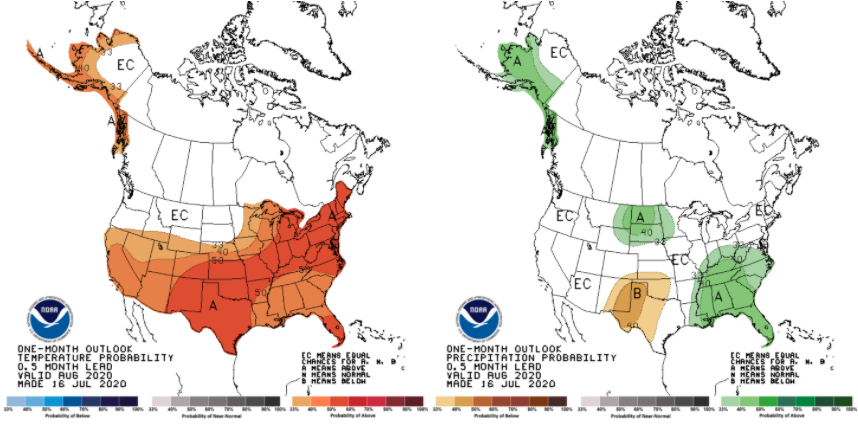
On July 16th, the national Climate Prediction Center released the climate outlooks for August (Figure 1) and the August-September-October (Figure 2) period.
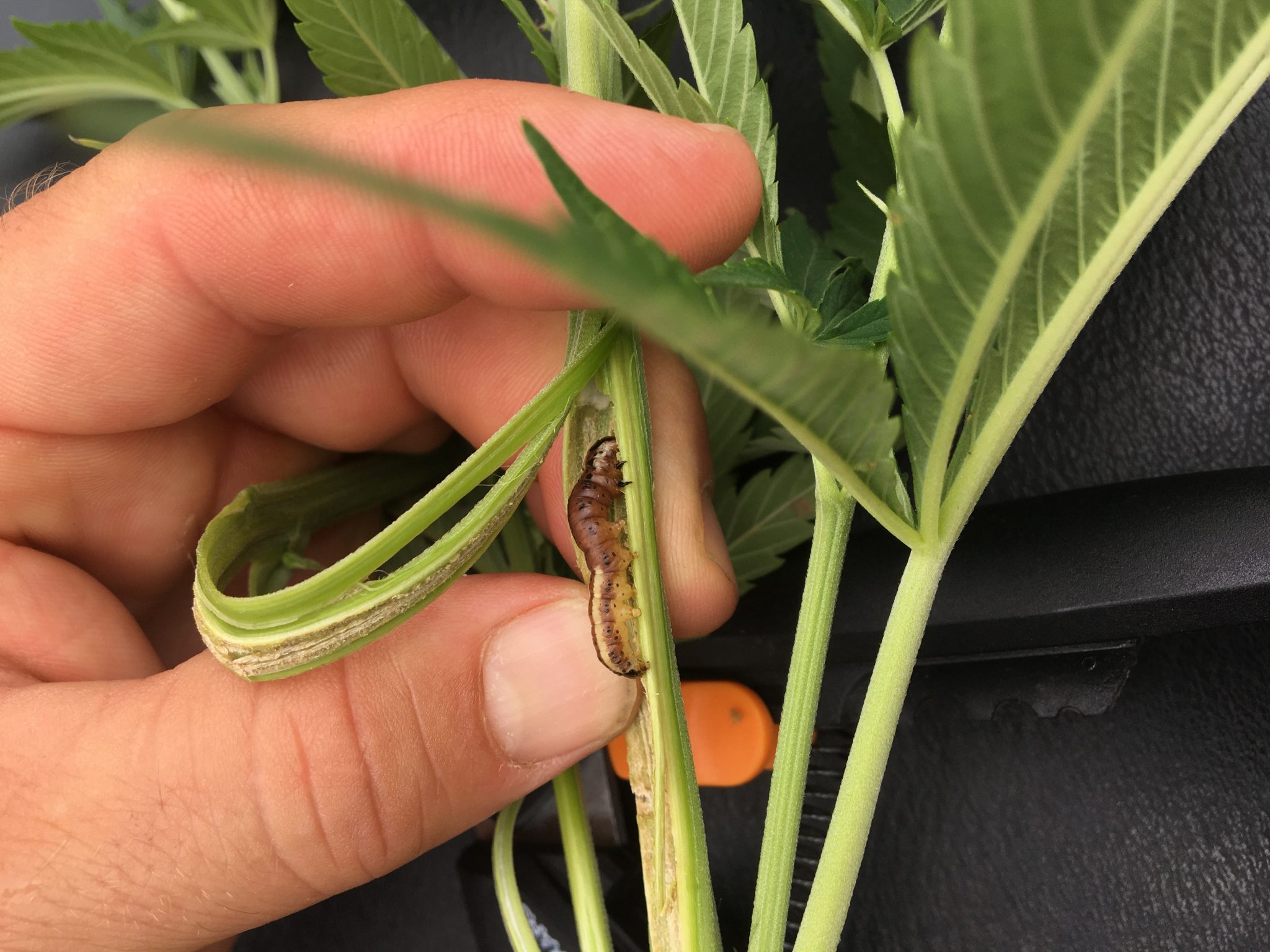
For many hemp growers, things have been calm in the field.
In the last couple of years, we have received multiple calls regarding the control of volunteer corn in Enlist and Xtend soybeans systems.
2020 Western Bean Cutworm Pheromone Trap Report
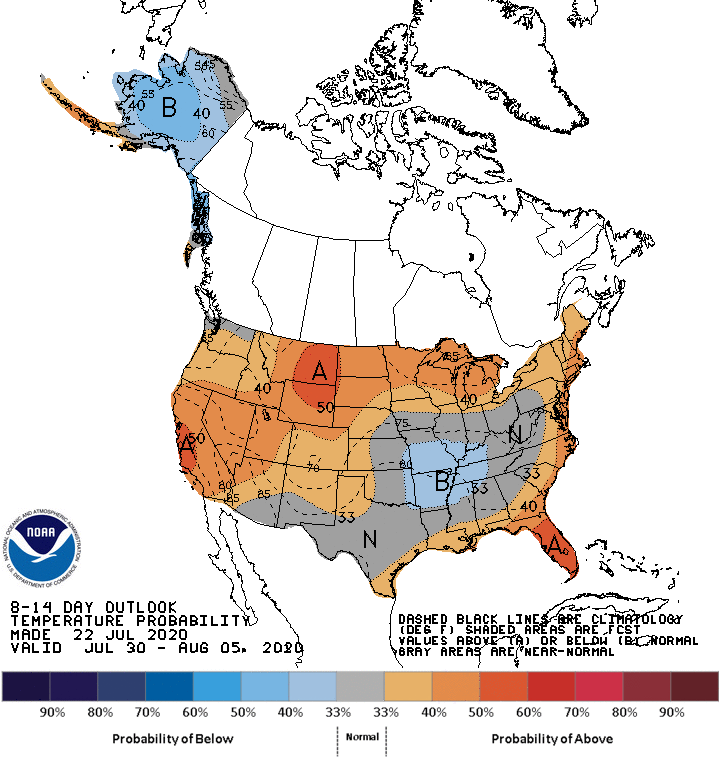
For the first time in what seems like months, the 8-to-14-day climate outlook is not showing significant confidence for above-normal temperatures in Indiana (Figure 1).
© 2026 Purdue University | An equal access/equal opportunity university | Copyright Complaints | Maintained by Pest&Crop newsletter
If you have trouble accessing this page because of a disability, please contact Pest&Crop newsletter at luck@purdue.edu.