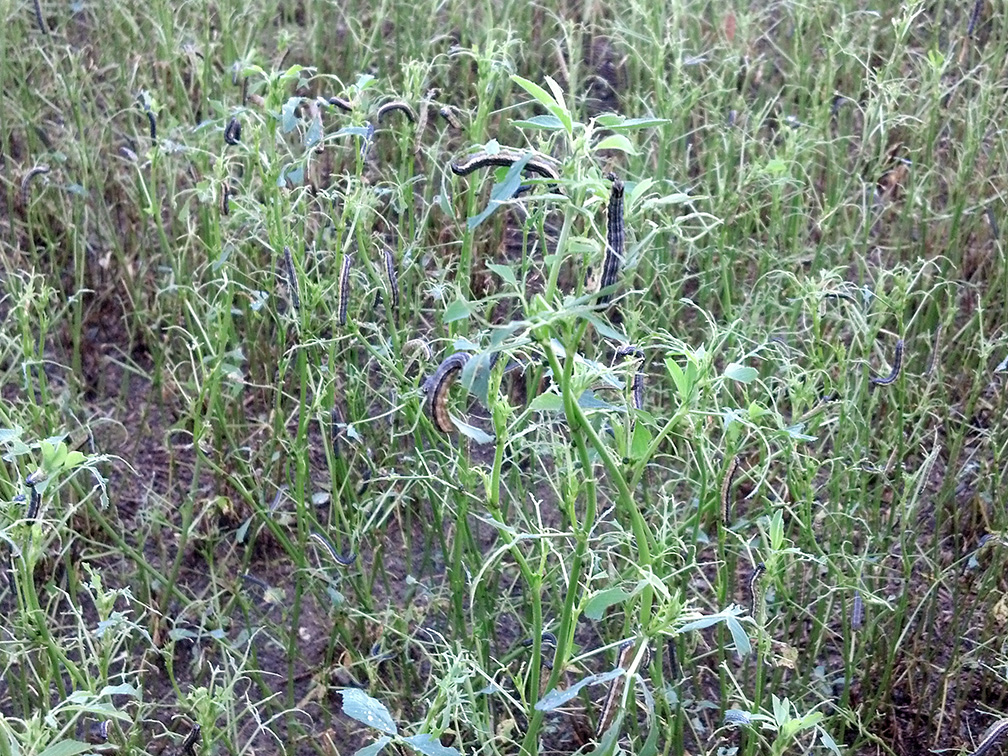
Armyworm has been an occasional, yet unpleasant, surprise throughout this summer to those with grass crops, e.g, corn, orchardgrass, etc. One instance of late planted corn was documented in Pest&Crop 2018.17 (July 27).
Armyworm has been an occasional, yet unpleasant, surprise throughout this summer to those with grass crops, e.g, corn, orchardgrass, etc. One instance of late planted corn was documented in Pest&Crop 2018.17 (July 27).
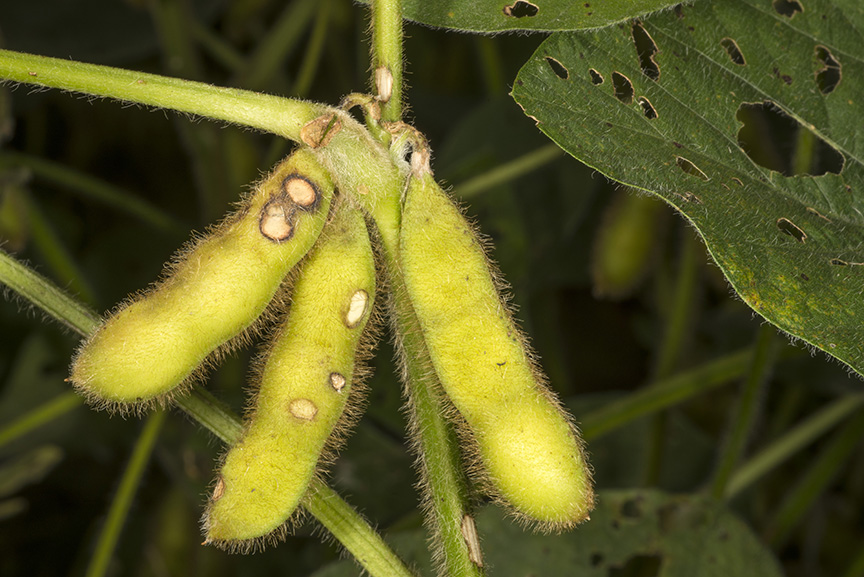
Combines are rolling and wagons of grain are heading for dryers and storage. Already, questions have been received about soybean seed observed to be shrunken and/or discolored.
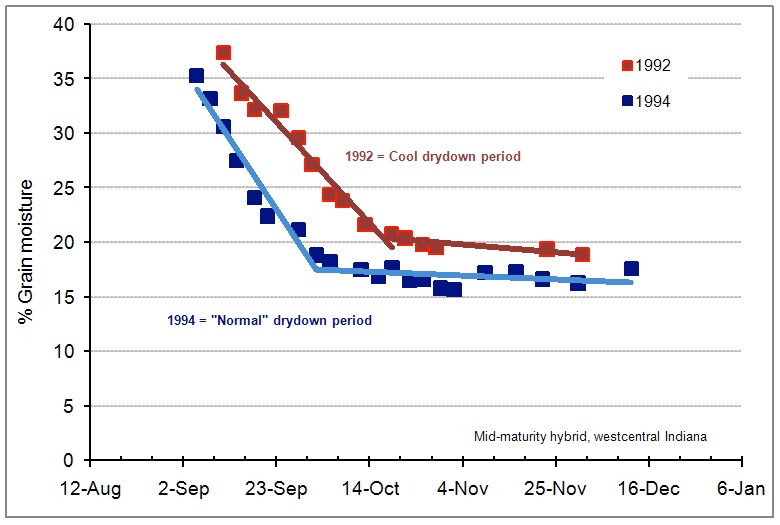
Delayed maturity of corn due to late planting or simply cool growing seasons often translates into delayed or slow drydown of mature corn grain prior to harvest and, consequently, higher than desired grain moisture contents at harvest. Wetter grain at harvest increases the need for artificially drying the grain after harvest which, in turn, increases the growers’ production costs and can delay the progress of harvest itself.
Heavy rains and wind have started to take a toll on corn that has compromised stalks. Many factors can contribute to stalk decline – I am going to focus on the plant pathogenic causes, but note abiotic stresses factors could also play a role such as drought and flooding.
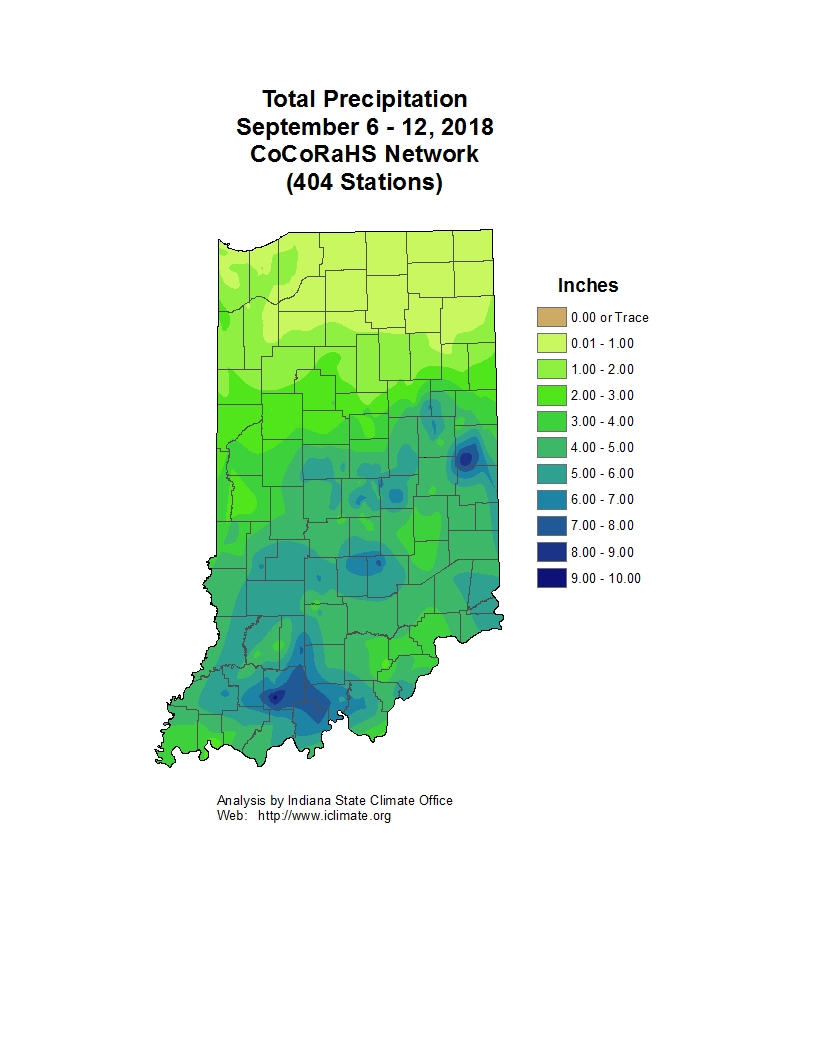
Total Precipitation September 6-12, 2018
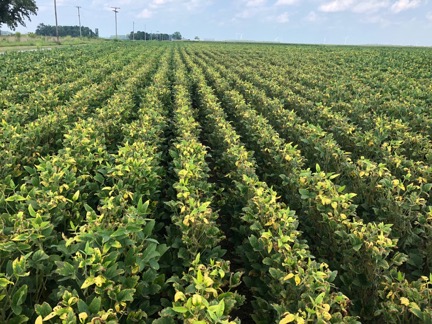
Soybeans in Indiana often show potassium (K) deficiency symptoms during seed fill – leaf margin chlorosis to necrosis.
Corn is often harvested at grain moisture contents higher than the 15% moisture typically desired by grain buyers.
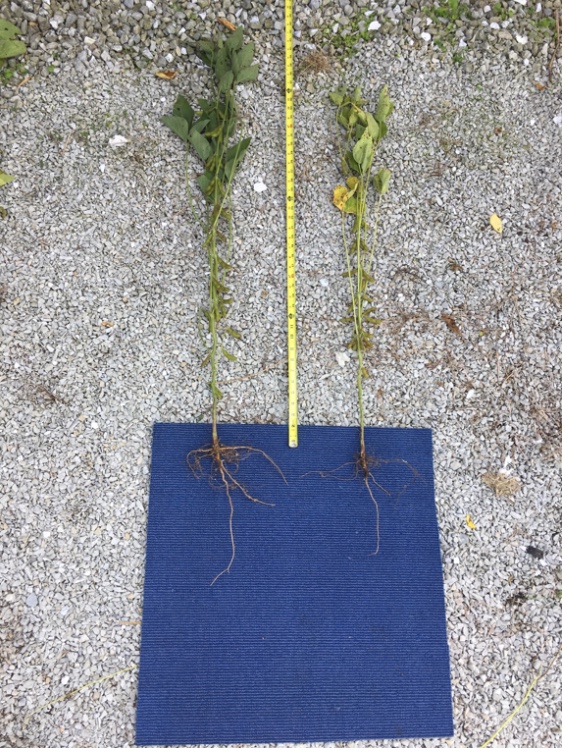
Highlighter green soybeans (N-deficient) are related to the root system, number of nodules, and nodule activity (i.e., evidence of N fixation).
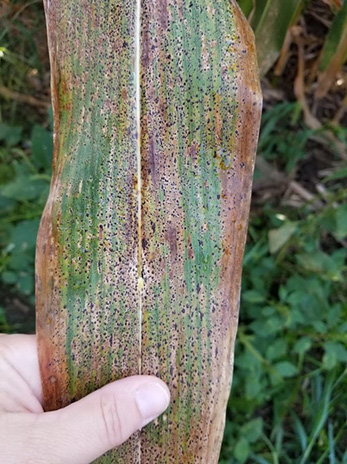
Local epidemics of corn tar spot have growers worried in Indiana about how their corn will finish out the season.
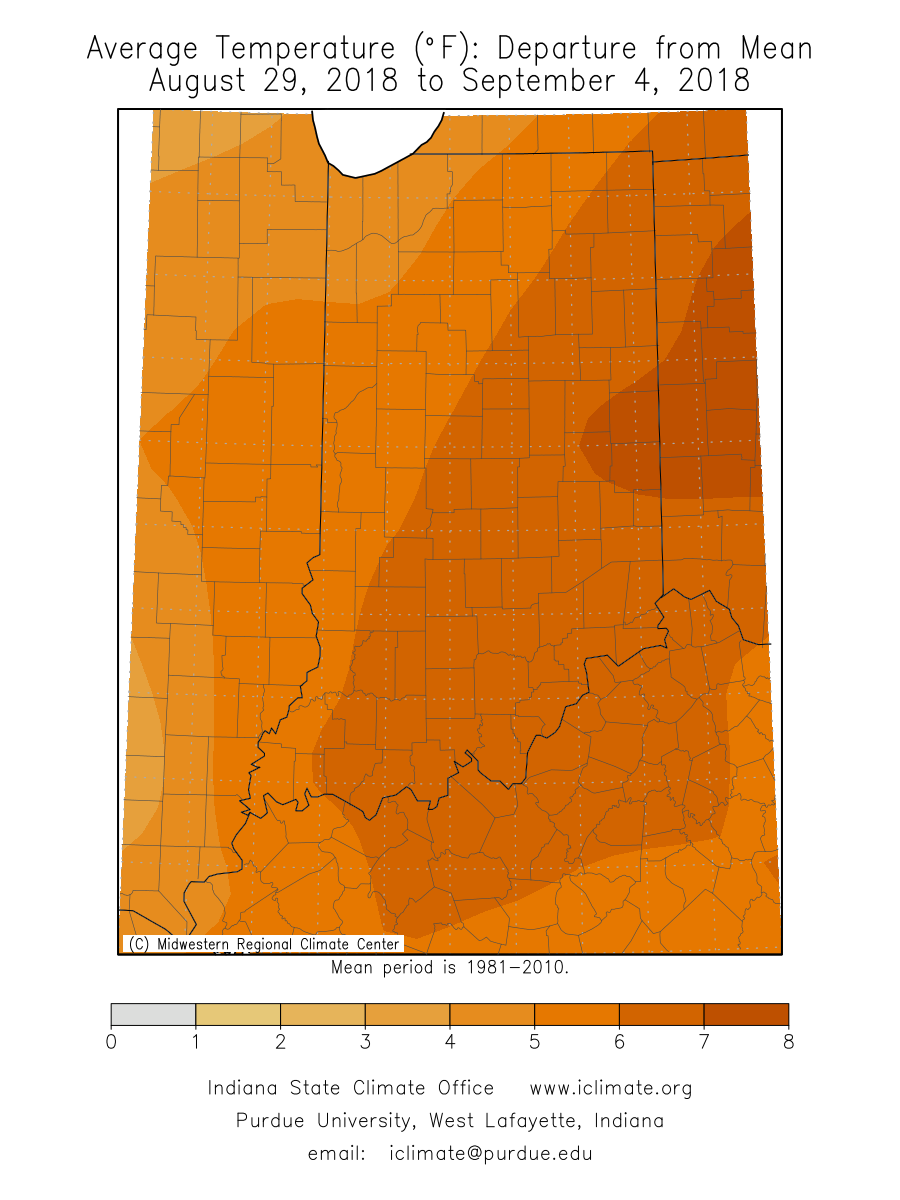
Average Temperature Departure from Mean August 29 to September 4, 2018
© 2026 Purdue University | An equal access/equal opportunity university | Copyright Complaints | Maintained by Pest&Crop newsletter
If you have trouble accessing this page because of a disability, please contact Pest&Crop newsletter at luck@purdue.edu.