2019 Black Cutworm Pheromone Trap Report Form
2019 Black Cutworm Pheromone Trap Report Form
2019 Black Cutworm Pheromone Trap Report Form
2019 Black Cutworm Pheromone Trap Report Form
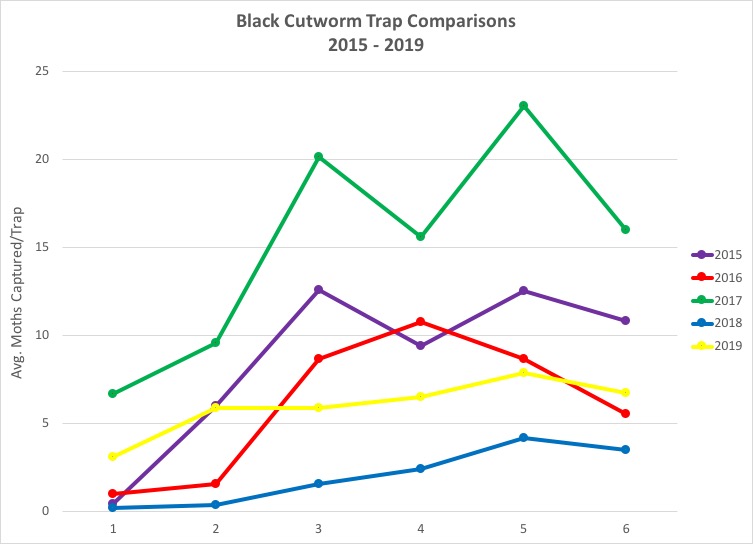
Every spring, dozens of cooperators throughout the state put forth considerable effort in trapping for the arrival and intensity of black cutworm moths.
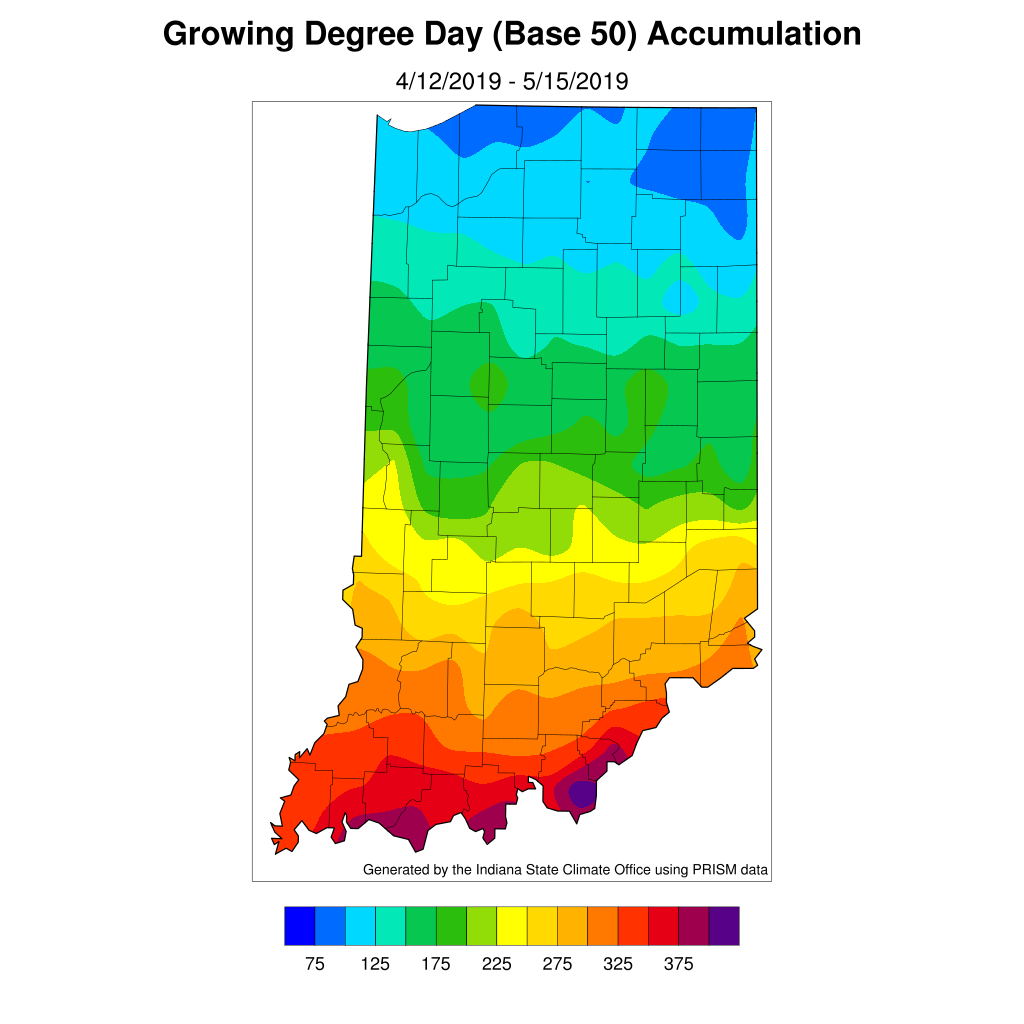
Multiple intensive black cutworm moth captures, 9 or more caught over a 2-night period, around April 12, signaled for us to begin tracking heat units (Base 50), see “Black Cutworm Pheromone Trap Report.”
Dr. Jocelyn Smith and Art Schaafsma at the Ridgetown campus of the University of Guelph recently reported a new and unexpected development in the resistance to Bt saga – this time it happened all the way out in the Maritime Corn Belt (MCB), in Nova Scotia, a province in Eastern Canada.
Suitability of the soil moisture and whether a field is “fit” for field work and planting is partially “in the eyes of the beholder”, but is also subject to the “laws of relativity” and calendar date. Use your best judgement.
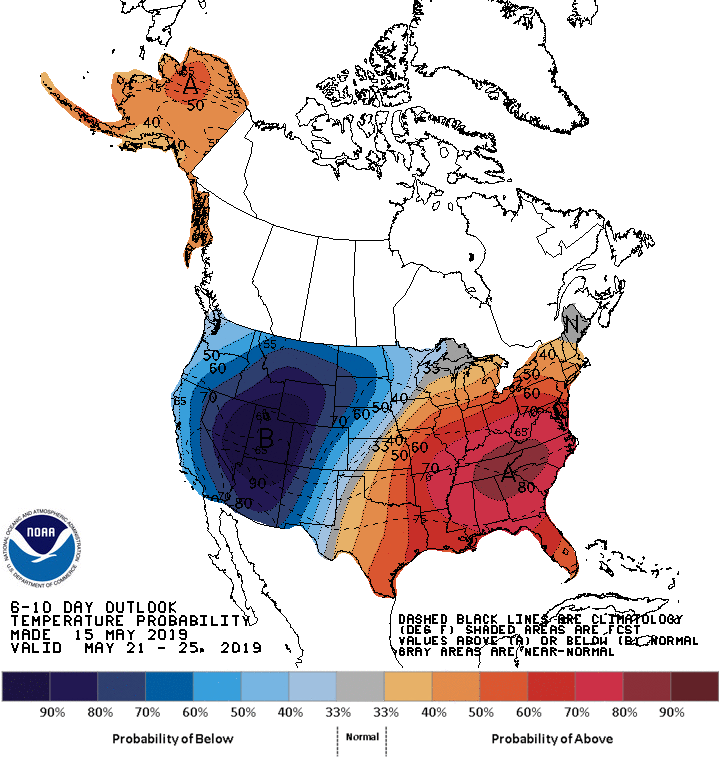
Near term, Sunday looks like the next most likely precipitation event around the state. The active pattern seems to continue, with chances of rain continuing about every 3-4 days. Meanwhile, temperatures begin to trend more summer-like, with 80 degree days coming statewide, and likelihood for above average temperatures in the 6-10 day outlook high (see map, cpc.ncep.noaa.gov). Important to note: high temperatures and excessive moisture favor many different kinds of disease and insect development. Scout any crops that have been planted for disease development or infestation and act accordingly. Contact your local Purdue Extension office for help in identifying problems or economic thresholds for treatment.
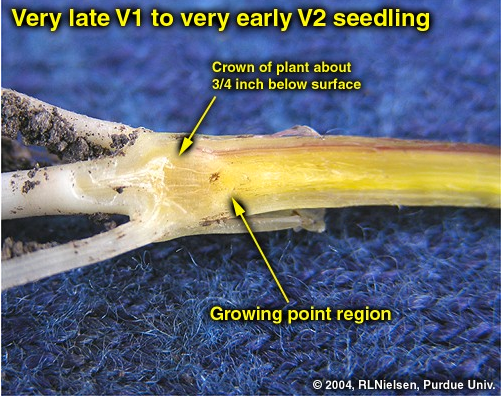
Recovery from early season damage to corn is strongly dependent on the health of the main (apical) growing point region following the damage.
Our rainy wet weather conditions have certainly caused a lot of delays in field operations this spring. One of these challenges we face in a spring like this one is the process of getting crops terminated and summer annual crops like corn and soybean planted in fields where cover crops have grown somewhat large.
© 2026 Purdue University | An equal access/equal opportunity university | Copyright Complaints | Maintained by Pest&Crop newsletter
If you have trouble accessing this page because of a disability, please contact Pest&Crop newsletter at luck@purdue.edu.