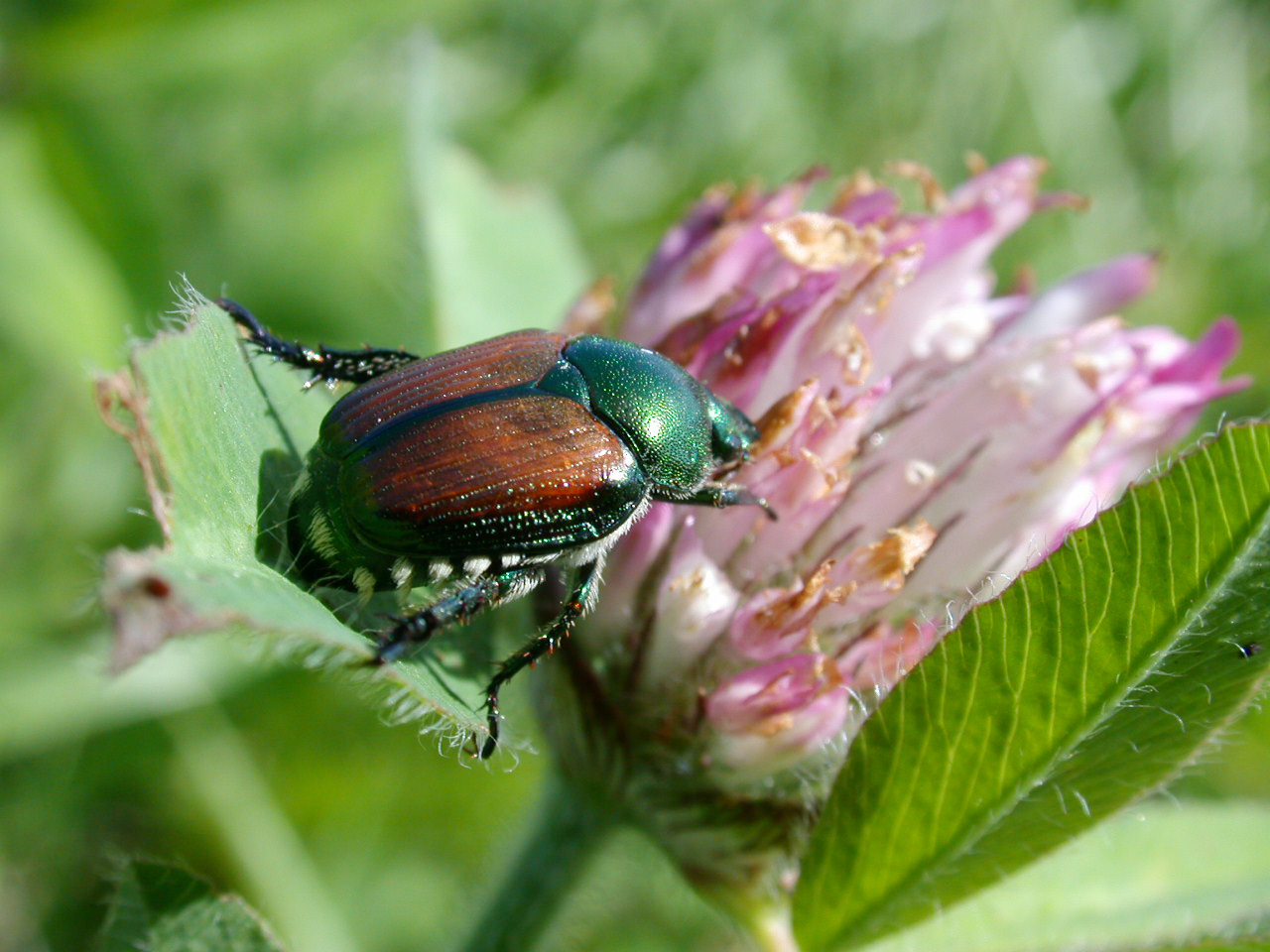
Locally, we found Japanese beetle adults on Monday, June 11, in field crops and flying around campus. This is certainly earlier than normal, as we typically think of them emerging more toward the end of June.
Locally, we found Japanese beetle adults on Monday, June 11, in field crops and flying around campus. This is certainly earlier than normal, as we typically think of them emerging more toward the end of June.
After a delayed start to our planting season, we were able to plant both corn and soybean across the state in record or near-record time during May. This coincided with our hottest May on record, which was also dry in many areas of the state.
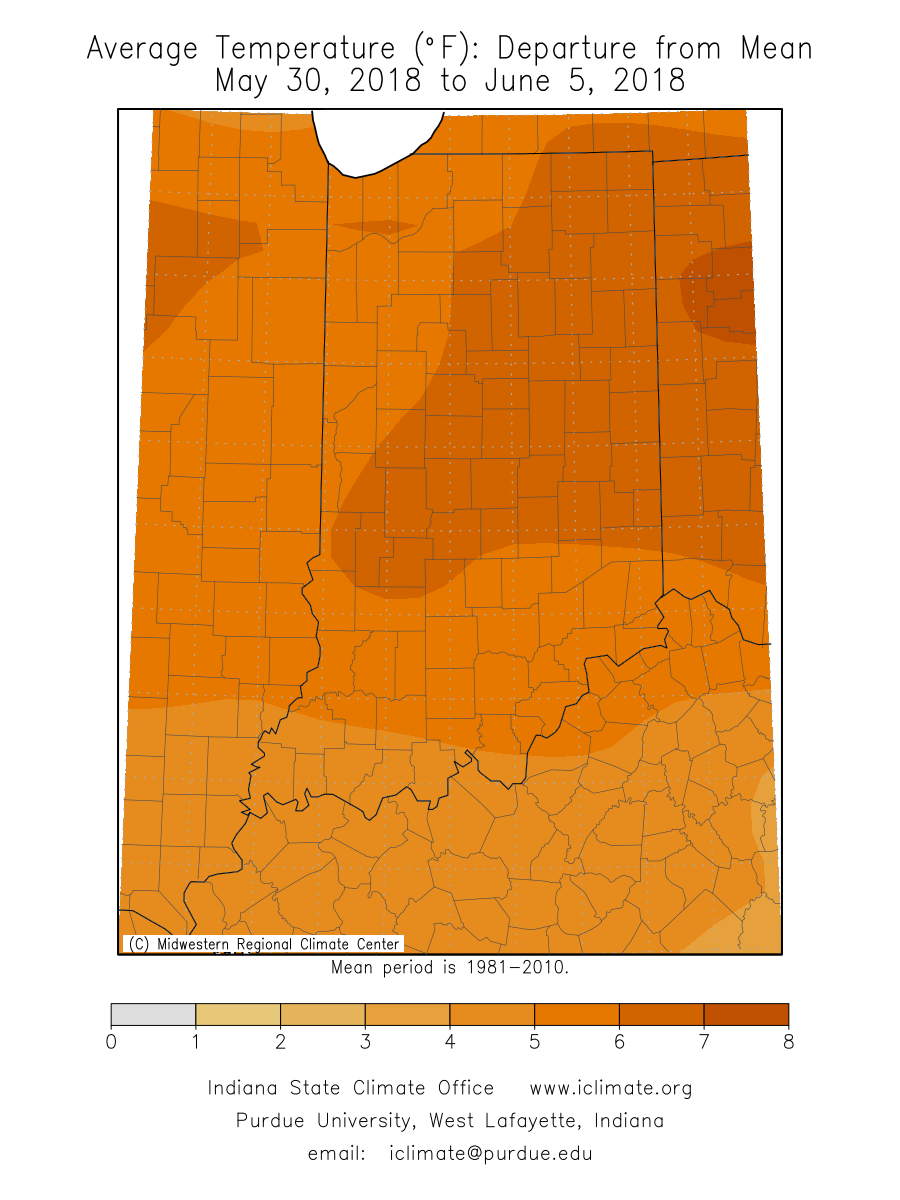
Average Temperature Departure from Mean May 30-June 5, 2018
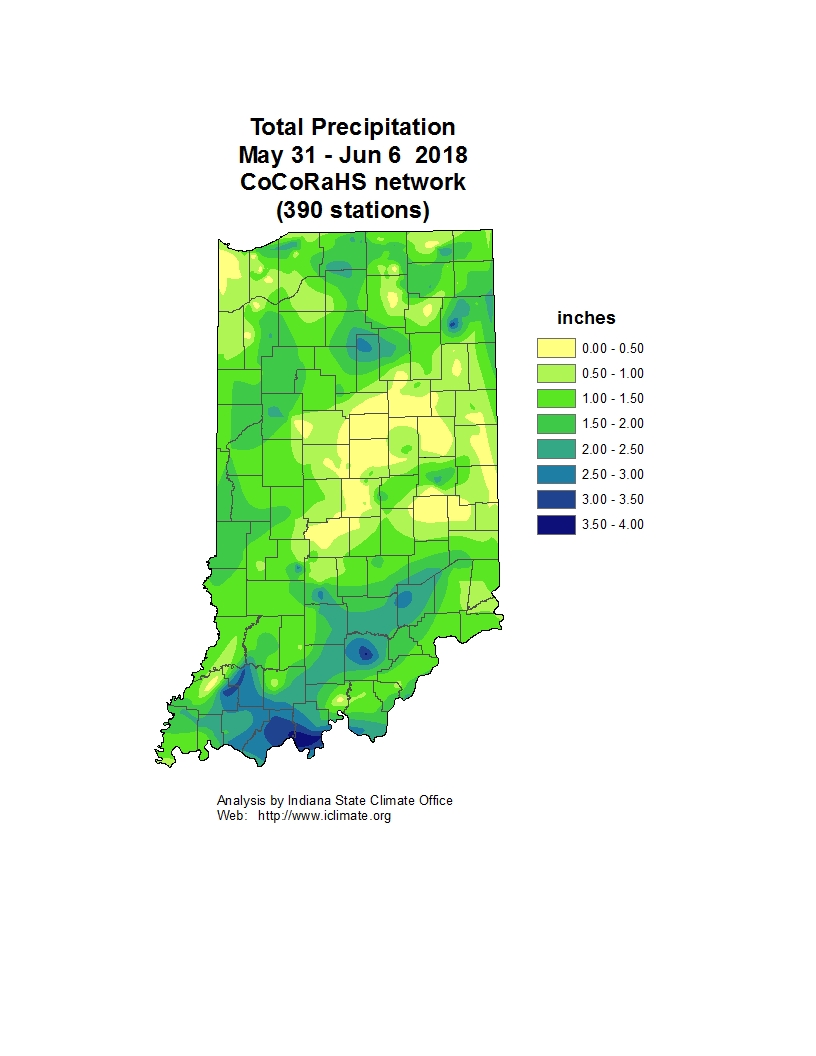
Total Precipitation May 31-June 6, 2018.
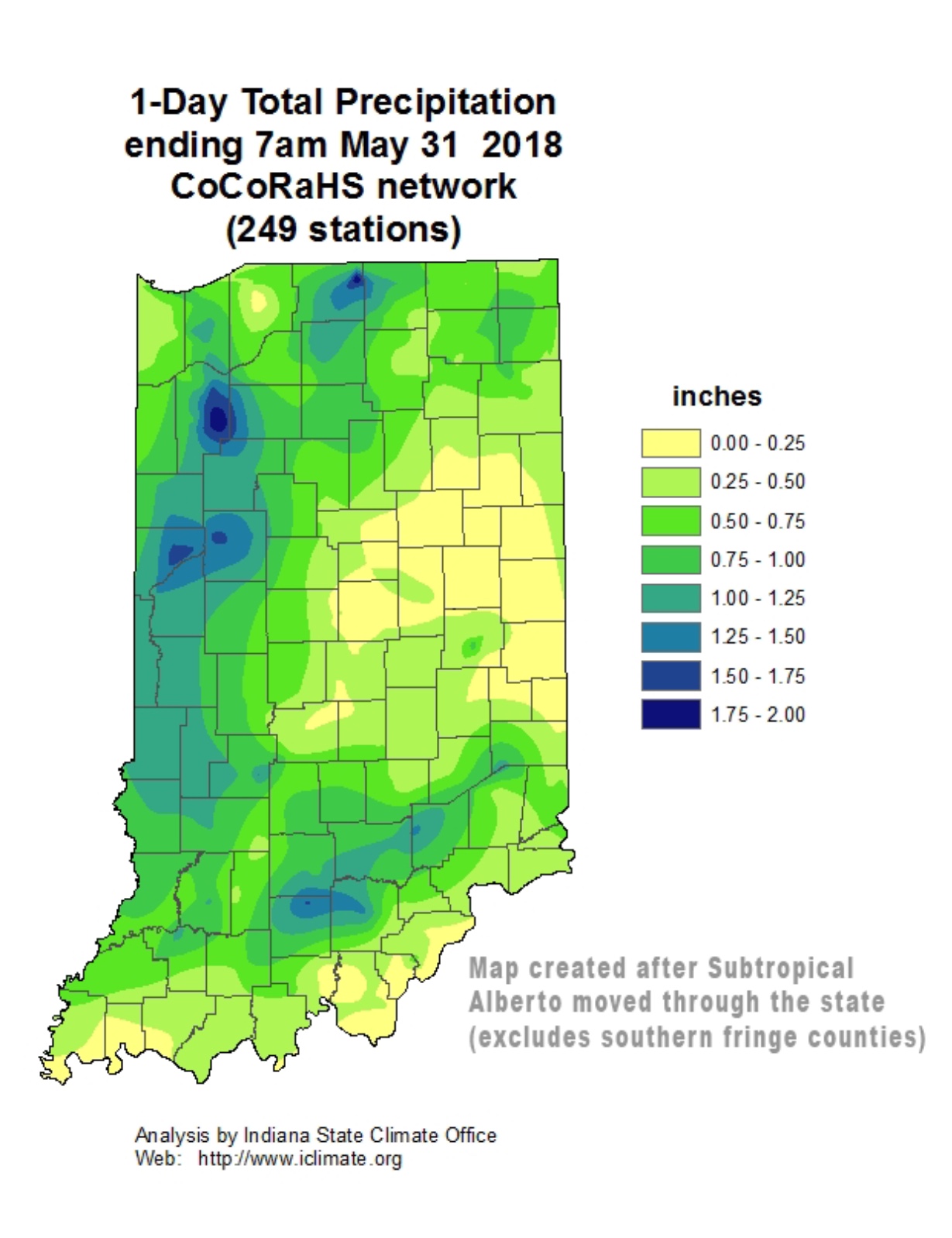
1-Day Total Precipitation Ending 7 AM May 31
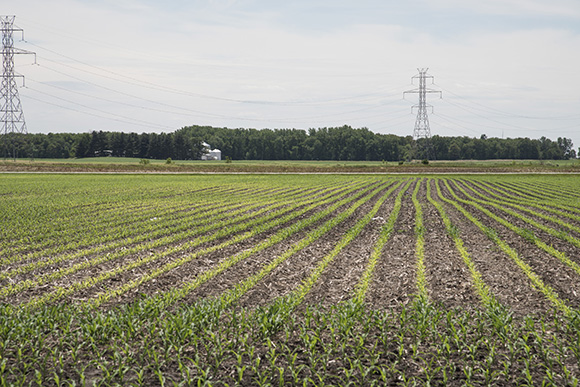
Now that cleaner air has reduced the amount of sulfur acquired by plants and soil from rainfall or adsorbed directly from the air, sulfur deficiency of crops appears to be increasing.
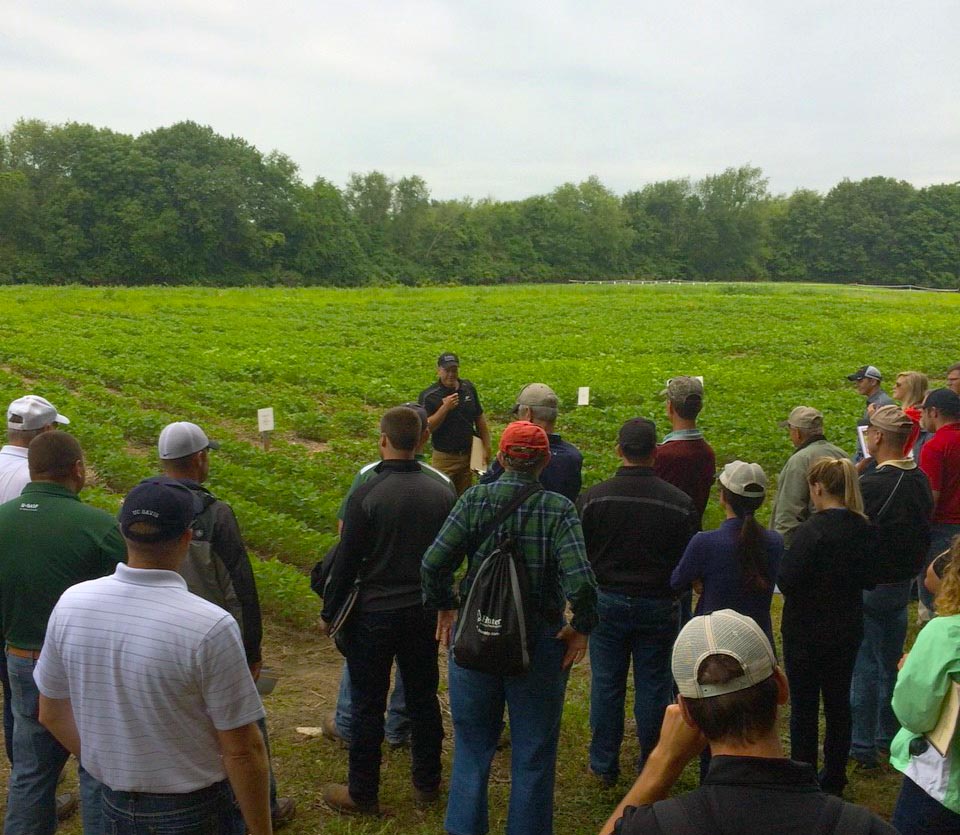
The Purdue Weed Science team is hosting an educational field day for farmers, agricultural industry professionals, Extension educators, consultants and others who apply herbicides.
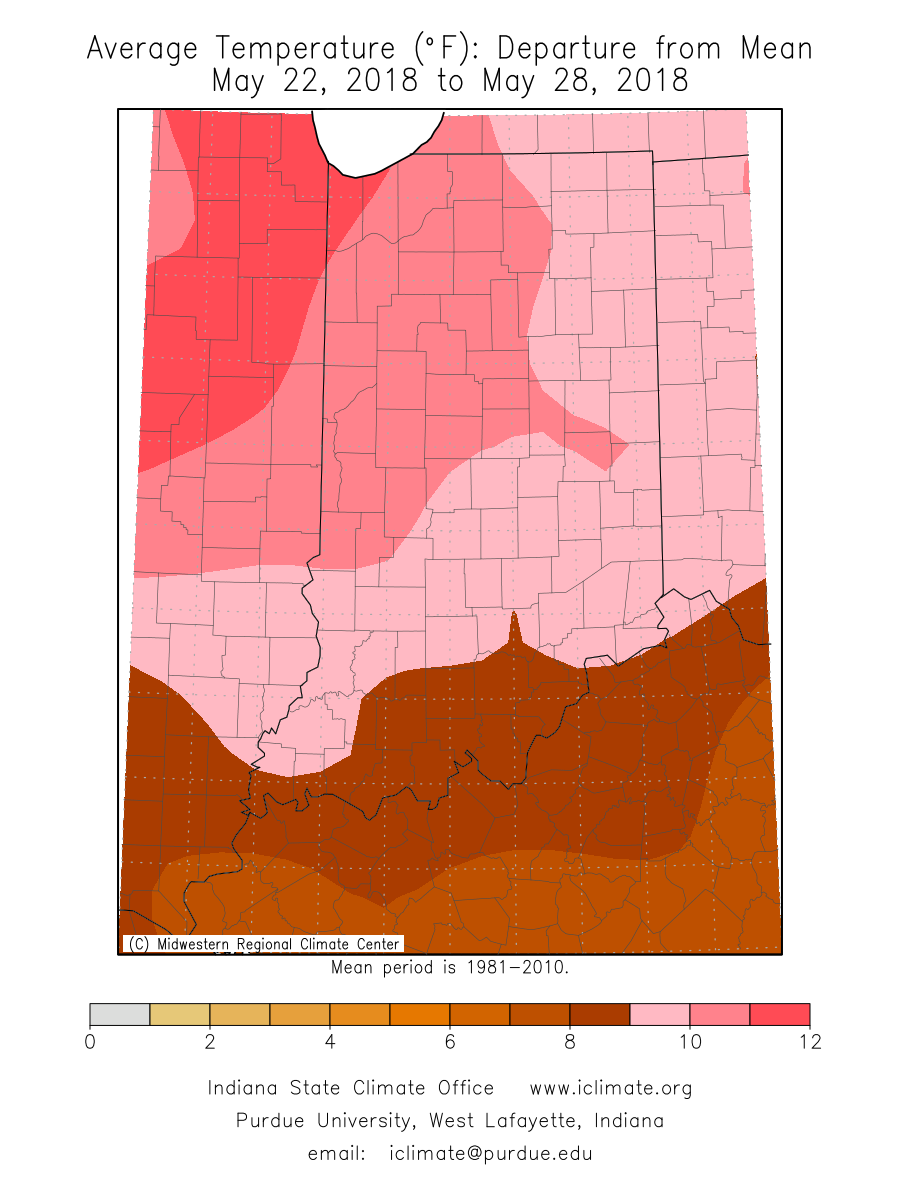
Average Temperature Departure from Mean May 22-28
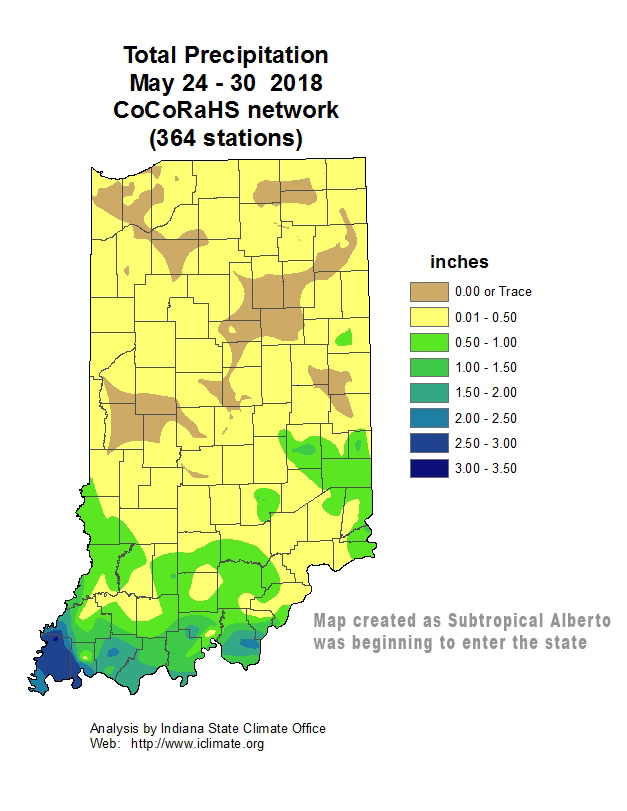
Total Precipitation May 24-30, 2018
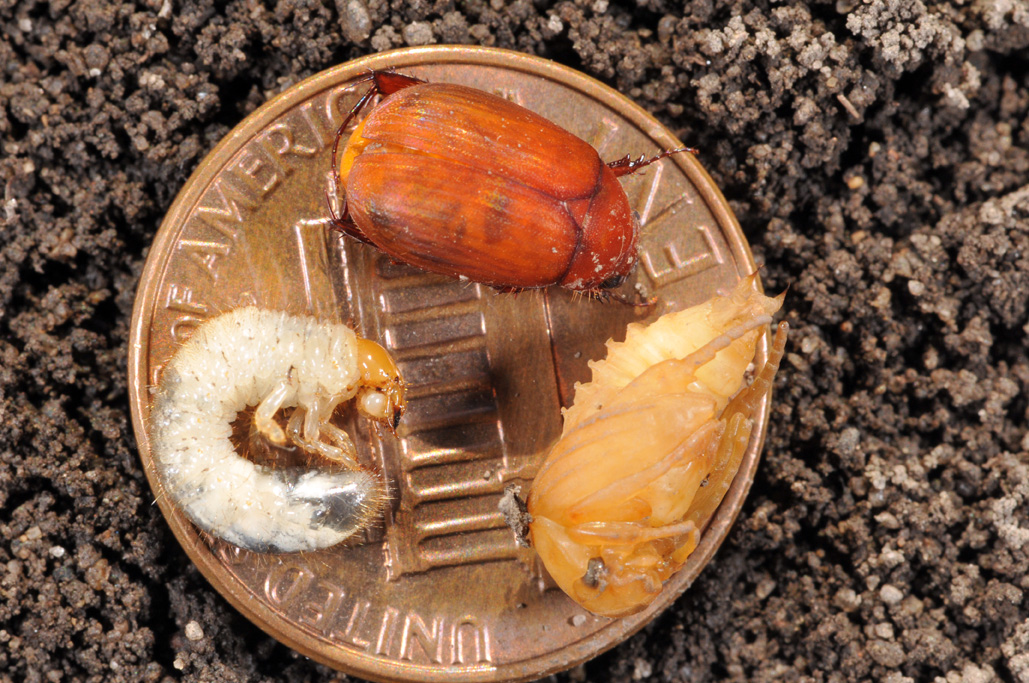
Grubs of the Asiatic garden beetle have been recently found damaging corn seedlings in northern Indiana counties.
© 2026 Purdue University | An equal access/equal opportunity university | Copyright Complaints | Maintained by Pest&Crop newsletter
If you have trouble accessing this page because of a disability, please contact Pest&Crop newsletter at luck@purdue.edu.