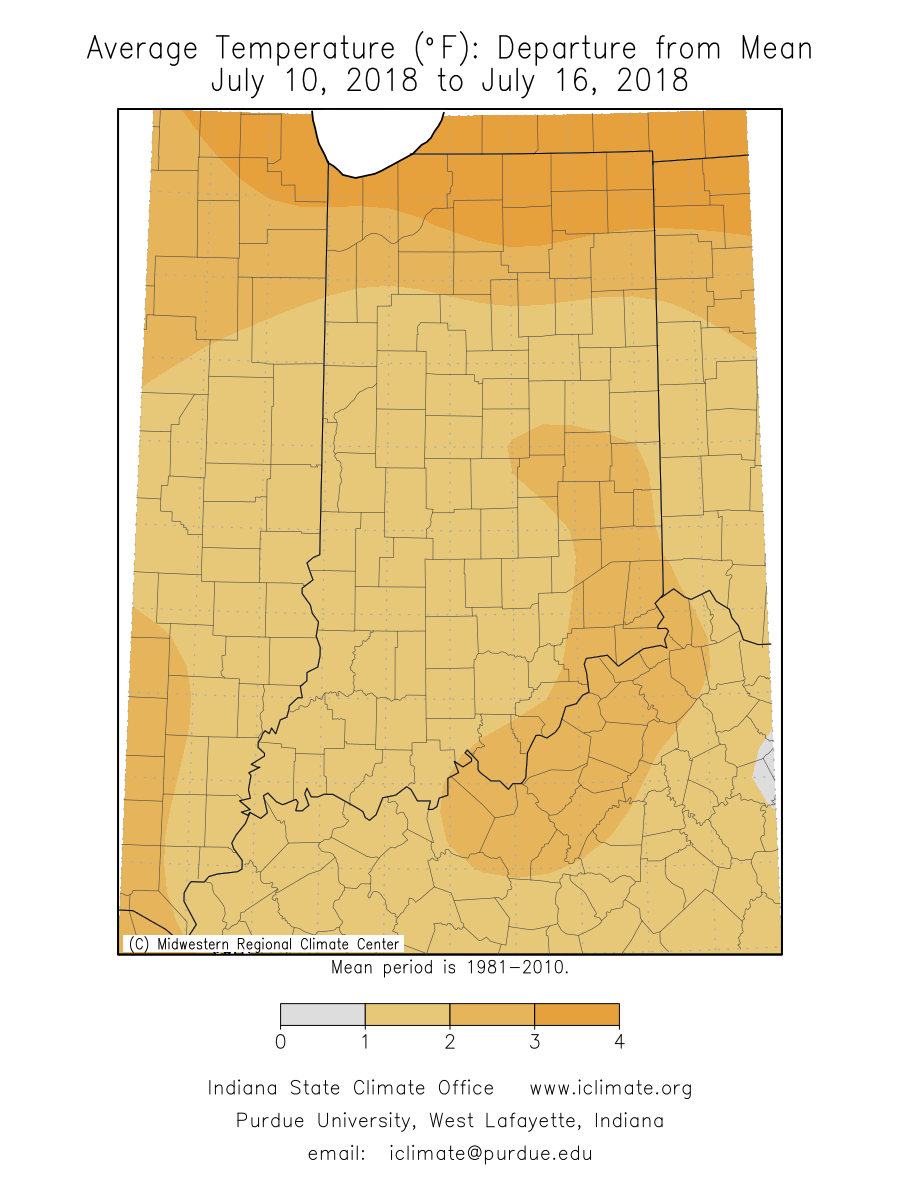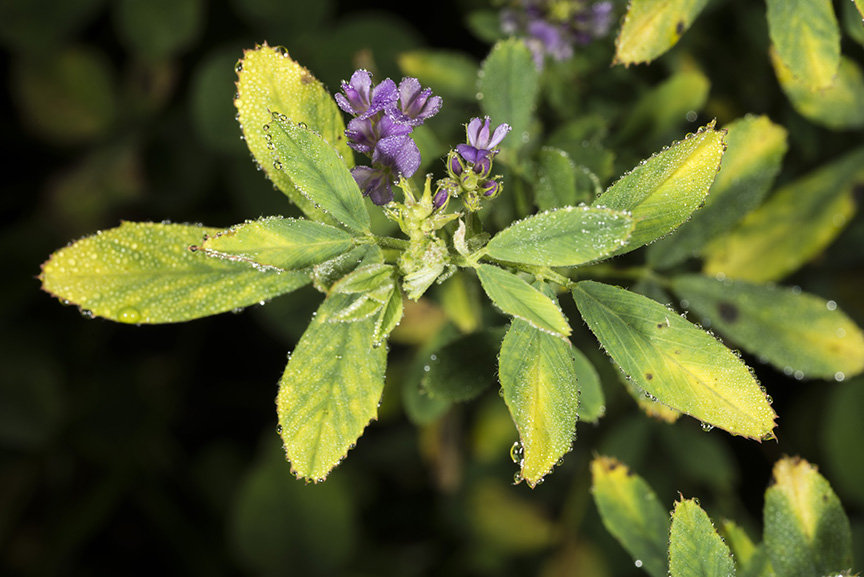
Populations of potato leafhopper continue to plague alfalfa fields throughout the state. Undoubtedly, the extended warm temperatures have contributed to this population explosion.

Populations of potato leafhopper continue to plague alfalfa fields throughout the state. Undoubtedly, the extended warm temperatures have contributed to this population explosion.

The western bean cutworm (WBC) trapping season continues, and after a slow start, moth flights have surged in many northern Indiana county traps this past week.

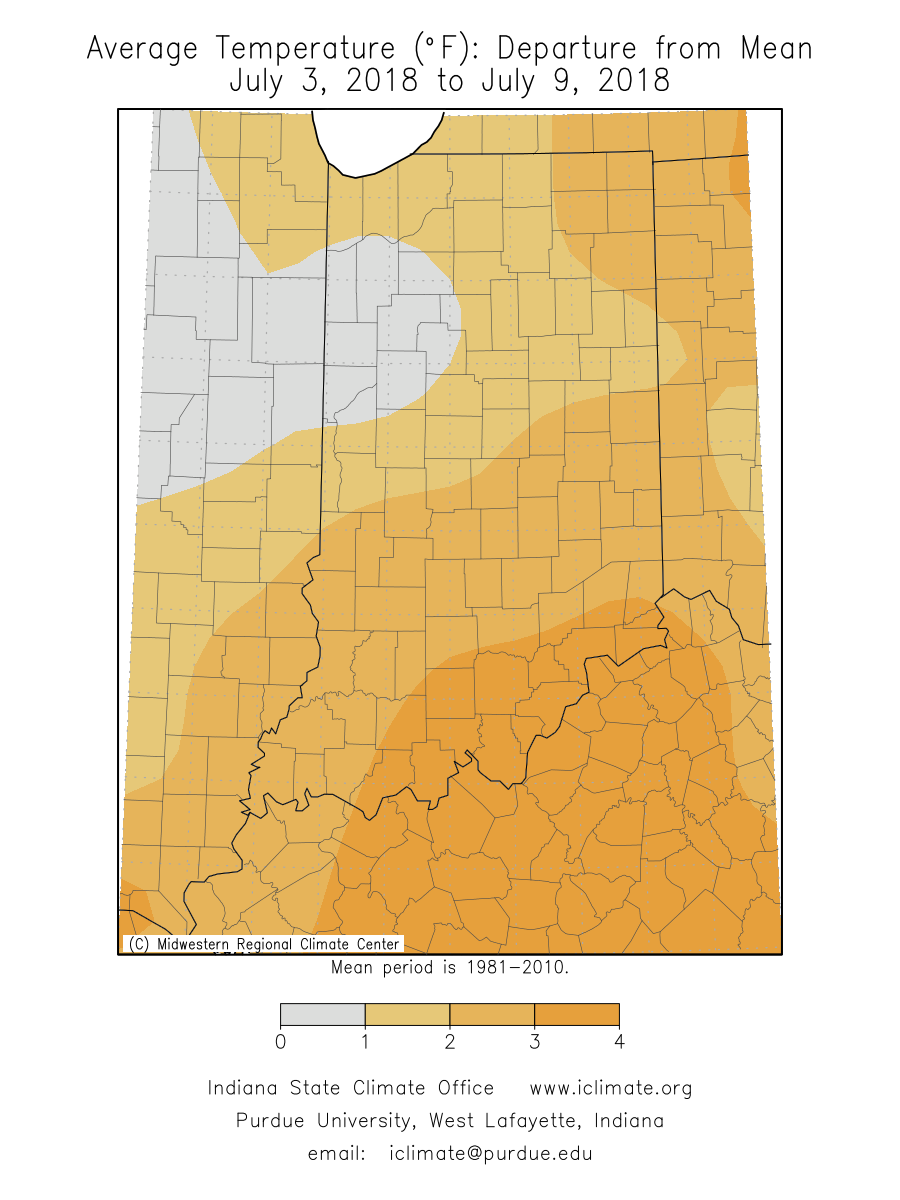
Average Temperature Departure from Mean July 3-9, 2018

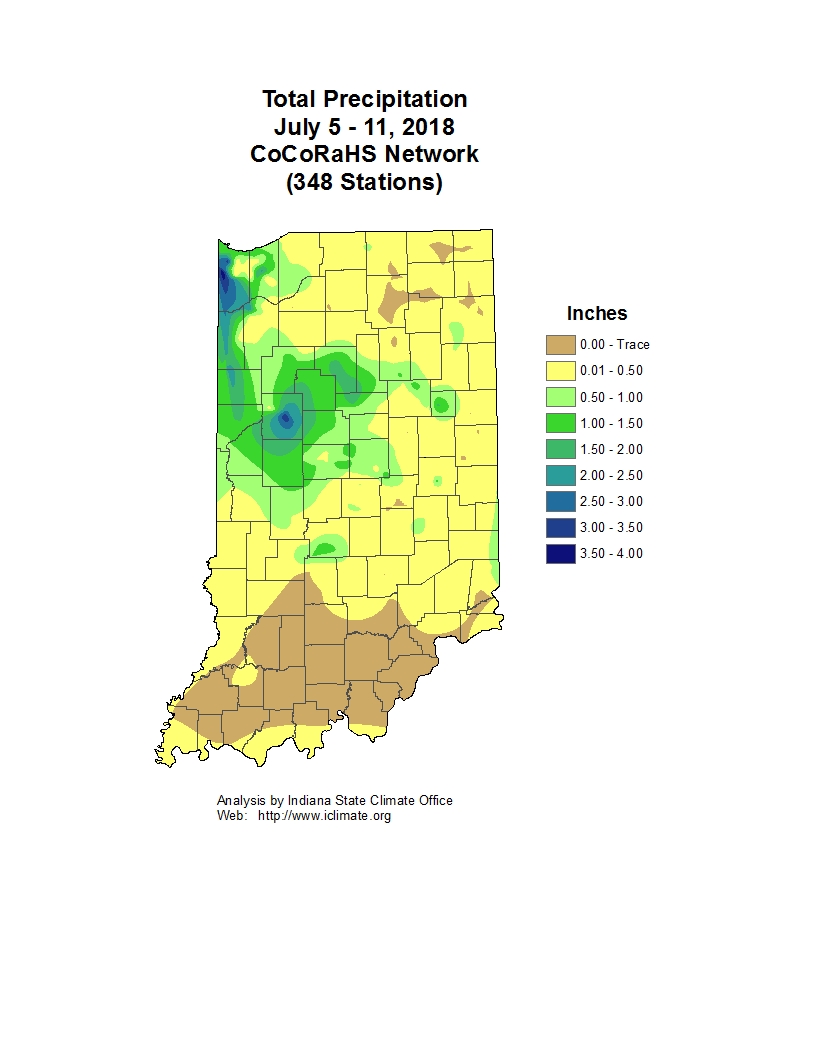
Total Precipitation July 5-11, 2018.

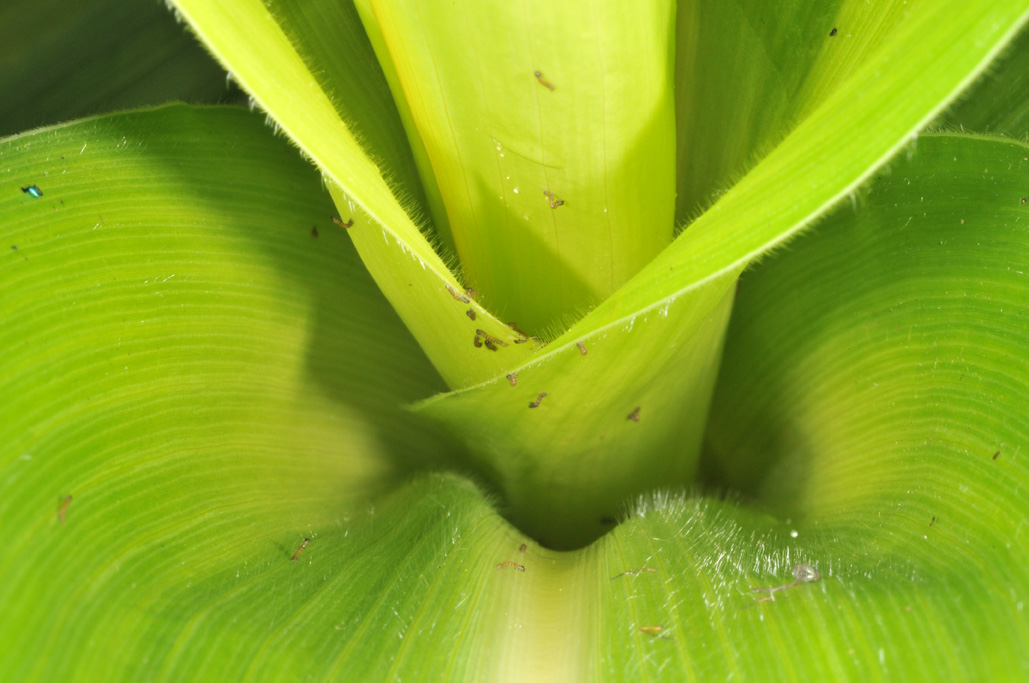
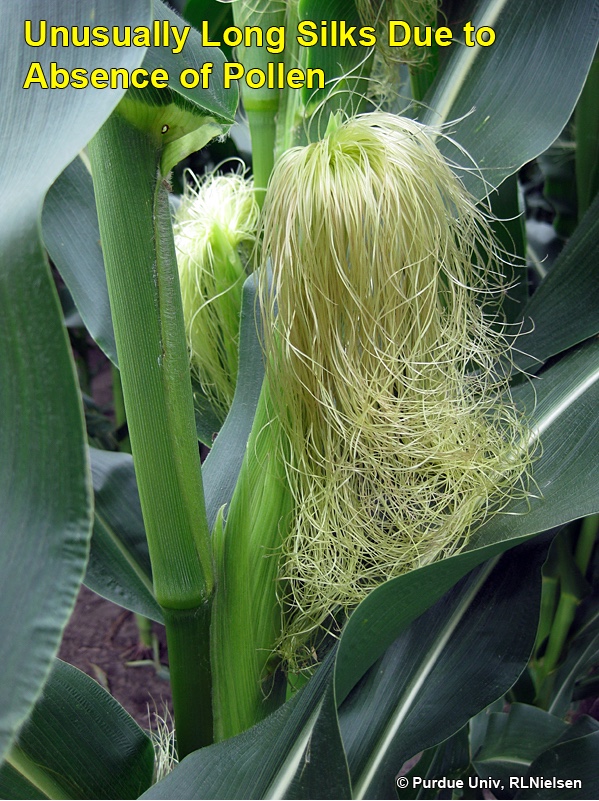
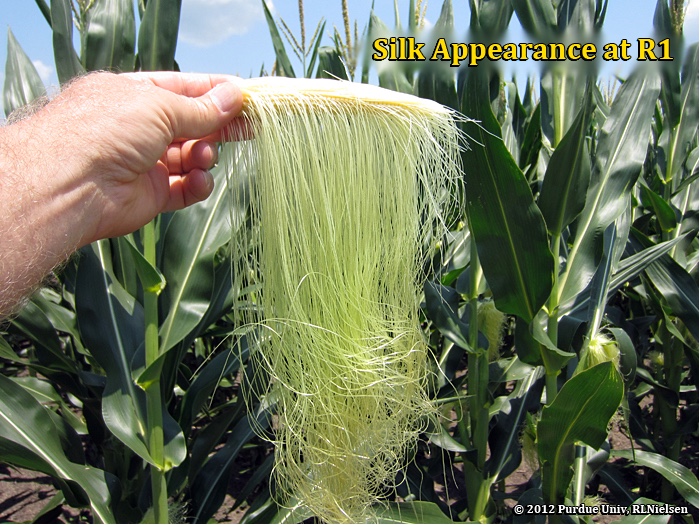
The other day, one of the patrons of Rudy’s Bar and Grill walks in with an ear of corn that exhibited long, flowing locks of blonde silks tumbling down the sides of the husk leaves and asked two questions: “Why are the silks so long?” and “Do such long silks bode ill for the success of corn pollination?”
As most of you are aware, we are monitoring the dicamba and Xtend soybean situation fairly closely. There have been a number of articles in the press recently regarding drift complaints and acreage affected in other states.
Most of our pheromone trappers got their report in during this Independence Day holiday, see “Western Bean Cutworm Pheromone Trap Report.”

Frustrations have been expressed about the numbers of Japanese beetles and their soybean defoliation this season. This compounds the weather woes that soybean has endured, i.e., too wet, too dry, too hot, yellowing from nutrient deficiencies, and the herbicides seemingly torching them.

Average Temperature Departure from Mean June 27 – July 3, 2018

Total Precipitation June 28 – July 4, 2018
© 2026 Purdue University | An equal access/equal opportunity university | Copyright Complaints | Maintained by Pest&Crop newsletter
If you have trouble accessing this page because of a disability, please contact Pest&Crop newsletter at luck@purdue.edu.