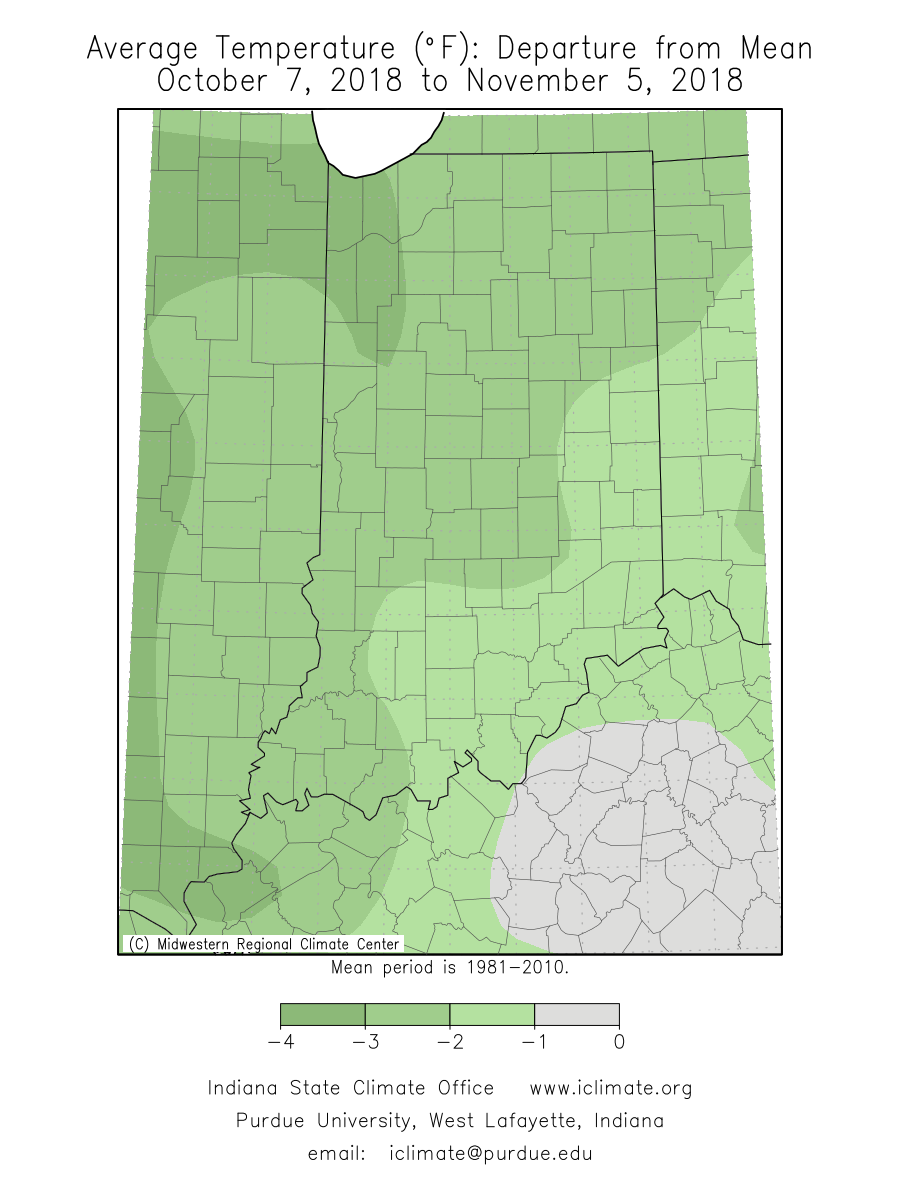
https://extension.entm.purdue.edu/newsletters/pestandcrop/wp-content/uploads/sites/2/2018/11/TempDepartOct7_Nov5.png
https://extension.entm.purdue.edu/newsletters/pestandcrop/wp-content/uploads/sites/2/2018/11/TempDepartOct7_Nov5.png
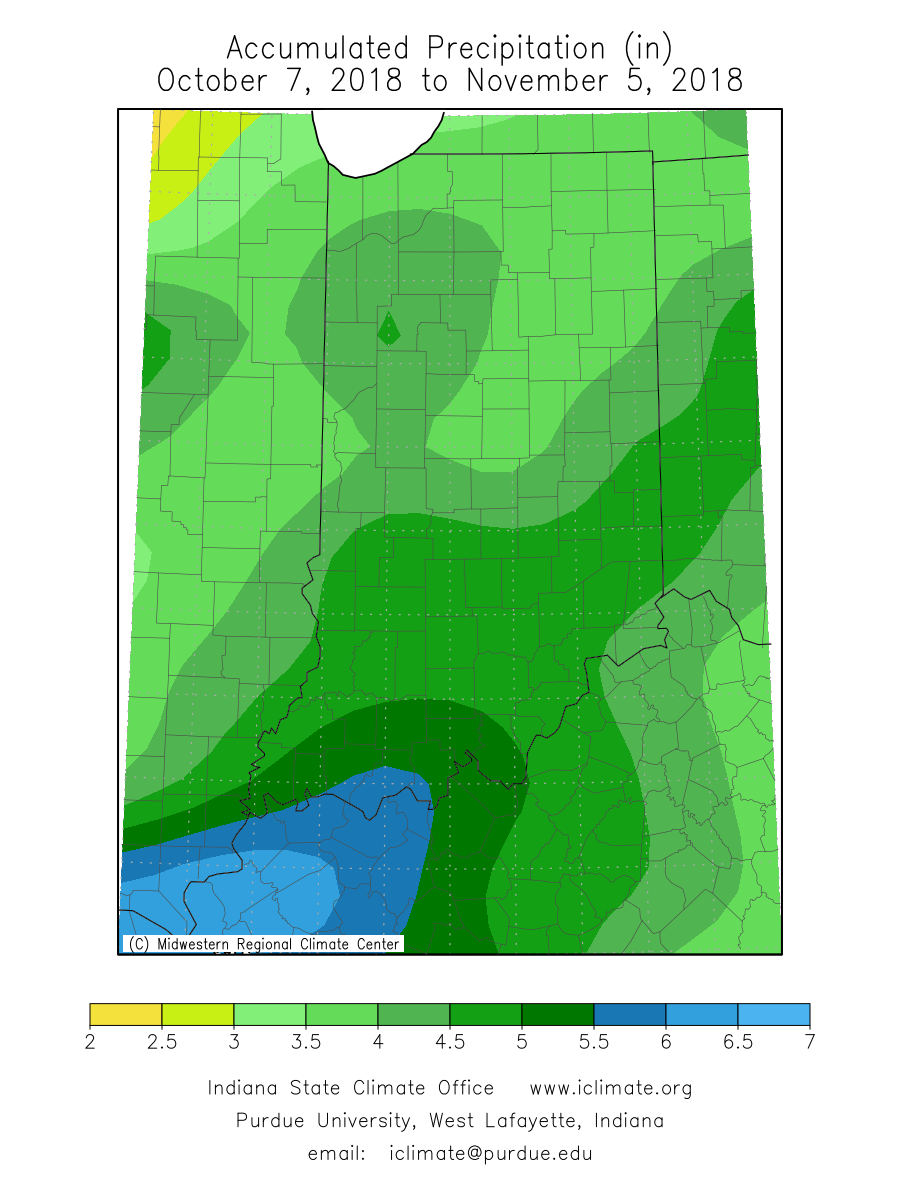
Accumulated Precipitation Oct. 7-Nov. 5, 2018
Ohio, Indiana, and Illinois are heavily infested with weeds resistant to glyphosate (group 9), PPO inhibitors (group 14), and ALS inhibitors (group 2). This has greatly reduced the number of effective postemergence herbicides for controlling these weeds in Roundup Ready 2 (RR2) soybeans.
On October 31st, the EPA approved revised labels for Xtendimax, Engenia, and FeXapan for the 2019 and 2020 growing seasons. The labels will expire in December of 2020.
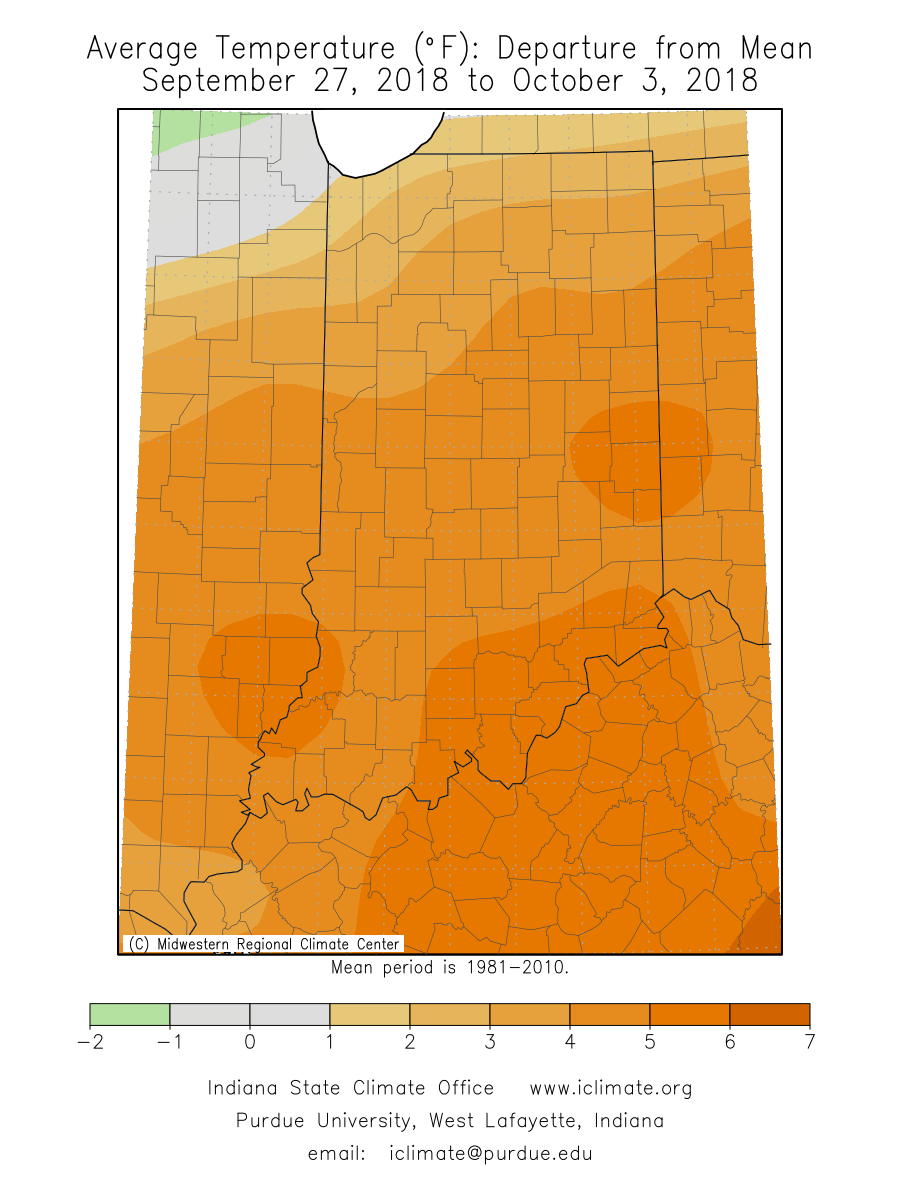
Average Temperature from Mean September 27-October 3, 2018
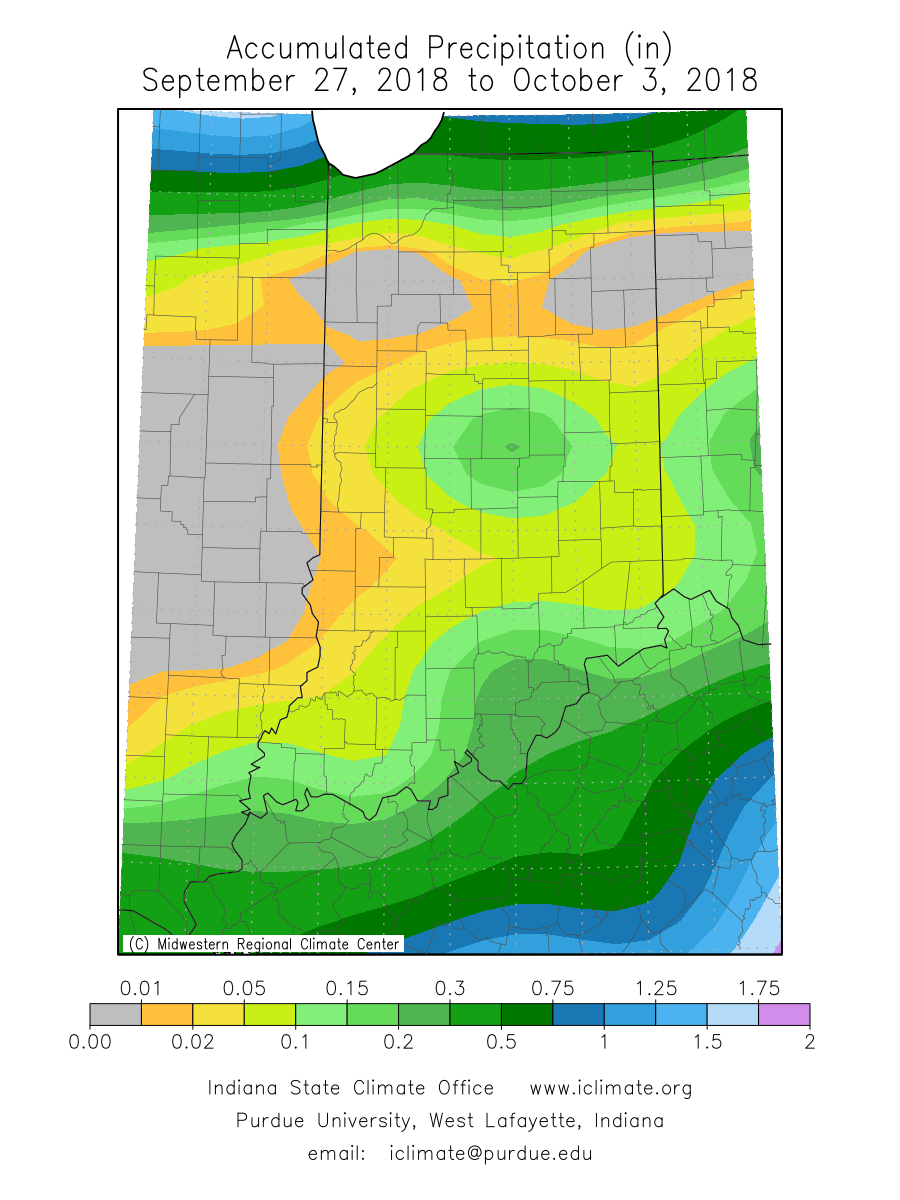
Accumulated Precipitation September 27-October 3, 2018
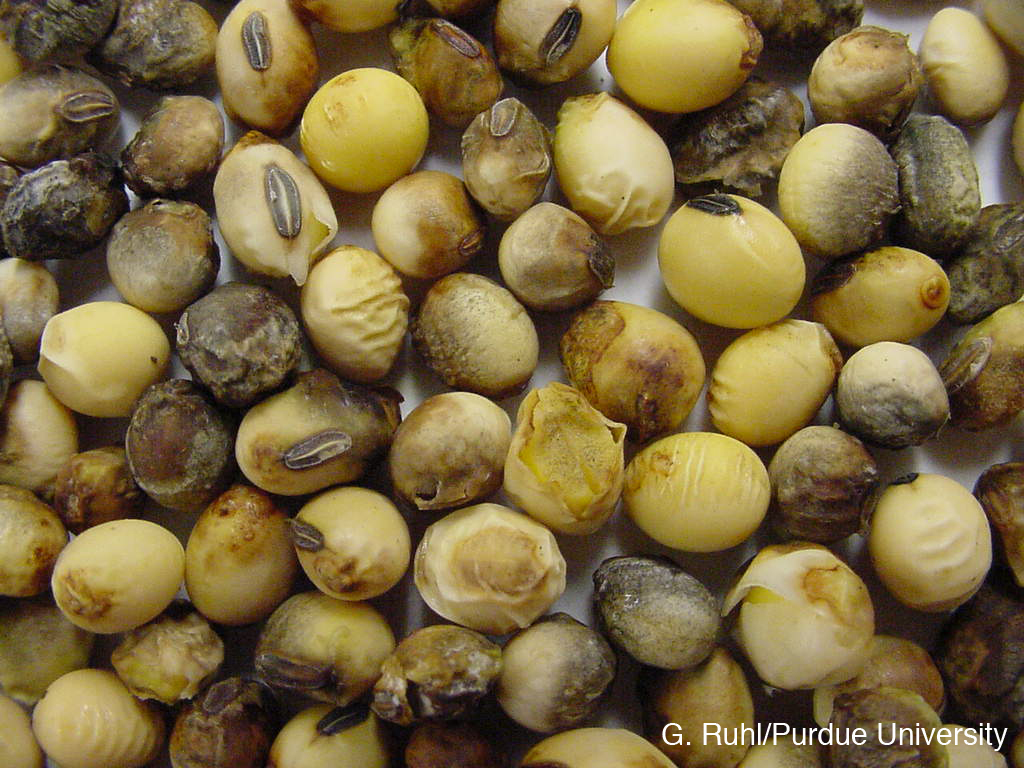
There are a number of fungal soybean diseases that can greatly impact seed quality.
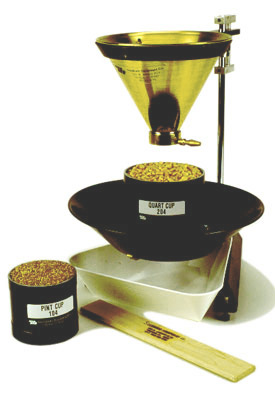
Among the top 10 most discussed (and cussed) topics at the Chat ‘n Chew Cafe during corn harvest season is the grain test weight being reported from corn fields in the neighborhood.
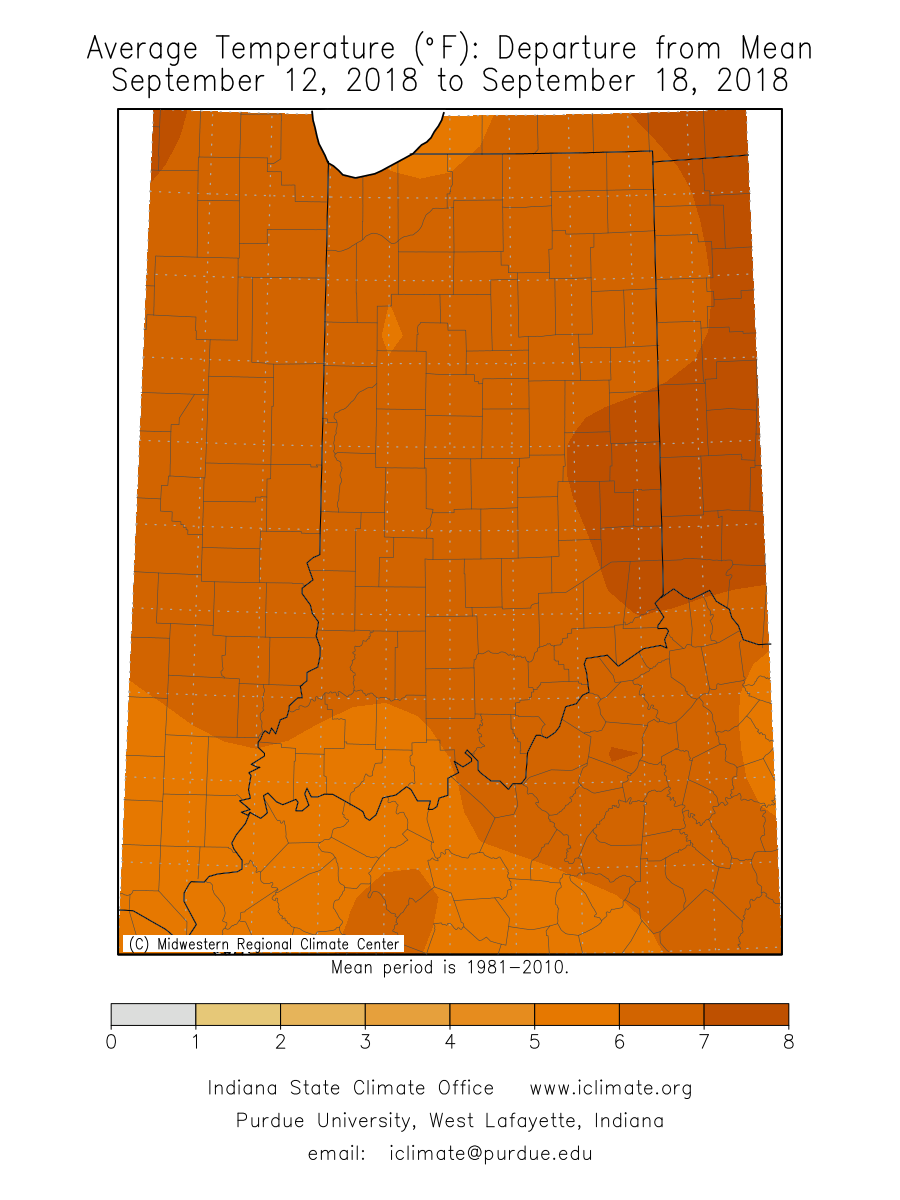
Average Temperature Departure from Mean September 12-18, 2018
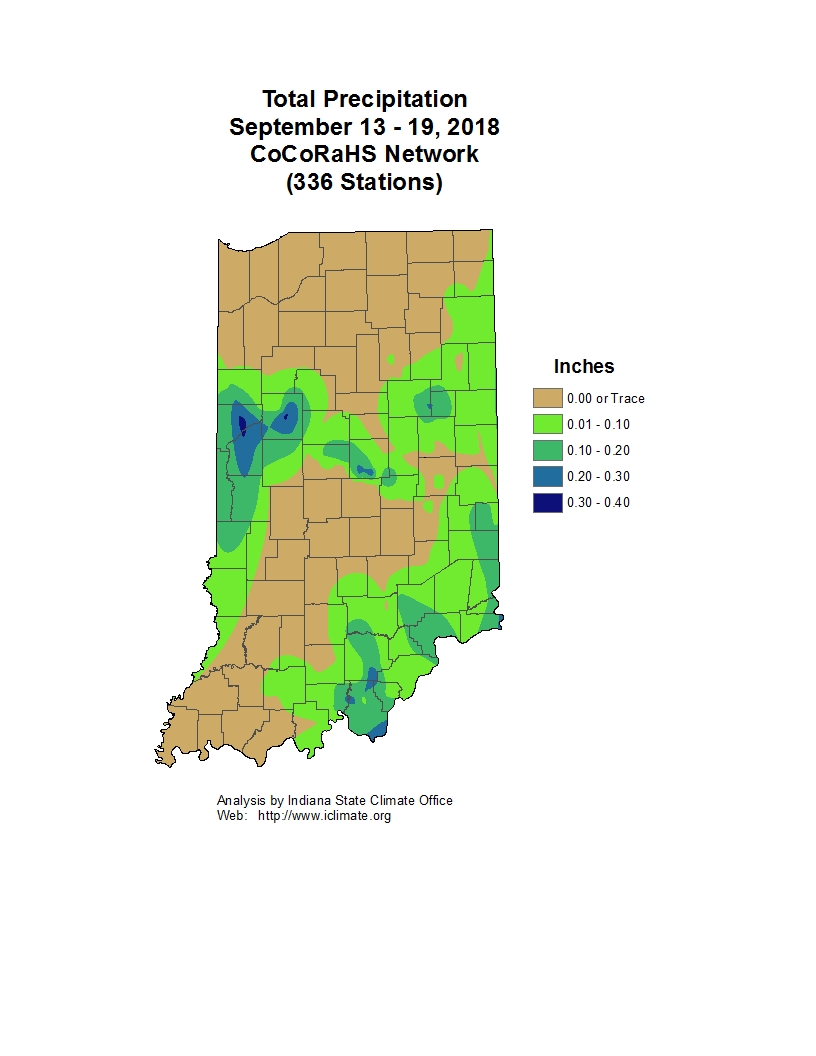
Total Precipitation September 13-19, 2018
© 2026 Purdue University | An equal access/equal opportunity university | Copyright Complaints | Maintained by Pest&Crop newsletter
If you have trouble accessing this page because of a disability, please contact Pest&Crop newsletter at luck@purdue.edu.