Most readers have probably noticed a sharp increase in firefly activity lately.
Most readers have probably noticed a sharp increase in firefly activity lately.
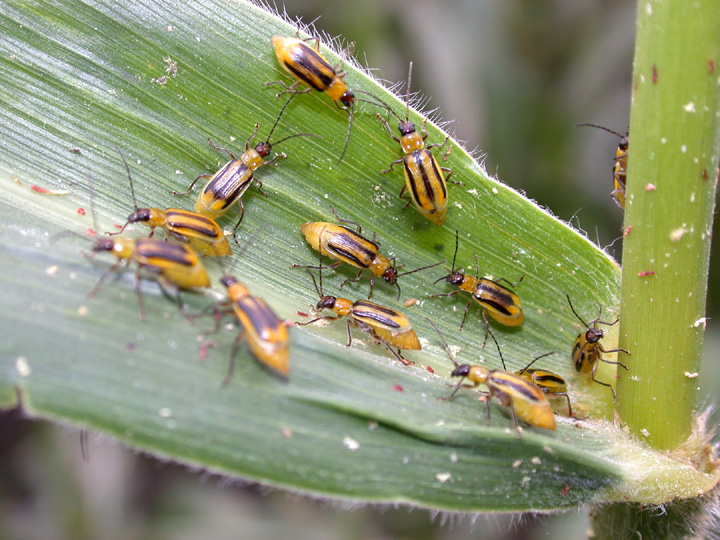
We’ve received multiple reports of impressive rootworm beetle populations in cornfields. Most of these fields were continuous corn without rootworm larval protection. These fields seem to be the exception, but the increasing trend is troublesome. This article is a reminder that is pest is still alive and well. For years, high adoption of highly effective Bt hybrids for rootworm control has likely contributed to a decline in rootworm populations. Overall, Indiana producers have managed this pest through a combination of crop rotation and/or use of Bt-rootworm hybrids. This approach, over many years, drastically reduced rootworm populations compared to 20 years ago. More recently, as state-wide rootworm risks to corn damage declined, producers have used less rootworm protection on their corn. This was a combination of those wanting to save money and take a chance with no protection or those assessing their risks on a field-by-field basis with scouting[Read More…]

The vast majority of corn has long ago completed pollination. There are the late-planted fields that have yet to do so.
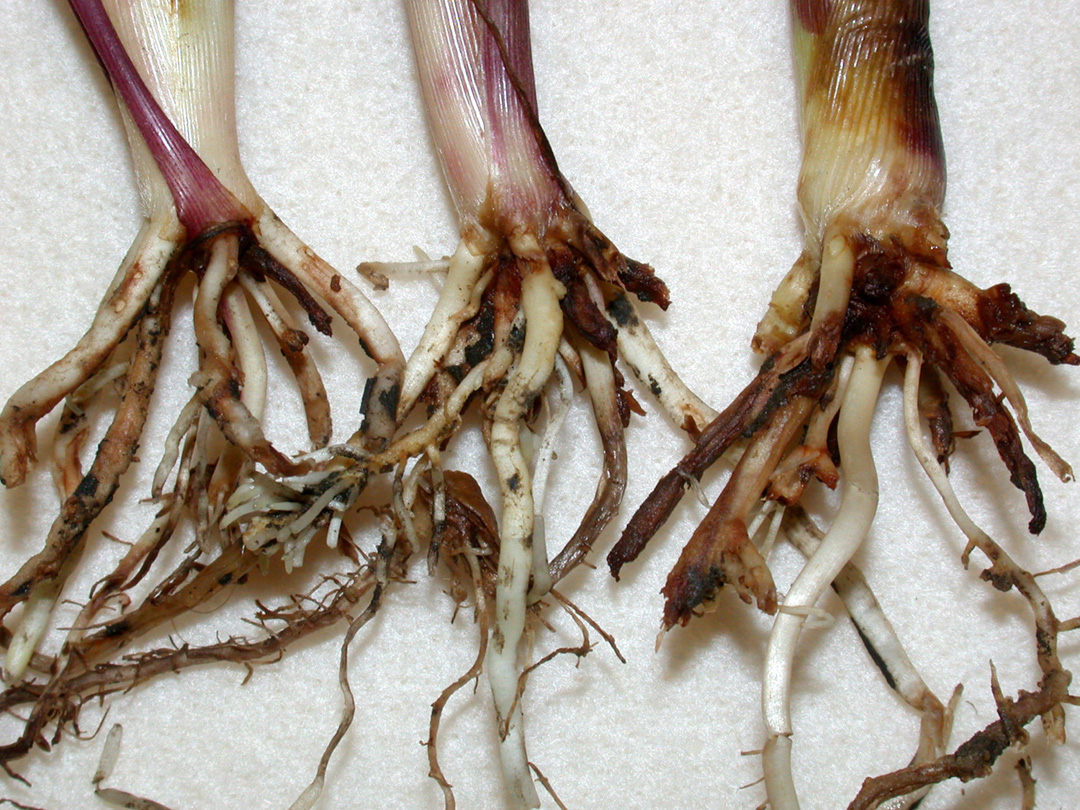
In some parts of the state, delayed planting – or re-planting – of corn is a reality. Some producers may be attempting to switch to shorter day hybrids, including some without desired insect traits, including rootworm-specific Bt traits.

Much of the corn has pollinated throughout the state, but there are the late-planted fields that have yet to do so. Those are the fields that potentially act as a “trap crop” for various insect pests as they look for an excellent protein source…pollen. One particular insect, known by some producers as silk beetles, is the western corn rootworm beetle. In most years, this is the time for the peak number of beetles present in the state. In fact, for research trials we deliberately plant corn late the year before in an attempt to lure pollen-feeding female beetles into the crop so there will be plenty of eggs in second year corn. However, beetle numbers are much lower than they used to be several years ago. Because of this, some producers have let their guard down, only to later regret their decision to not protect their corn from larval damage.[Read More…]
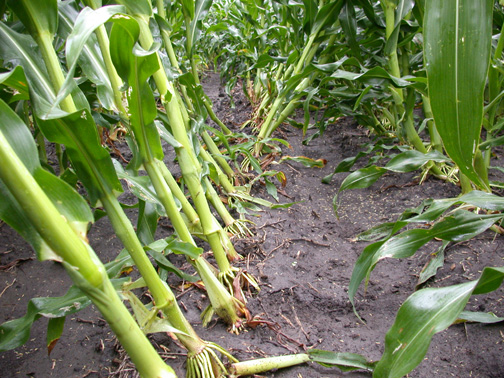
With the recent heavy rains and winds in many parts of the state, it seems like a good time to talk about corn lodging.
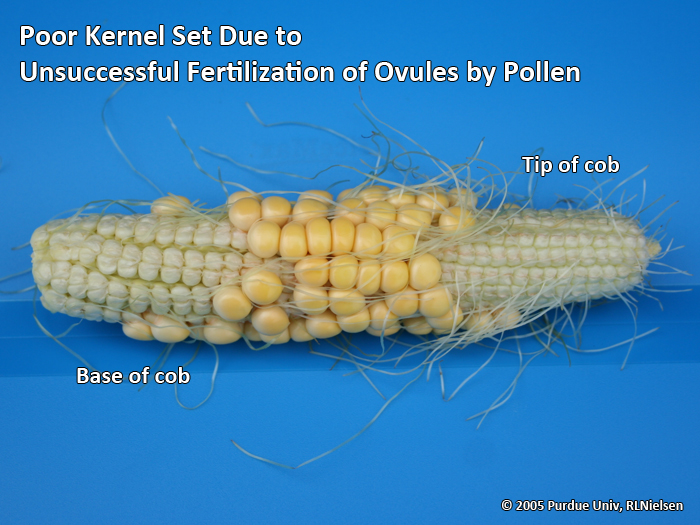
The post-pollination scuttlebutt overheard in coffee shops throughout Indiana during mid- to late summer often revolves around the potential for severe stress that might reduce kernel set or kernel size in neighborhood cornfields.

As folks get out to inspect corn ears, especially in northern counties where western bean cutworm is a greater concern, they will find “little black bugs,” especially where kernels are damaged. Their presence is in response to previous damage to kernels, which includes insect and/or bird feeding, hail, etc. In addition, hybrids with short ear husks seem to be more prone to exposing kernels, making easy access for rootworm and Japanese beetles to compromise ear tip kernels while feeding on silks. These small, opportunistic insects are feeding on decaying kernels and subsequent molds, NOT directly damaging the crop. They are simply fulfilling their niche in the cycle of life, “clean up in Aisle 3.”
Corn lodging, during rapid vegetative growth just before pollination, is not a welcome site.

Pollination in corn is the act of transferring pollen from the tassels to the emerged silks of the ear.
© 2026 Purdue University | An equal access/equal opportunity university | Copyright Complaints | Maintained by Pest&Crop newsletter
If you have trouble accessing this page because of a disability, please contact Pest&Crop newsletter at luck@purdue.edu.