Going back to about 2016 or so, a species of hover fly (and their larvae) have become increasingly common in and near Indiana cornfields. Last weekend I attended a picnic where they were a topic of conversation because they were landing on everyone and everything. They are harmless but annoying. They have no stingers and cannot bite. These are syrphid flies in the genus Toxomerus (likely Toxomerus politus), and mimic bees and wasps with their yellow/orange and black striping.
These flies are common in and around cornfields because the larvae feed on pollen. Each corn plant produces hundreds of thousands of surplus pollen grains, many of which end up in leaf axils. That’s where many of the maggots, fly larvae, can be found. They are taking advantage of a free, reliable protein source. Many syrphid fly larvae are beneficial predators, feeding on aphids, whiteflies and other soft-bodied pest insects. For more details, see the excellent identification guide to Indiana hover flies produced Dr. Laura Ingwell and graduate student Allison Zablah.
At the picnic last weekend, several annoyed people referred to these hover flies as “sweat bees”, which is not actually correct. The common name sweat bees refers to small bees with 2 pairs of wings (hoverflies have only a single pair) and they do have stingers. Sweat bees are smaller and are typically dark or metallic in color. Both hover flies and sweat bees can be a minor nuisance because they are attracted to us by moisture and salts they get by lapping up our sweat. Sweat bees will readily sting if accidentally squashed while they are feeding. And they will sometimes sting even when they are not bothered at all.
Large numbers of hover flies, and their maggot larvae in corn, are not a concern. They are not really a pest, nor are they clearly beneficial. Like most insects, they are generally neutral for humans – they’re just out doing their thing and occasionally annoying us when we are outdoors. The reasons behind the recent spike in numbers over the last decade or so is a bit of a mystery, but nothing to be concerned about.
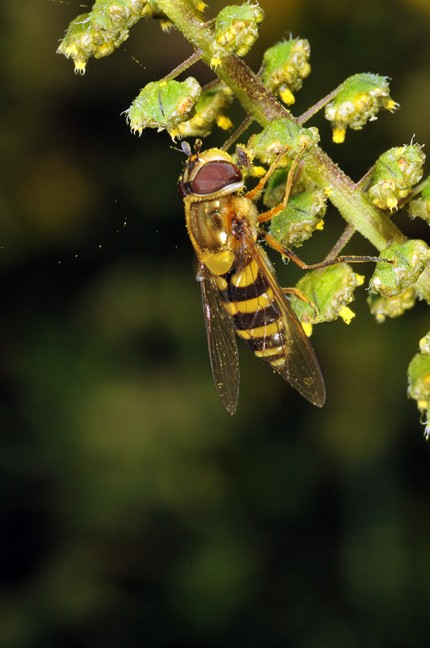
Syrphid fly (hover fly) feeding on nectar.
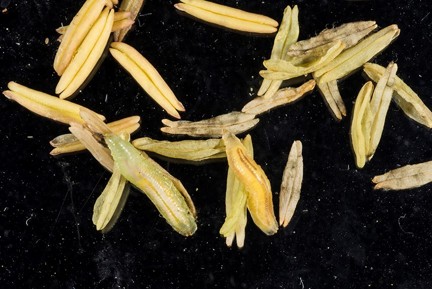
Syrphid fly larvae, or maggots, shown with corn anthers. Larvae indicated by white arrows.
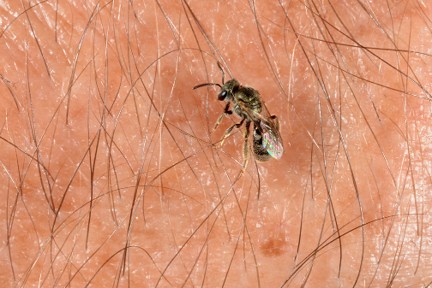
Sweat bee on skin