Corn leaf aphid (CLA), is typically an occasional presence in cornfields within the Midwest. They are a common sight late in season, in September and October, when corn is starting to senesce and they can’t have much impact on yields. They are frequently seen on corn stalks close to the ground at this time and can reach very high numbers, with black sooty mold covering some plant parts. Since corn plants are effectively “shutting down” at this time in terms of photosynthesis, they are not a pest of concern at that time.
However, in Indiana and throughout the Midwest, we have some recent sightings of CLA infestations in the last week or so. These are a mix of the winged (dispersers) and wingless aphids and typically in spotty, small groups (less than 20 individuals). Like many aphids, they feed on a variety of hosts – primarily grasses – and aren’t restricted to corn. They are more common in the southern states and migrate northward each year.
The pest threat occurs when very large infestations produce sufficient honeydew to interfere with pollination – gumming up tassels and corn so that pollen cannot disperse and fertilize developing ears. I have personally never seen (or even heard of) an infestation of this severity, but I am sure it’s happened. At this point, much, but not all of the corn in the state is past this point in maturity.
But as I see aerial applicators hard at work, it’s worth a review of the management guidelines – is there any point in adding pyrethroid insecticides to fungicide sprays to “clean up” these infestations?
Prior to Tasseling
- In 5 areas of a field, randomly select 4 nonconsecutive plants, 10 to 15 paces between each plant.
- Pull the whorl upward and out of the plant. Unroll each whorl, counting and recording the number of aphids found.
- Total the number of aphids found on the 20 whorls and determine the average number of aphids per plant.
During Pollen Shed
- Examine 20 consecutive plants randomly selected in each of 5 areas of the field for aphids and honeydew on the tassels.
- Calculate the percentage of plants with aphids and honeydew.
- Determine the status of pollen shed and ear pollination
Treatment thresholds for CLA are as follows:
Pre-tassel: 15 aphids/plant whorl 3 weeks before tasseling and plants under drought stress.
Post-tassel: 50% of tassels covered prior to 50% pollination and plants under drought stress
Most Indiana corn doesn’t have the drought stress component to worry about, which helps a lot, so it is unlikely that aphid infestations impacted pollination in any way.
There are no aphid threshold guidelines after pollination, for obvious reasons; by this time, the fertilization story is written and aphids won’t be a factor in determining yields.
Although treatable infestations of CLA are very uncommon in Indiana field corn, it is worthwhile to keep an eye on them – often natural enemies like ladybird beetles and parasitoids play a large role in regulating these populations and provide another reminder that sometimes these flare ups just need a little bit of time to resolve on their own.
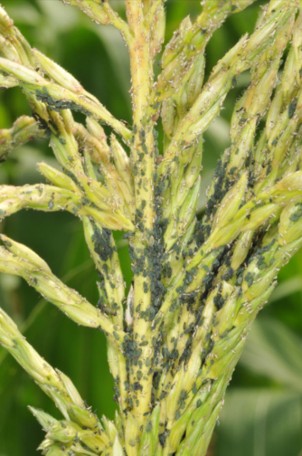
A heavy CLA infestation on a corn tassel. Photo by John Obermeyer
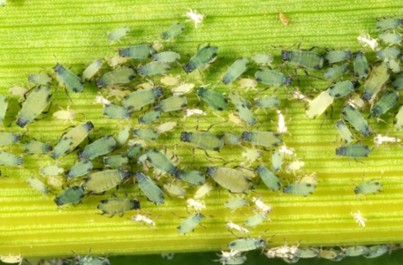
The sage-green color of CLA distinguishes them from several other aphid species that may be found on corn plants. Photo by John Obermeyer