Each year, Indiana crop scouts focus on a wide range of crop pests – above and below ground, feeding on roots, shoots, grain and patchily distributed around the state. The main way we prioritize what to look for, and when, is the calendar and historical dates and times of pest emergence.
During pest management scout trainings over the past 2 weeks at the Diagnostic Training Center (DTC) near the Purdue main campus, an example popped up that led to thought and discussion about this practice. A Western Bean Cutworm trap captured 4 male moths during that time. That is unusually early – our pocket guides, websites, factsheets and other resources establish adult emergence time beginning in early July. So what is going on? The answer is likely one of the most common ones for modern insect development anomalies – climate change. In this case, specifically a sustained warm spring for 2026.
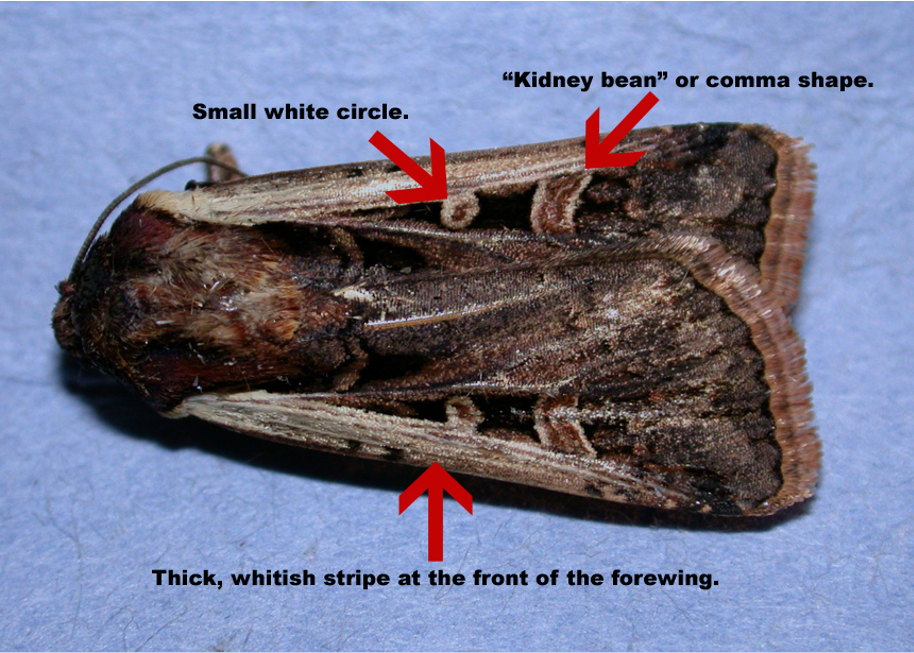
Adult WBC are readily identified and not easy to confuse with the countless other “boring brown moths” you may find.
All insect development is temperature driven (WBC: base of 38F and upper threshold of 75F) and many of our models are likely not be as sensitive to temperature changes as the insects themselves (this is particularly true in the Great Lakes Region, where moths always seem to emerge earlier than predicted). In other words, there are variables we don’t account for when we develop these models, sometimes because we do not know what they are yet… for example, insects evolving to take increased advantage of warmer winters to overwinter closer to the soil surface. This is a risky bet that can pay off after a mild winter.
Bottom line: this is a reminder that amidst the rapid environmental changes we are experiencing, scouting will be more important going forward. Purchase/place out WBC pheromone traps in the next week or two if possible. Documenting unpredictable infestations of insects in the field is one area where there is no replacement for observing your own fields.
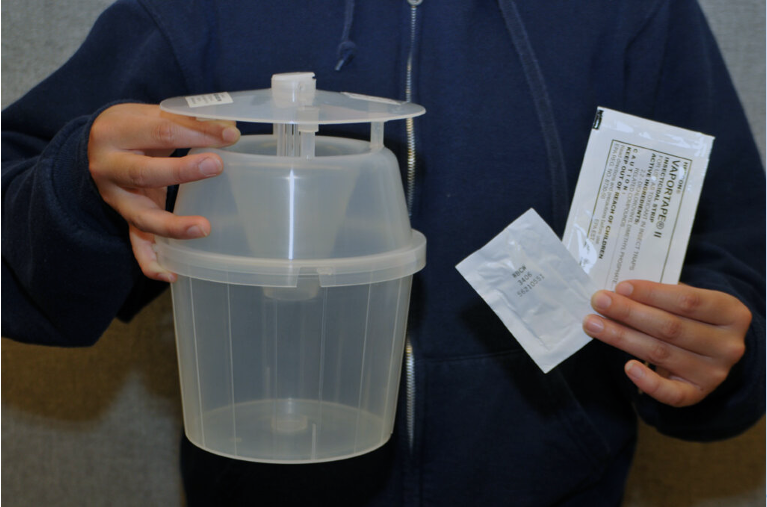
Moth trapping supplies: a bucket trap, pheromone and a kill strip. All available from Great Lakes IPM.
On a related note, my attempts testing various AI engines to guide and inform scouting has shown me that this technology is really not up to par at this time (often shockingly bad). This is part of a project in our lab to assess the pros and cons of AI for IPM that you will read more about in future. For now, be cautious! A lot of the information is incorrect, sometimes way off and actually unhelpful – even when referencing university sources. It will undoubtedly improve over time but for now our tried-and-true approaches work best.