True armyworm infestations are being confirmed in southwest Indiana hayfields, with multiple reports arriving this week from producers and Purdue research staff. Several farmers reported waiting for hay to gain height, soon learning that much of the crop had already been consumed, looking as if it was already mown — a classic sign of armyworm feeding.
True armyworm is not an annual problem at economic treatment threshold levels in Indiana, but when conditions align, populations can build quickly. Jason Tower, Superintendent of Southern Indiana Purdue Ag Center noted that this is the worst infestation he has personally seen since 2008. Armyworm moths migrate north on storm currents each spring and lay eggs in dense grassy vegetation like hayfields, wheat, grassy cover crops, and grassy waterways.
True armyworm differ from fall armyworm in both their appearance and seasonal maturation/feeding cycles. True armyworm larvae, present in Indiana now, are typically greenish brown with dark lengthwise stripes bordered by orange and an orange-brown head sporting a net-like pattern. Mature larvae may reach 1.5 inches long, and this is when the vast majority of feeding occurs. In fact, this is often the first time producers notice the damage. Damage can seemingly appear suddenly because larvae feed mostly at night or when it is overcast, hiding beneath plant residues in the day. Heavy infestations can strip leaves down to stems and veins in short order.
Producers in Indiana should begin scouting for true armyworms in late April to May. They are most likely to be present in hayfields, wheat, pastures, and corn planted into grassy cover crops. The best time to scout is early morning, late evening, or when it is cloudy. Damage is patchy and not typically confined to edges like other field crop insect pests. Examine multiple areas at ground-level, especially lodged or thick grassy areas, and look beneath crop residue. Larvae are typically found very close to the freshest signs of feeding. Thresholds in grasses and pastures are generally around 3-5 larvae per square foot, and larvae are far more effectively treated when they are ¾ inches or shorter. Larger larvae may be quite difficult to kill and may be preparing to pupate.
Treatment recommendations and labeled insecticides can be found through Purdue Extension’s forage and field crop insect management resources. Producers should also carefully review harvest and grazing restrictions before spraying forage crops.

Notice the net-like appearance of the true armyworm’s head. (Photo Credit: Sarah. Brackey)
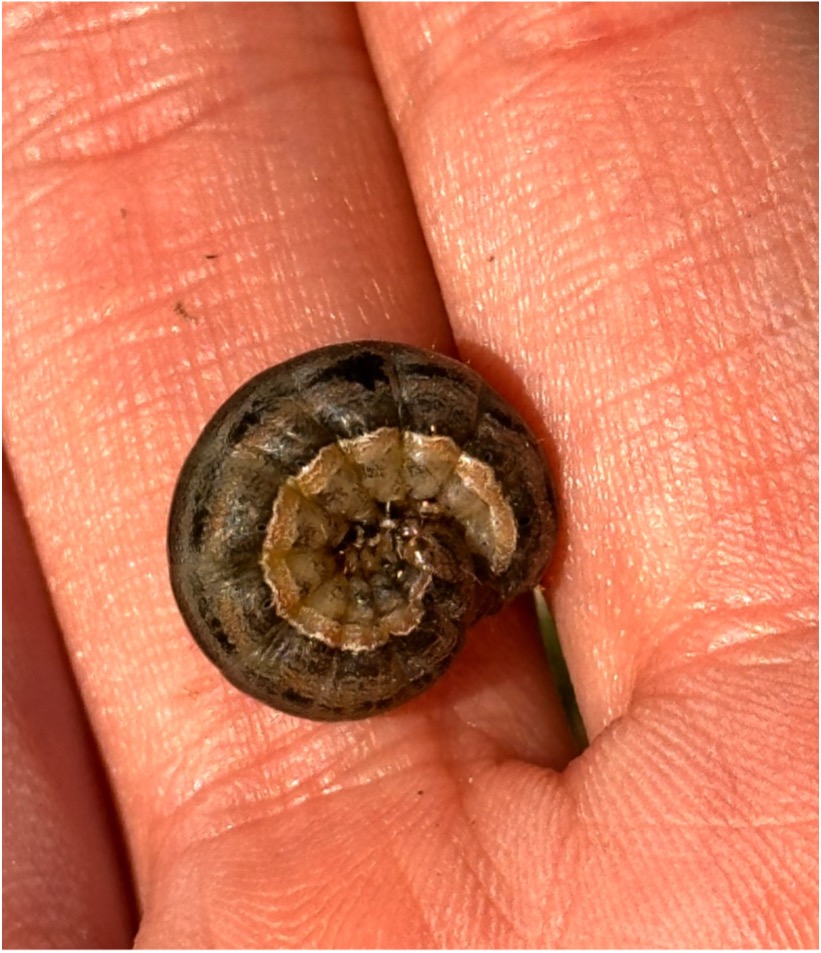
True armyworm is the larval stage of a migrating moth. They feed voraciously in grassy crops. (Photo Credit: Sarah Brackney)
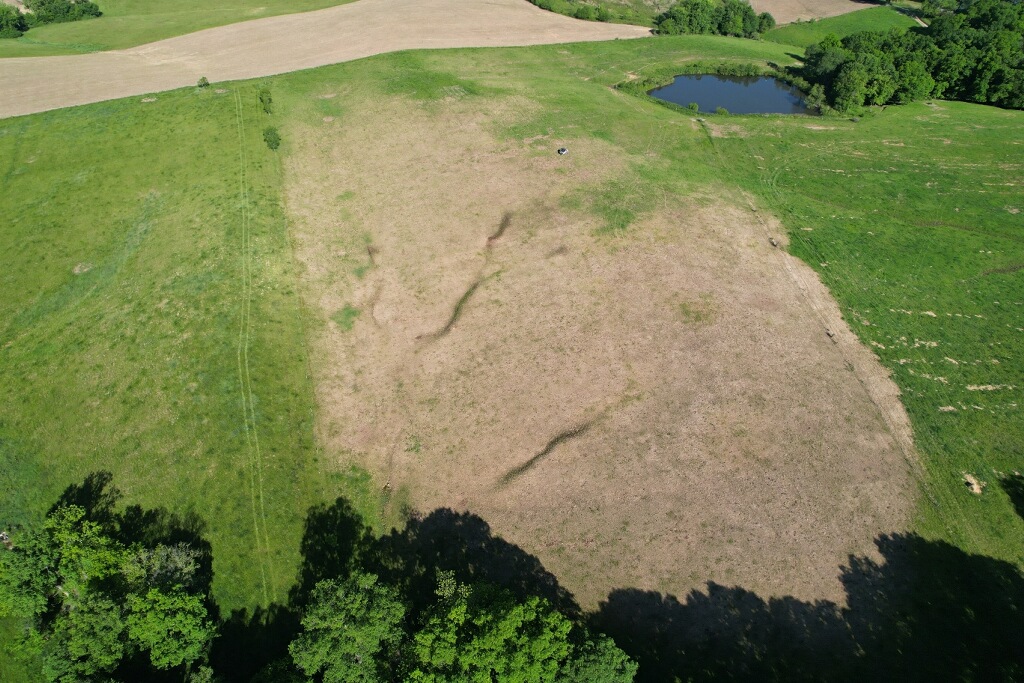
In the center of this photograph, see an aerial view of true armyworm damage of forage. (Photo Credit: Alex Helms, Assistant Director, Purdue Ag Centers)
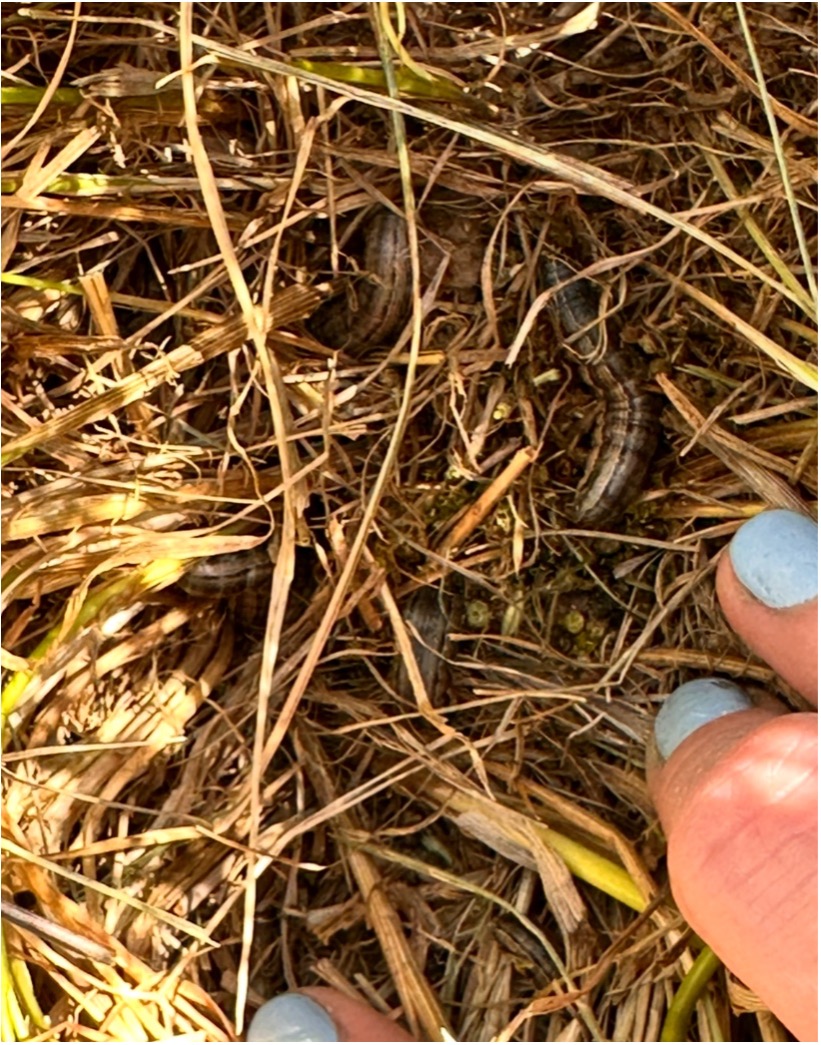
If you scout field during the daytime, you must look under vegetation at the soil surface. Armyworm finds refuge in shady, cooler areas in the day and feeds at night or when skies are overcast. (Photo Credit: Sarah Brackney)