Indiana has received quite a bit of rain in the last few months, and fields are flooded throughout the state. How can you determine if you just have a flooding injury or a seedling disease has taken hold? Standing water leads to root suffocation as roots are oxygen-deprived and CO2 builds up. Digging up a few plants in the area can help determine the issue. If the outer root tissue sloughs off and reveals the white hair-like core of the root, then there may only be a flooding injury. If the roots appear rotted, brown and mushy, then a root rot may have infected the stressed plants. Flooding also kills the nitrogen-fixing bacteria, so you can cut open the soybean nodules to see if they have lost their healthy pink color. In contrast, seedling diseases, such as Phytophthora root and stem rot, can leave the roots brown and rotted, but their nodules may actually remain pink until the plant dies. Soybeans can bounce back from flooding, especially during periods of cool and cloudy weather, but their recovery also depends on how long the plants were submerged and upcoming weather conditions.
Commonly observed soybean seedling diseases:
- Pythium seedling blight
- Phytophthora root and stem rot
- Rhizoctonia seedling blight
- Fusarium root rot
Pythium seedling blight and Phytophthora root and stem rot
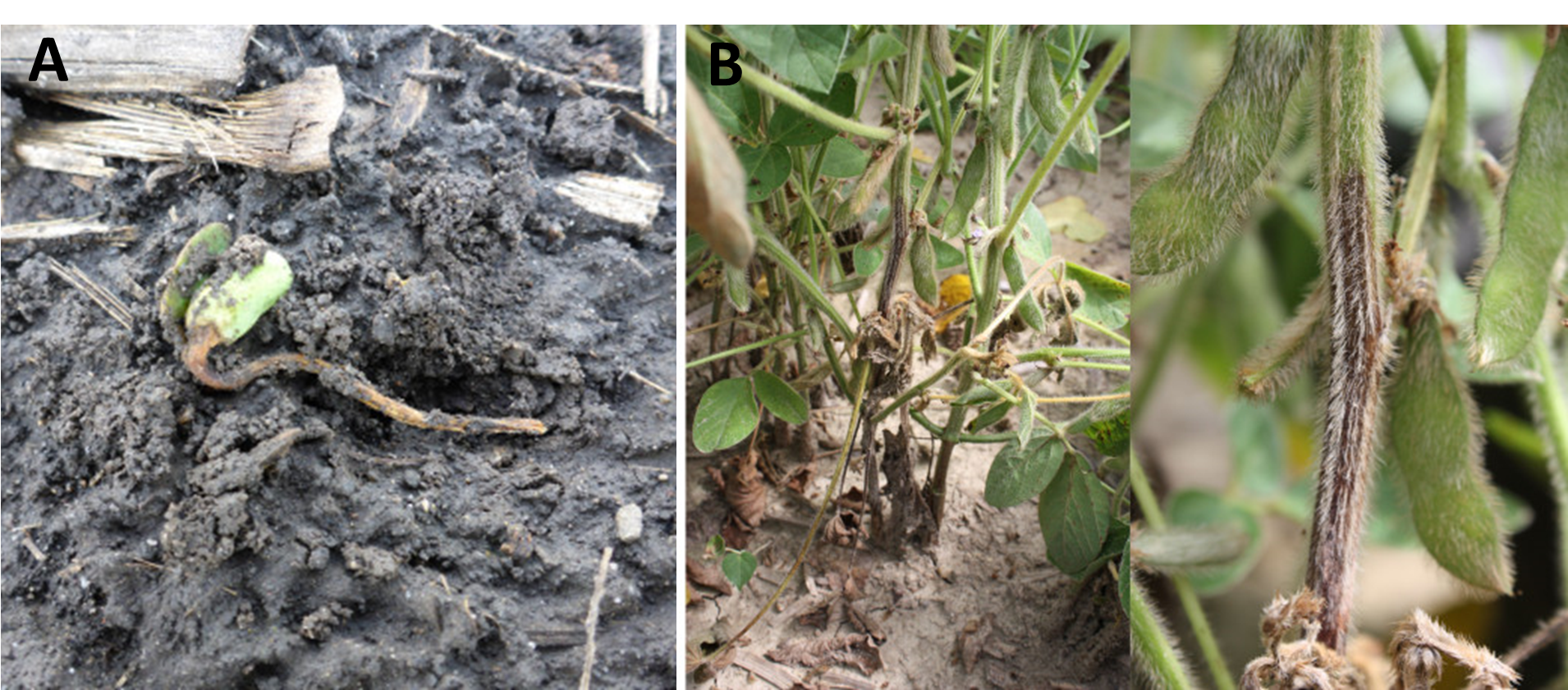
Figure 1. A- Rotted seedling infected with Pythium, B- Characteristic later season symptoms of chocolate lesion on the stem caused by Phytophthora. (Photo Credit: Tristan Mueller, Austin McCoy and Martin Chilvers)
Pythium and Phytophthora are oomycetes, or “water molds”, that thrive in saturated fields. Both pathogens produce swimming spores (zoospores) that are chemically attracted to soybean roots. Infection leads to rotten, mushy seedlings with poorly developed roots that pull out of the ground easily (Fig. 1A). Infection from Pythium usually occurs in cooler soils (50-60°F), whereas Phytophthora prefers warmer soils (70°F). Phytophthora sojae can infect soybeans not just at the seedling stage but also at any point in the growing season. The main symptom of Phytophthora root and stem rot later in the season is a chocolate brown/purple lesion on the stem (Fig. 1B). This discoloration typically starts below the soil and can spread up the stem. Oomycetes like Pythium and Phytophthora survive in the soil or plant residue for extended periods of time as oospores. Oospores can survive in the soil for years, and they do not all germinate at the same time, so short crop rotations are not as effective.
Rhizoctonia seedling blight
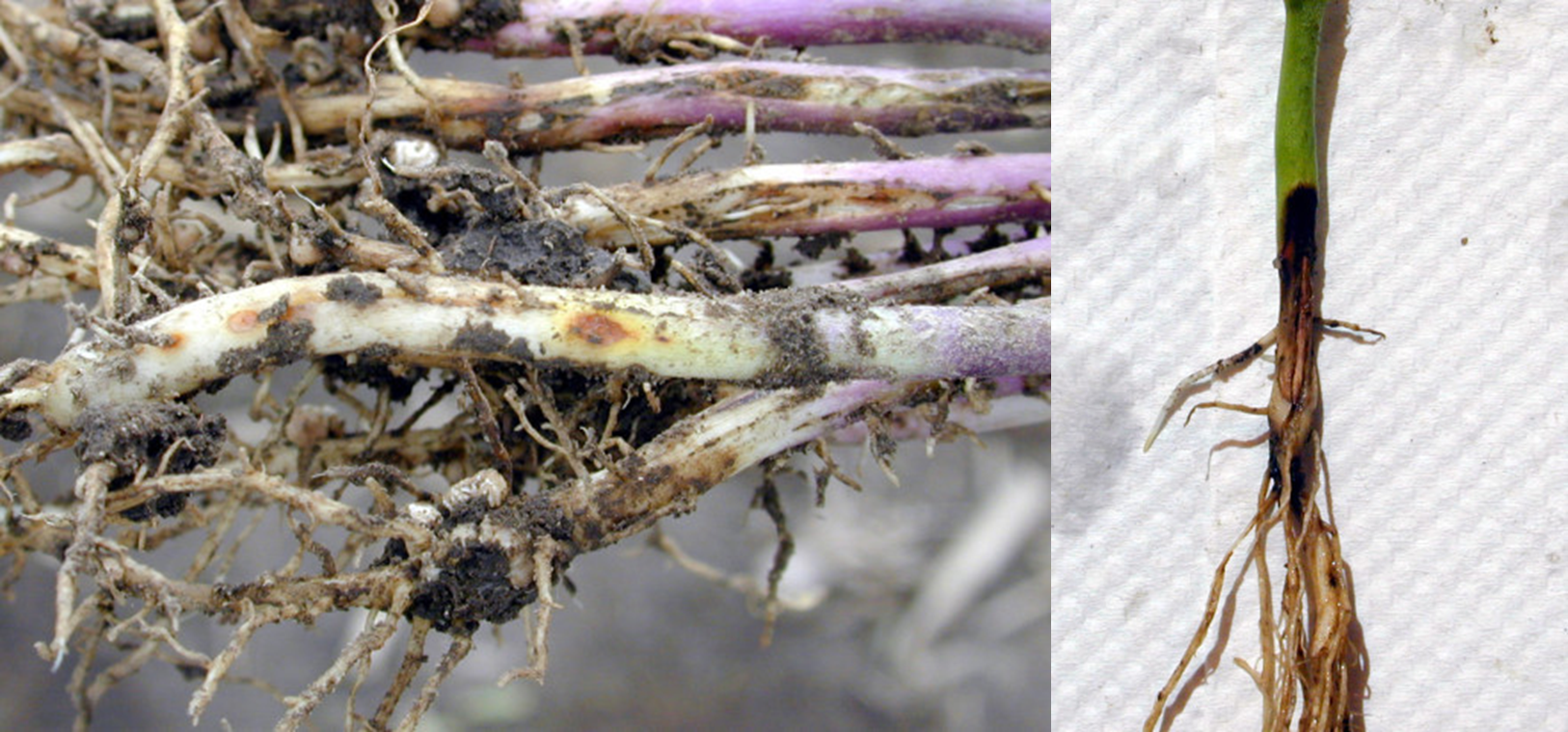
Figure 2. Reddish lesions on hypocotyls caused by Rhizoctonia infection. (Photo Credit: Daren Mueller and Tristan Mueller)
Unlike water molds, Rhizoctonia is a fungus that causes lesions that are sunken and remain firm and dry to the touch. Infection often occurs right after planting, particularly when a cool, wet spring is quickly followed by hot, dry weather. The main distinguishing symptoms are reddish-brown lesions on the hypocotyls at the soil line (Fig. 2). The fungus survives on infected residue and in the soil.
Fusarium root rot
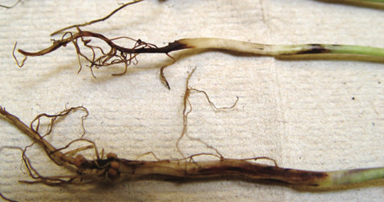
Figure 3. Brown and black lesions on soybean roots infected with Fusarium root rot. (Photo Credit: Loren Giesler)
Fusarium is a highly adaptable fungus that infects soybeans across a wide range of soil conditions. Infected root systems have few secondary roots, and brown to black lesions on roots and lower stem (Fig. 3). Similar to Pythium and Phytophthora, Fusarium can survive for years in the soil as chlamydospores, as well as crop residue, weeds, and seeds. Spores germinate when they sense root exudates. Spores are easily transported via water, wind, and soil on farm equipment.
Seedling disease management
- Seed treatments can vary in efficacy – need an accurate diagnosis to properly manage the disease. Different products control for Rhizoctonia and Fusarium vs Pythium and Phytophthora. Crop Protection Network has a table that is annually updated listing products with a range of efficacy on seedling diseases: https://cropprotectionnetwork.org/publications/fungicide-efficacy-for-control-of-soybean-seedling-diseases
- Pathogens that cause seedling disease typically survive in the soil or plant debris for many years. They also tend to have a wide host range, so short rotations between crops may not be enough to manage the disease.
- The Crop Protection Network has many articles, publications, maps, tools, and more to help with decisions related to protecting field crops https://cropprotectionnetwork.org/
For Indiana growers – with support from check off funding through the Indiana Corn Marketing Council – soybean and corn disease samples submitted to our Purdue Plant Pest Diagnostic Lab (PPDL) are covered to help us track diseases this season https://ag.purdue.edu/department/btny/ppdl/
If you have any questions, please contact Darcy Telenko (dtelenko@purdue.edu) or PPDL (ppdl-samples@purdue.edu/765-494-7071)
References
Wise, K., Lopez-Nicora, H., Bradley, C., Mangel, D., Johnson, B., Legleiter, T., Licht, M., Mueller, D., Chilvers, M., Sisson, A., Tenuta, A., Young-Kelly, H. 2026. An Overview of Soybean Seedling Diseases. Crop Protection Network. CPN-1008. doi.org/10.31274/cpn-20190620-023.