We are continuing to track the activity of tar spot (map-Figure 1). On the tar spot map, you can see gray areas where we have detected the tar spot in past years (all 92 Indiana counties). In Indiana, we have confirmed tar spot as of June 16, 2026 in 2 counties a, Randolph and Rush. In the samples, it has generally been only a single tar spot stromata on a lower leaf in V6-V7 corn. Moderate temperatures and high moisture conditions in May and now June have caused the tar spot risk to be high across the state (Figure 2). I would still wait to see what happens the next few weeks before pulling the fungicide trigger.
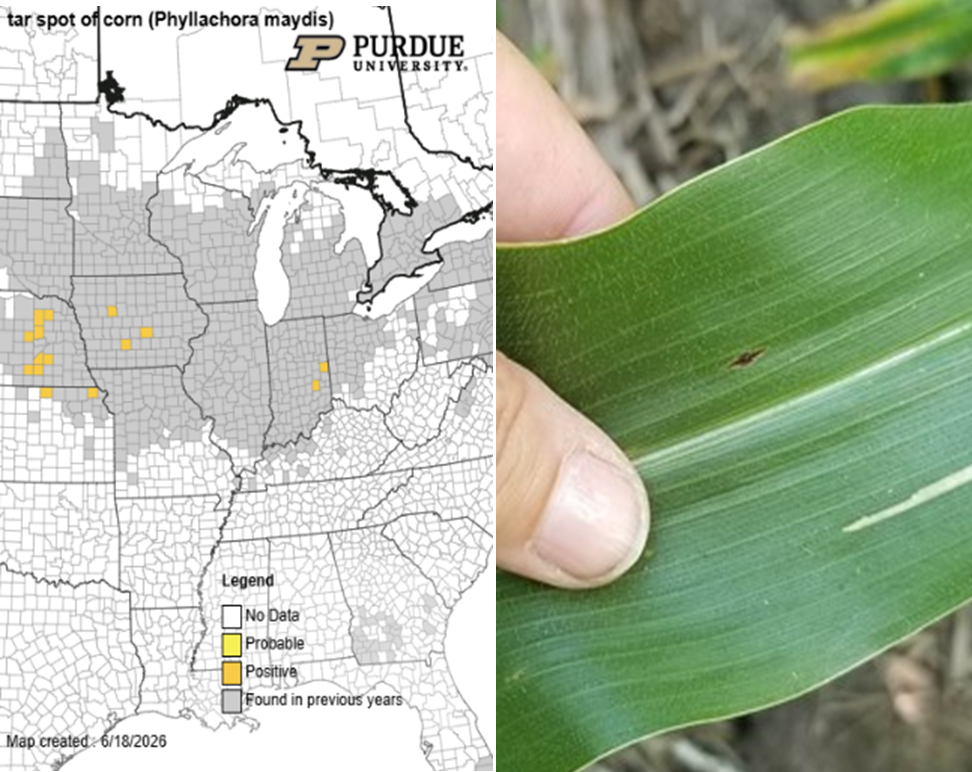
Figure 1. June 18, 2026 map of tar spot activity and an image of a tar spot lesion on corn. Map source: https://corn.ipmpipe.org/tar-spot/ (Image Source: Darcy Telenko, Purdue)
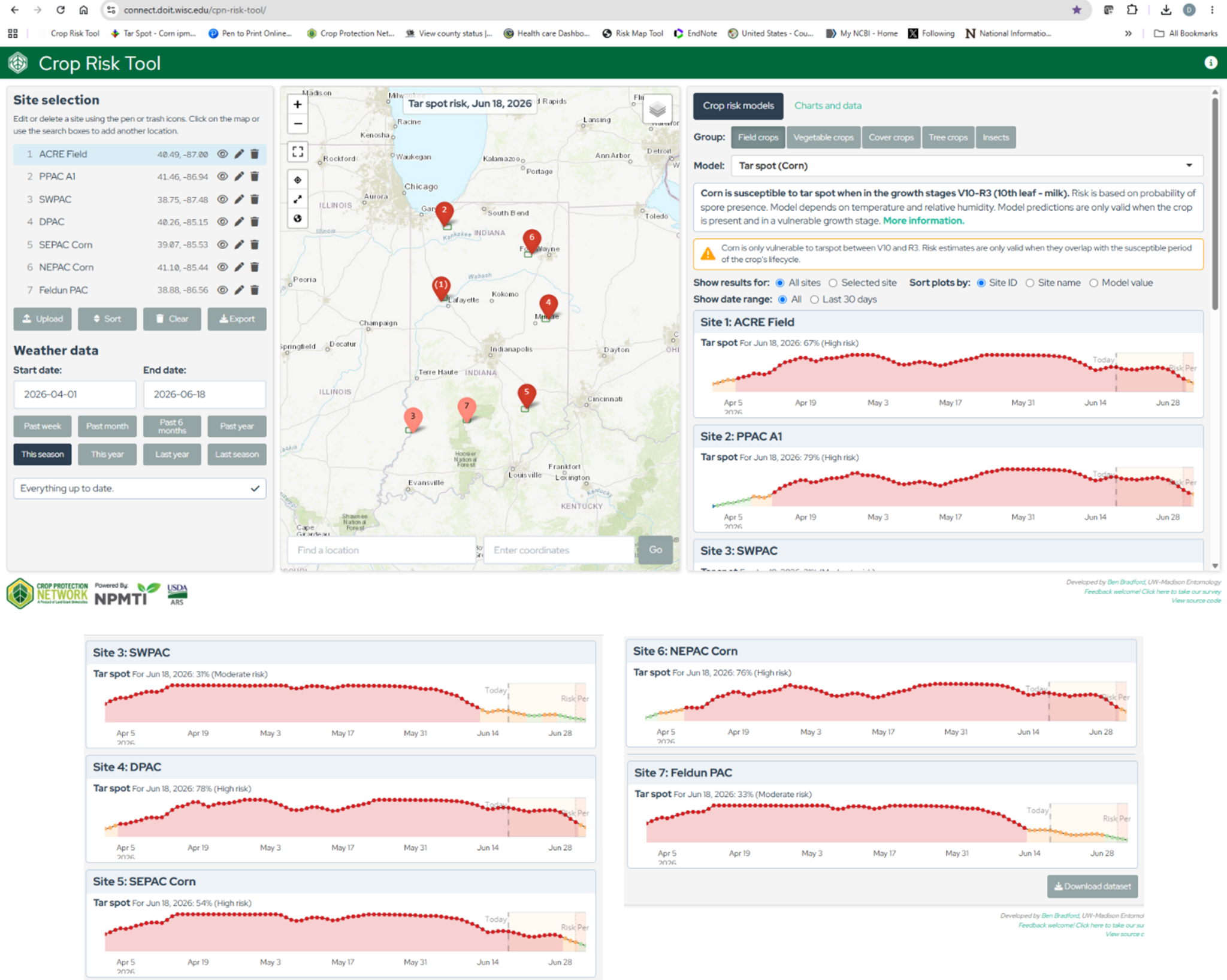
Figure 2. Crop Risk Tool for Purdue Ag Centers in Indiana on June 18, 2026 (https://connect.doit.wisc.edu/cpn-risk-tool/). These disease risk models are only valid when the crop is present and in a vulnerable growth stage. Risk may be mitigated in commercial production by application of a protective fungicide. Corn diseases include tar spot and gray leaf spot. Risk is based on probability of spore presence. Corn is vulnerable to these diseases when in the growth stages V10-R3. Across Indiana the risk of favorable environmental conditions for tar spot is has been running high risk with the moderate temperatures and rainfall we have been experiencing in May and June.
We will continue to monitor and provide updates – please keep sending us samples. Continue to scout your field to determine if any of these diseases are present. Gray leaf spot, northern corn leaf blight and tar spot are the diseases that are most commonly managed by fungicides in Indiana. For these diseases fungicides applied at VT-R1 are most effective at preventing yield loss. Scouting will help determine the level of disease pressure in a field and help you make an informed decision. See the fungicide efficacy tool to assist in based on your crop and disease target https://cropprotectionnetwork.org/fungicide-efficacy-tool. As for southern rust which is also on everyone’s mind from last year, it has not yet been detected in Indiana or the U.S. for this season (Figure 3). It is important to keep an eye out for both of these diseases and send samples to the Purdue Plant Pest Diagnostic Lab (PPDL) if you suspect one or the other.
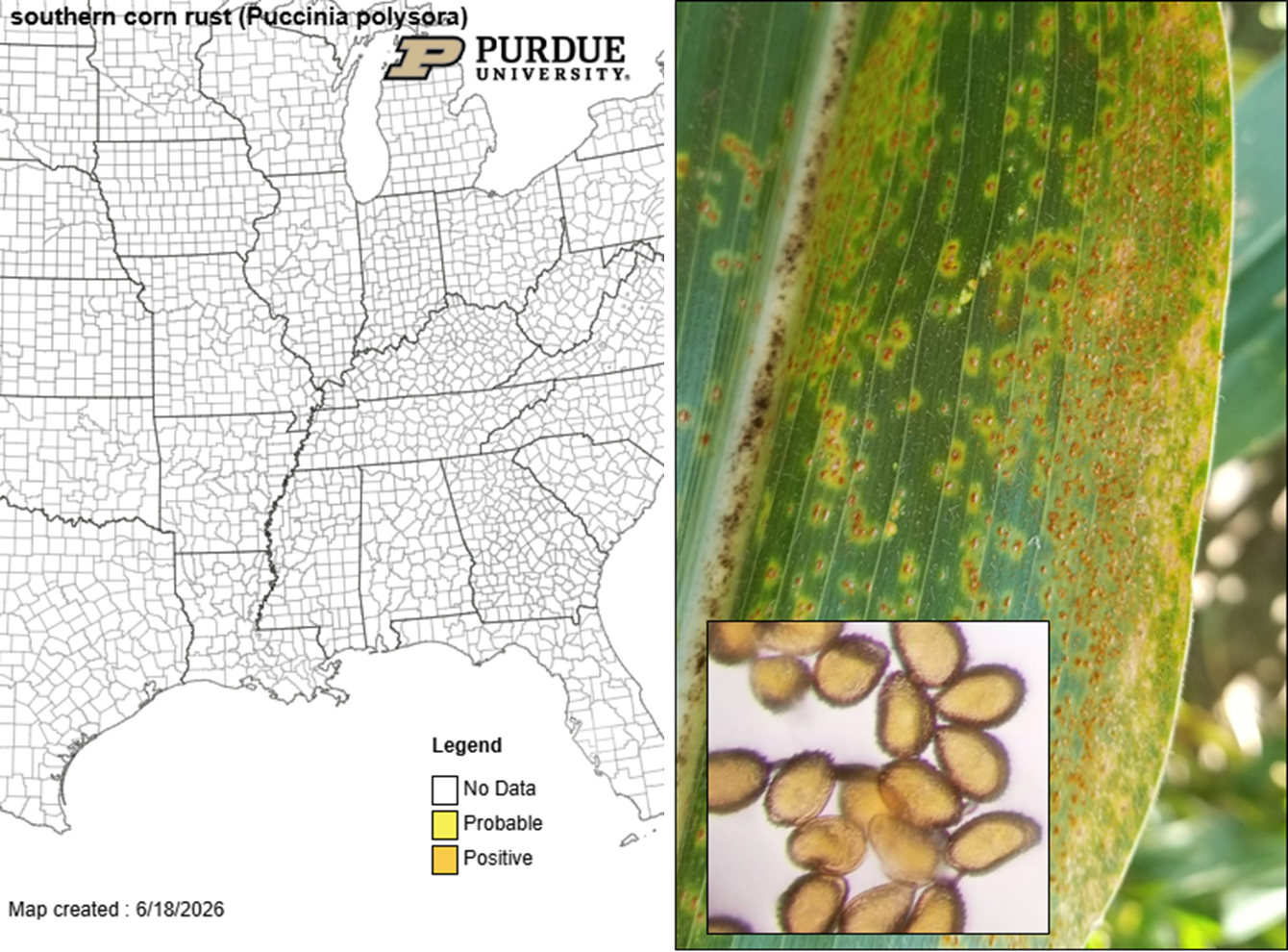
Figure 3. Southern rust has not been detected in U.S. as of June 18, 2026 and an example of southern rust pustules on a corn leaf and diagnostic spores. Map source: https://corn.ipmpipe.org/southerncornrust/ (Photo Credits: Darcy Telenko and John Bonkowski)
A tar spot specific article on “Fungicide Application Reminders to Optimize Management of Tar Spot and Return on Investment in Corn” on Crop Protection Network, may also be a good reference. Check it out here:
https://doi.org/10.31274/cpn-20240618-0.
To make a decision for applying a fungicide there are four things I consider –
- Disease risk in a field – do you have a previous history of the disease
- Current disease activity – do you find the disease in the lower canopy while scouting
- Weather conditions – will there continue to be favorable weather moisture and rain for foliar diseases? Check out the Crop Risk Tool (https://connect.doit.wisc.edu/cpn-risk-tool/)
- Return on investment – will the yield protected by a fungicide cover the additional cost of the application? Check out a new tool to aid in this decision (https://cropprotectionnetwork.org/fungicide-roi-calculator)