As winter begins to loosen its grip and fields start to show signs of green, many growers, agronomists, and applicators are looking for the earliest opportunity to make burndown applications, especially in no-till systems. The urge to get ahead of weeds before planting season ramps up is understandable. However, just as residual herbicides depend on moisture for activation, burndown herbicides are heavily reliant on temperature for maximizing weed control and/or cover crop termination. Cold conditions and frost can significantly reduce herbicide effectiveness in early spring when temperatures fluctuate widely.
Each year, questions arise about how burndown applications will perform when nighttime temperatures drop or daytime highs remain cool. Burndown herbicides work best when daytime temperatures reach at least 55°F for several days before and after application with no overnight frost events. This minimum temperature makes sure weeds are actively growing, which is necessary for herbicide activity on and inside the plant. When temperatures fall below 55°F following application, control can decrease noticeably, particularly with systemic herbicides, such as glyphosate and 2,4-D (Figure 1). Generally, systemic herbicides tend to be more dependent on temperature than contact herbicides since they require translocation within the plant. However, contact herbicides like paraquat can also be affected by cold conditions. Studies have shown that paraquat performance declines sharply at temperatures around 47°F, especially on species such as chickweed and henbit. When applying paraquat in less-than-ideal weather, correct adjuvants and including effective tank-mix partners, such as metribuzin or atrazine which synergize paraquat, can help improve results.
Nighttime temperatures are equally important. Even if daytime temperatures appear adequate, a freeze the night before or after an application can damage plant tissue and prevent the herbicide from effectively working on the plant. As a general rule, wait until nighttime temperatures stay above freezing for several consecutive days before and after applying burndown herbicides. Spraying too soon after a freeze often leads to weak performance, regardless of the rate used (Figure 2 & 3).
The desire to clean up fields early is understandable, but waiting for a more favorable weather pattern can make a noticeable difference in burndown success. Look beyond a single day forecast and evaluate temperature trends several days before and after the planned application. A short stretch of consistent warmth can lead to a cleaner start, reduce the risk of early weed escapes, and save on input costs. Careful attention to temperature trends now can set the stage for a smoother transition into planting season.
Early-Season Burndown Success Checklist
- Target daytime highs ≥55°F
- Avoid applications immediately before or after a freeze
- Wait for nighttime lows to be above freezing for several consecutive days
- Consider labeled rate adjustments and/or incorporating effective tank mixes in cool conditions
- Use recommended, certified adjuvants when conditions are marginal
For more information, be sure to check the Purdue Weed Science Resource (Resources – Purdue Weed Science) page or refer to the burndown section of the 2026 Weed Control Guide (https://extensionpubs.osu.edu/category-2c-agricultural-weed-control-2026/).
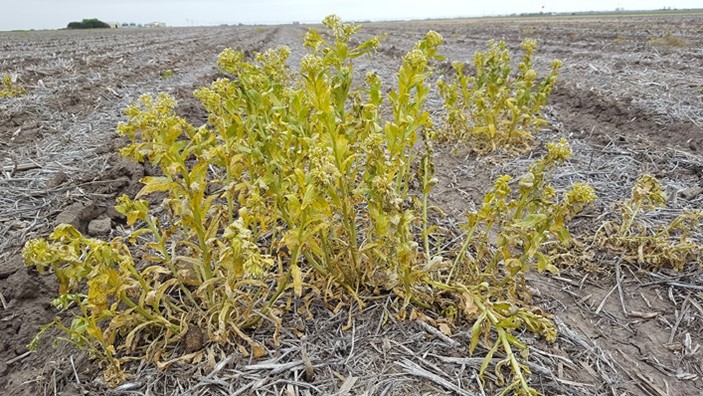
Figure 1. Survival of field pennycress due to an application of a burndown herbicide when the temperature was below 40°F for an extended time. Image courtesy of: Jhala & Brhel 2017, https://cropwatch.unl.edu/2017/low-temperature-and-frost-may-affect-efficacy-burndown-herbicides/
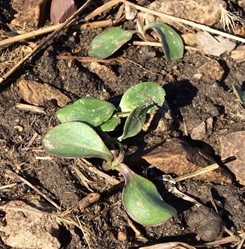
Figure 2. Frost damaged giant ragweed seedlings. To control these seedlings, it would be best to wait for true leaves to emerge and warmer temperatures (no frosts) before spraying. Image courtesy of: Hartzler 2016, https://crops.extension.iastate.edu/cropnews/2016/04/cold-temperatures-and-burndown-herbicides
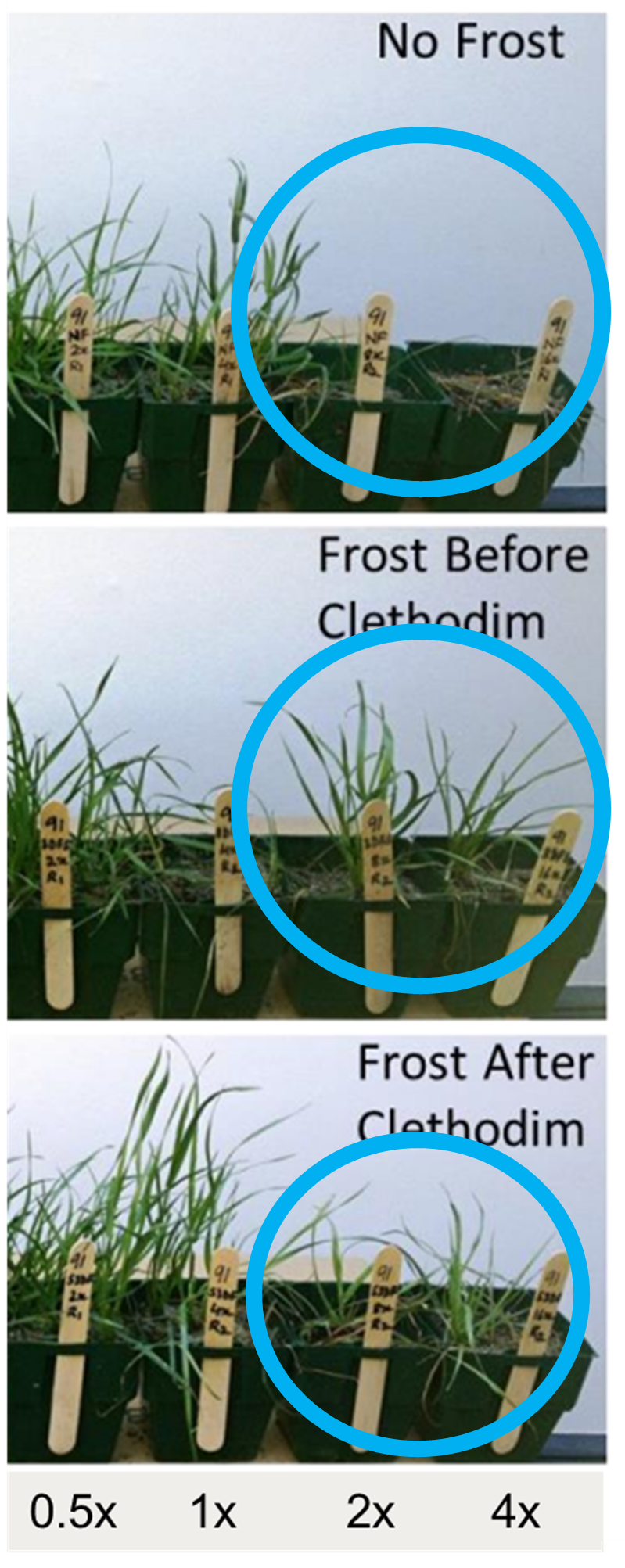
Figure 3. Effect of a frost event for 3 nights before or after a clethodim application on annual ryegrass control with low-level resistance. Image courtesy of: Saini et al., 2015, https://sciences.adelaide.edu.au/agriculture-food-wine/system/files/docs/2016-clethodim-frost.pdf