


Pest & Crop Newsletter, Entomology Extension, Purdue University

- Delayed Soybean Planting Decisions
- Corn And The Ugly Duckling
- Prevalent Purple Plants Possibly Puzzle Producers

Stalk Borer Active - (Christian Krupke, John Obermeyer, and Larry Bledsoe)
- This year’s stalk borers come from eggs laid last fall.
- Waterways, ditches, and giant ragweed patches can attract egg-laying moths.
- Scouting and a timely treatment prevents spread of infestation.
Stalk borer infestations often occur in the same area of a field each year corn is grown. This happens due to attraction of stalk borer moths in the fall to certain plants for egg deposition. Plants favored for egg laying include: grasses in waterways and fencerows and various weeds, especially giant ragweed. The fall-laid eggs remain in the egg stage throughout the winter. In the spring, the larvae hatch and begin their search for suitable plants to feed on. Stalk borer larvae are easily identified by the purple band or “saddle” around the middle of their bodies and the white longitudinal stripes at their anterior (front) and posterior (rear) ends.
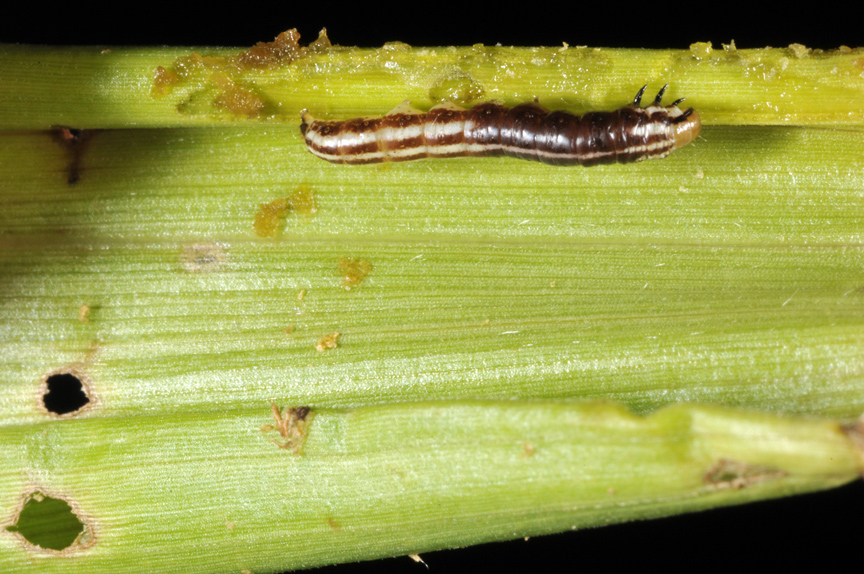
Stalk borer and damage revealed from whorl
As the name implies, these larvae bore into the stem of their host plants and feed within, although small larvae may feed on the leaves or in the whorl of corn plants before tunneling into the plant. In corn, infestations are usually not noted until the borers are already in the stalks. The first sign of damage is often “dead hearted” plants, with the center leaves wilting. If stalk borers are noted in the whorls or on the leaves of corn, a spot treatment with an insecticide in the infested area and adjacent areas should prevent the infestation from spreading. Remember that stalk borer will move from one plant to another, if their host is killed or if they kill and/or outgrow their present host plant. The borers are susceptible to insecticides when they are moving from plant to plant or are in the corn whorl, but, like other types of borers, cannot be contacted once they are inside the stem.

Dead heart damage
For recommended insecticides, see Extension Publication E-219, Corn Insect Control Recommendations – 2009, which can be viewed at <http://extension.entm.purdue.edu/publications/E-219.pdf>.

Soybean Aphid: First Indiana Sighting - (Christian Krupke and John Obermeyer)
- Soybean aphid found in northern Indiana this week.
- Numbers are low at present.
- Continued vigilance, especially in northern counties, is recommended.
As in the past, our first soybean aphid sighting of the year comes from the northern part of the state, specifically near the St. Joseph/Marshall county line. Thanks to Gary Battles for alerting us to this finding – up to 40 aphids/plant on early V-stage beans. These populations typically peter out before getting near threshold levels, but should be monitored nevertheless.
As many of you know, Indiana is a “second-tier” aphid state in some ways: we typically don’t get the large early infestations that states such as Michigan and Minnesota do, probably because we have less of the overwintering host plant (buckthorn). Therefore, northern areas of the state that are closer to these high-pressure areas will usually report aphids first, and any emerged beans should be scouted in these areas. Populations can build quickly, and treatable infestations (i.e., over 250 aphids/plant) in June are not unheard of, although August is typically Indiana’s heaviest month for aphids. In a couple of weeks, we will begin tracking aphid numbers using our sentinel plots <http://www.sbrusa.net>, and will post frequent updates here as well.
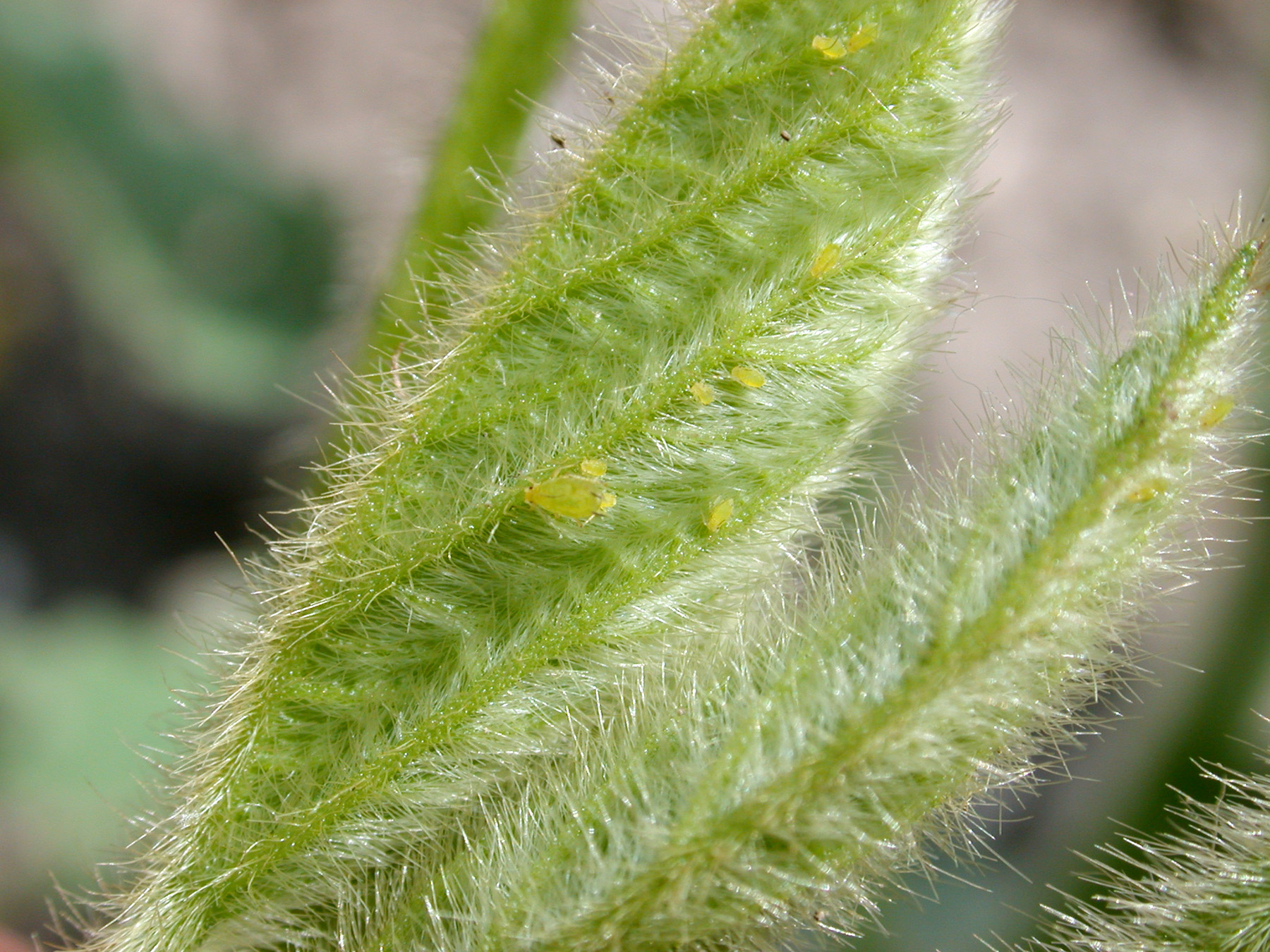
Stalk borer and damage revealed from whorl
Click here to view the Black Light Trap Catch Report

Cases of Possible Chloroacetamide Injury – (Glenn Nice and Bill Johnson)
Typically, herbicides are safe to the crops they are labeled in when used according to directions on the label. A large amount of effort in the form of research is put into assuring that they are safe. However, all the variables that our crops come up against can’t always be reproduced in field research and either by application error or specific conditions products that are usually safe can sometimes cause injury.
Recently two samples from two locations were submitted at the Plant & Pest Diagnostic Lab that showed similar symptoms that could be connected to active ingredients found in Lumax. In addition we have received numerous calls regarding minor injury caused by acetochlor (Degree, Harness, Topnotch). It should be noted that two samples do not make an epidemic, but it can be interesting. Lumax is a premix of mesotrione (Callisto), s-metolachlor (Dual II Magnum), atrazine and a safener benoxacor.
Mesotrione is a member of the triketone class of herbicides. Triketones inhibit the function of the enzume 4-HPPD. This causes problems with the making of carotenoids, a pigment in the plant. A symptoms that occurs in weeds and rarely in crops is a bleaching effect. Injury due to mesotrione would be chlorosis to bleaching of the leaf similar to the symptoms seen below. Mesotrione is herbicide labeled in corn and controls several broadleaf weeds such as black nightshade, lambsquarters, pigweeds, velvetleaf, and waterhemp. Some of the corn showed symptoms called bleaching (Figure 1). It should be noted that we rarely see injury from soil applied mesotrione.
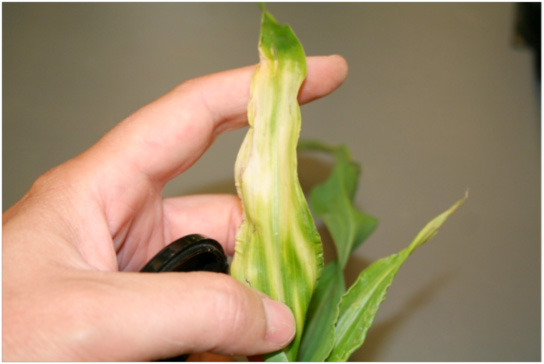
Figure 1. Suspected Lumax injury on corn in the form of bleaching.
The other symptom observed in the samples was the inability of the leaves to unfurl (Figure 2, 3 and 4). This symptom is often associated with chloroacetamide injury from herbicides such as s-metolachlor, acetochlor, flufenacet (Define) and dimethenamid (Outlook). In some cases, the leaves can’t pull free from the whorl and form a “ladder” like plant. The chloroacetamides inhibit the making of fatty acids, lipids, proteins, isoprenoids and flavonoids1. S-metolachor is a preemergence herbicide that has activity on annual grasses, black nightshade, pigweeds and waterhemp.
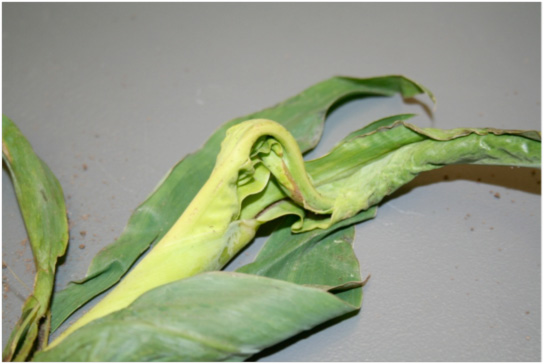
Figure 2. Young leaves trying to pull out of older leaves.

Figure 3. Leaves starting to form a 'ladder' as the bases of the leaves try to put free of the older outer leaves.

Figure 4. Corn leaf unable to pull out of the furl.
Why Can These Herbicides Occasionally Injury Crops.
When we consider the number of acres these herbicides are used on with good weed control and no crop response, it is not surprising that in rare cases conditions may be right to produce a negative crop response. Lumax is typically very safe on corn. Our very own Weed Control Guidelines rate Lumax as ‘good’ for crop tolerance. In research conducted at Purdue University, studies that collected injury responses reported no more than 8% bleaching and 3% leaf malformation, often not significantly different than the check. In most cases no injury was reported2. However, in 2005 Bill reported 17% stunting with a spring application of Lumax at 3 qt/A on a sandy soil3. But the corn recovered and no injury was observed by 6 weeks after treatment.
Both active ingredients are detoxified in the corn plant by different methods. In cool soil and weather conditions, corn metabolism is slowed reducing the speed at which these herbicides can be detoxified in the corn plants. Stressed corn plants may not be able to rapidly detoxify the herbicides. Heavy rain after applications can also influence potential for injury.
Cases of Possible Herbicide Injury
Although a light rainfall after a preemergence application of a herbicide can be beneficial, a heavy rainfall or standing water can lead to either the seed soaking up the herbicide or young shallow roots taking up to much of the herbicide. In a study conducted in Minnesota, corn injury from metolachlor was higher in wet soil conditions within a two week period after application4. Rainfall was recorded ranging from 1.25 to 3.6 inches during the two week period after planting. Cooler temperatures also increased injury. No yield effect was reported in treatments that showed injury earlier in the season. In this study, metolachlor treatments that contained the safener benoxacor did not have any injury as compared to the untreated check. Benoxacor increases the rate of metolachlor metabolism in corn, making the use of metolachlor safer. Lumax has benoxacor in its formulation leading to typically low levels of injury due to metolachlor.
Many things can lead to a crop response to a herbicide that for the most part is safe. These things can include tank contamination, increased rates due to misapplication, hybrid selectivity, environmental conditions, soil characteristics and drift of non-labeled products. In many cases, a combination of these things can not only increase potential, but in some cases make diagnosis of the problem far more difficult. This can be more so in what I like to call ‘messy years’. Years when we are rushed, under pressure or the growing season is off to a difficult start and plants are under stress. If you have used a product that has traditionally done well and you are experiencing problems, look at the symptoms, the patterns, and what may have been unique about this year. Often it’s in the details.
Other Things That Might Cause Similar Looking Symptoms
In conditions where a soil surface can form a crust corn can sometimes show similar injury. Seedling corn plants trying to emerge can hit a soil crust and will leaf out underground. In some cases the seedling never emerges and small plants can be dug up with distorted leaves. In other cases the plant can break the soil surface but have similar symptoms on small plants. Some fields have had conditions that can produce soil crusting such as heavy rain right after tillage. Other herbicides, such as growth regulator herbicides can induce growth abnormalities similar to the ones seen by chloroacetamides. In many cases the later and chloroacetamide injury are difficult to pull apart. In those times field history, pattern and sprayer history is required to provide clues as to the cause.
References:
1. 2007 Herbicide Handbook; 9th Edition. S.A. Senseman (editor), K.L. Armbrust, D.H. Johnson, G.E. McDonald, H.S. McLean, H.G. Hancock, T.J. Peters, J. Reynolds, D.W. Rushing, W. Vencill, R.D. Wauchope, J.H. Massey, F. Lichtner and D.Kitner. Weed Science Scocienty of America. p. 276.
2. Weed Science Research Report – Tom Bauman Program. T. Bauman and M.D. White. <http://www.btny.purdue.edu/weedscience/resreport/index.htm>.
3. Spring applied herbicide treatments for preemergence and postemergence control of dandelion. B. Johnson. 2005 Annual Research Report. <http://www.btny.purdue.edu/weedscience/resreport/BJ2005/04WB01.pdf>.
4. Influence of available soil water content, temperature, and CGA-154281 on metolachlor injury to corn. 1991. P.R. Viger, C.V. Eberlein, and E.P. Fuerst. Weed Science, 39:227-231.

Wheat Diseases Present Throughout Indiana – (Kiersten Wise) -
Scouting reports from across Indiana indicate that many wheat diseases are present in commercial fields and research plots throughout the state.
Fusarium head blight, or scab, is present in many commercial fields in southern and central Indiana. Incidence and severity vary from field to field, and fields that appear to look healthy from the road still have low to moderate levels of head blight in the field. Incidence (number of infected heads) ranges from 5-40% across southern Indiana, and 1-24% in central Indiana. Severity (amount of infection per head) ranges from 7-30% in these areas. Producers in northern Indiana should continue to monitor fields for symptoms of Fusarium head blight. Information about the disease was discussed in a previous Pest&Crop Issue 5, 2009 article: <http://extension.entm.purdue.edu/pestcrop/2009/issue5/index.html#wheat>. The Fusarium Head blight risk model <http://www.wheatscab.psu.edu> indicated that risk of infection was low in areas of northern Indiana during flowering. However, northern Indiana had frequent, spotty rains during that time which may have favored infection in localized areas.
Leaf rust and very low levels of stem rust are also present in wheat fields in southwest and south-central Indiana. Rust diseases do not overwinter in Indiana, and infection occurs when rust spores blow north from southern states each year. Glume blotch, Septoria/Stagonospora leaf blotch, loose smut, and black chaff have been observed in fields across Indiana at low to moderate levels .
All of these diseases in Indiana may reduce yield and grain quality in certain fields in Indiana. Growers should be prepared to deal with DON, or vomitoxin, in fields infected with Fusarium head blight. The University of Kentucky has prepared an excellent document with information on handling and storing scabby grain: <https://www.ca.uky.edu/ukrec/newsltrs/News09FHB.pdf>.
Scouting continues throughout Indiana and more information will be available as the crop progresses. We will also be reporting final disease estimates and losses. Many thanks to all of the Extension specialists, educators, and crop advisors who contributed scouting observations to our report.

Delayed Soybean Planting Decisions – (Shaun N. Casteel)
The 2009 planting season has been challenging with buckets of rain that delayed the planting of corn and recently soybeans. Sixty-nine percent of the acres intended for soybeans have been planted, which is below the five-year average of 87% according to the June 8th Indiana Crop & Weather Report. This report noted that the planting progress was greatest in northern Indiana (81%) followed by central Indiana (74%) and southern Indiana (41%).
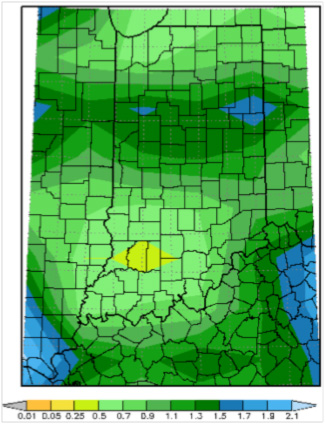
Rainfall has been the main story for this planting season with the majority of Indiana receiving 1 to 5 inches above the historical average in the past 90 days (Figure 1). Departures from the mean precipitation were greatest in west-central Indiana. Pockets in the central belt of Indiana were hit by the eastbound “train of rain”, which is evident in the precipitation totals for the past week (Figure 2).
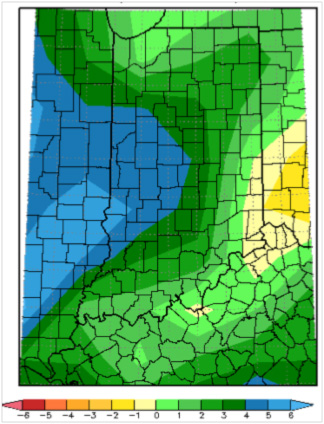
Departure of Total Precipitation (in)
Figure 1. Departure of the total precipitation from the historical mean over the past 90 days (March 11 to June 9, 2009)
Total precipitation (in)
Figure 2. Total precipitation over the past 7 days (June 2 to June 9, 2009) with the greatest amount in the central belt of Indiana.
Delayed planting of soybean will reduce the probability of attaining a maximum yield relative to an optimal planting date for a normal year (Figure 3). Fortunately, soybeans are not affected as severely as corn is by delayed planting. Unlike corn, which requires a certain number of growing degree days to mature, soybeans are sensitive to day length and as the day length shortens later in the growing season, maturity speeds up.
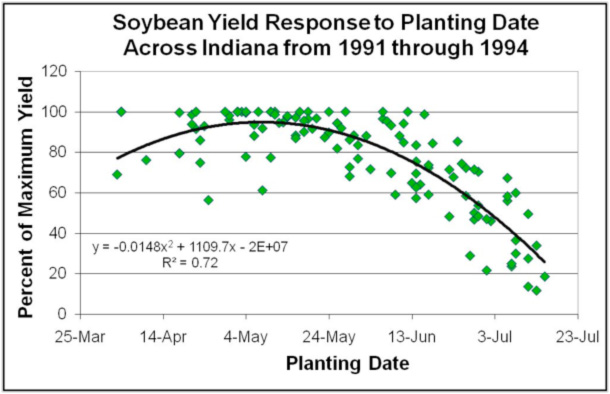
Figure 3. The yield effect of planting date across Indiana (1991-1994)
However, the opportunity to maximize soybean yields will decrease as planting is delayed (Table 1). Across Indiana locations, planting a full-season variety on June 10th will yield 90% of its maximum yield relative to a normal planting date. In another 10 days, this yield potential reduces to 78% of a normal yield. The full-season varieties of soybean should still be planted until June 15th in the northern one-fourth of the Indiana, June 20th for the central one-half of Indiana, and June 25th in the southern one-fourth of Indiana. Full-season soybeans will almost always out yield shorter season varieties for a given geographic area even when planting is modestly delayed.
| Table 1. Yield Effects from Delayed Planting (Uniform Stands) | ||
| Planting Date | Yield as a % of Normal for | |
| Mid-Season Variety | Full-Season Variety | |
| May 20 | 100 | 100 |
| May 30 | 96 | 94 |
| June 10 | 92 | 90 |
| June 20 | 82 | 78 |
| June 30 | 70 | Not Recommended |
| July 10 | 601 | Not Recommended |
| 1In Indiana, south of Interstate 70 only. | ||
Full-season variety of soybean should be switched to mid-season variety after June 15, 20, and 25 for the northern, central, and southern regions of Indiana, respectively. In other words, decrease the maturity by one-half assuming that the variety being grown was a full-season variety for that area of the state. Seeding rates should be increased by 15 to 20% to promote canopy closure to capture sunlight for photosynthate production, while shading out competing weeds. Additionally, the soybean-to-soybean competition will promote taller plants and subsequently the first reproductive node will be set higher to aid in harvest efficiency. Increased seeding rate will also increase the number of nodes per acre and increase the opportunity to maximize yields for the delayed planting.
Planting with mid-season varieties and increased seeding rate should cease around June 30th in northern one-fourth of Indiana, July 5th for central one-half of Indiana, and July 10th for southern one-fourth of Indiana. As general rule of thumb, a cutoff date to stop planting soybeans is 90 days prior to the first 32-degree frost for a given area within the state. For instance in Greencastle (central Indiana), the magical date would be October 7th for the first expected frost; therefore, the planting cutoff date would be approximately July 7th.
Related References
Christmas, E. 2009. Previous data and personal communication.
Conley, S. and G. Shaner. 2006. Is it time to plant an earlier maturity group soybean? <http://www.agry.purdue.edu/ext/soybean/pubs/MaturityGroupSwitch.pdf>.
Indiana State Climate Office. 2009. Total precipitation departure from mean: March 11, 2009 to June 9,2009. <http://www.agry.purdue.edu/climate/weather_maps/prcpdev-90days.asp>.
Indiana State Climate Office. 2009. Total precipitation: June 2, 2009 to June 9,2009. <http://www.agry.purdue.edu/climate/weather_maps/prcp-7days.asp>.
Purdue University Corn and Soybean Guide 2009 edition (ID-179) p. 102.
USDA-NASS. 2009. Indiana Crop & Weather Report ending June 7, 2009. <http://www.nass.usda.gov/Statistics_by_State/Indiana/Publications/
Crop_Progress_&_Condition/2009/wc060709.pdf>.
Corn And The Ugly Duckling - (Bob Nielsen)
- Ugly ducklings can change into beautiful swans.
What little corn that was planted back in late April and early May is beginning to reach an important milestone in its growth and development. Recognition of this event helps explain the annual transition from a slow-growing, often ugly, field of corn to one that grows like wildfire.
Every year, for the first five weeks or so after corn planting is finished, the guys down at the Chat ‘n Chew Cafe complain royally about the looks of the crop. Gripes about uneven stands, poor color, and slow growth abound around the tables as everyone airs their concerns about the looks of their neighbors’ fields.
Then suddenly one day, the tone of the conversation in between the coffee and sweet rolls perks up. Almost overnight, the crop has taken off like a rocket. The color of the leaves turns a dark, almost-blue green and they develop a distinct shine. From that point on, any connoisseur of corn feels better about life in general. What happens?
During the first five weeks or so after planting, the corn plant is going about the business of creating all of the leaves it will ever have. A few of these leaves are visible, but most are wrapped tightly deep inside the whorl, biding their time until its their turn to emerge.
Some root development is also occurring during these same first five weeks. In fact, the successful development of the first three or four sets of nodal roots during this time will go a long ways to ensuring successful stand establishment of the crop.
Even though new leaves and some roots are developing during this time, the rate of increase in total plant dry matter is relatively slow. The photosynthetic ‘factory’ is small, as is the size of the raw material accumulator devices (the roots).
Once the corn plant reaches the five or six leaf stage (determined by number of visible leaf collars), a miraculous turn of events occurs. The final leaf is created at the main growing point of the plant (near the top of the ‘pyramid’ of stalk tissue) and the plant turns its attention toward developing the reproductive structures known as the tassel and ears.
At the same time, the size of the photosynthetic ‘factory’ and its supporting staff of roots is reaching a critical mass that is finally capable of manufacturing greater and greater amounts of energy. With greater amounts of available energy, the ‘factory’ begins to convert more and more of the incoming nutrients and carbon dioxide into sugars, starches, and other plant dry matter.
Subsequently, the stalk begins to elongate rapidly, the roots begin to develop rapidly, the tassel develops rapidly, the tiny ears within the ear shoots develop rapidly, and suddenly the plant is growing like wildfire. From about knee-high corn to the onset of pollination, the corn crop progresses through its most rapid growth phase (above- and below-ground), including the uptake of the lion’s share of soil nutrients for use during the grain fill period.
By now you may be wondering what’s the moral of this story? Primarily, it’s a reminder to take time once in a while to look at this King of Crops in awe and wonder. Secondarily, be reminded that an ugly duckling of a corn crop that reaches the five to six leaf stage in reasonably good condition will usually turn the corner and become a beautiful swan of a corn crop during the next few weeks.
Thirdly, be reminded that true yield potential is just beginning to be determined at the start of this rapid growth phase. Ugly corn up to this point in time has not necessarily lost its yield potential. Ear size is determined from about knee-high to shoulder-high corn. Weather during pollination and grain fill finish off the yield determination. While we often moan and complain about the looks of young corn, it often surprises us with acceptable yields in the fall.
Related References
Nielsen, RL (Bob). 2007. Ear Size Determination in Corn. Corny News Network, Purdue Univ. [online]. Available at <http://www.kingcorn.org/news/timeless/EarSize.html> [URL accessed June 2009].
Nielsen, RL (Bob). 2008. Growing Points of Interest. Corny News Network, Purdue Univ. [online]. Available at <http://www.kingcorn.org/news/timeless/GrowingPoints.html> [URL accessed June 2009].
Nielsen, RL (Bob). 2009. Root Development in Young Corn. Corny News Network, Purdue Univ. [online]. Available at <http://www.kingcorn.org/news/timeless/Roots.html> [URL accessed June 2009].
Prevalent Purple Plants Possibly Puzzle Producers - (Bob Nielsen)
As folks trickle back into the Chat ‘n Chew Café after several weeks of intensive planting efforts, conversations are beginning to drift toward the condition of the young crop. Some of the café’s regulars are reporting that whole fields have taken on noticeable shades of red and purple over the past week or so. Landlords and tenants alike are wondering what on earth is wrong with these fields.
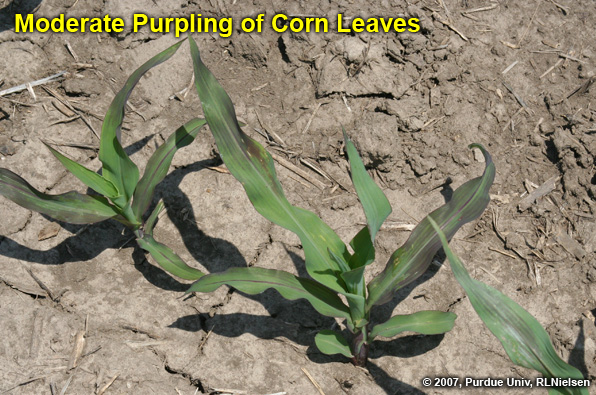
Purpling of corn plant tissue results from the formation of a reddish-purple anthocyanin pigments that occur in the form of water-soluble cyanidin glucosides or pelargonidin glucosides (Hak, 1998). A hybrid’s genetic makeup greatly determines whether corn plants are able to produce anthocyanin. A hybrid may have none, one, or many genes that can trigger production of anthocyanin. Purpling can also appear in the silks, anthers and even coleoptile tips of a corn plant.
Well, you may say, that’s fine but what triggers the production of the anthocyanin in young corn at this time of year? The answer is not clearly understood, but most agree that these pigments develop in young plants in direct response to a number of stresses that limit the plants’ ability to fully utilize the photosynthates produced during the day. These stresses include cool night temperatures, root restrictions, and water stress (both waterlogged and droughty conditions).
There’s no question that many cornfields throughout the state have suffered through wet soil conditions during the past several weeks. Furthermore, soil compaction (tillage- or planter-related) is more prevalent this year and that restricts the development of the initial root systems. The additional stresses imposed by recent relatively cool nights (upper 30’s to low 40’s) and several bright sunny days (high levels of visible and UV radiation) may be the final “triggers” that result in fields of pretty purple plants.
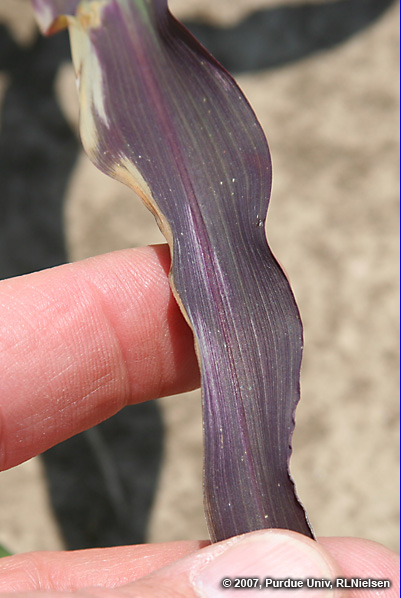
Since the anthocyanin occurs in the form of a sugar-containing glucoside, the availability of high concentrations of sugar in the leaves (photosynthesis during bright, sunny days) further encourages the pigment formation. If fields are stressed by other factors such as soil compaction, herbicide injury, disease damage, or insect injury, the purpling becomes even more pronounced.
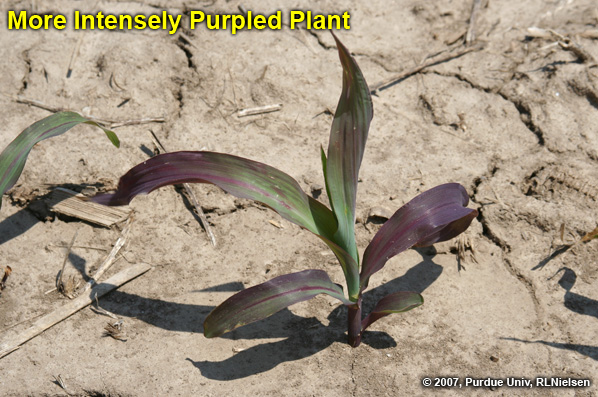
It has been my experience that the combination of bright, sunny days and cool nights when corn ranges from V3 to V6 in development (3- to 6-leaf collar stages) most commonly results in plant purpling. Hybrids with more anthocyanin-producing genes will purple more greatly than those with fewer “purpling” genes. In most cases, the purpling will slowly disappear as temperatures warm and the plants transition into the rapid growth phase (post-V6).
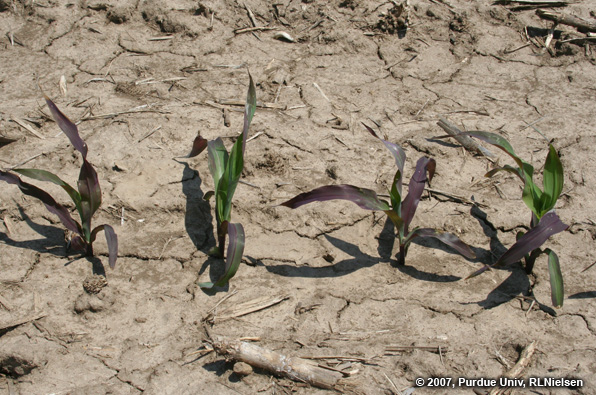
I have rarely diagnosed phosphorus deficiency as the primary cause of purple plants early in the season. Nonetheless, cold or wet soils inhibit root development and can aggravate a true phosphorus deficiency situation, frequently causing even more intense leaf purpling.
What About Yield Losses? Does the leaf purpling lead to yield losses later on? The cause of leaf purpling, not the purpling itself, will determine whether yield loss will occur by harvest time.
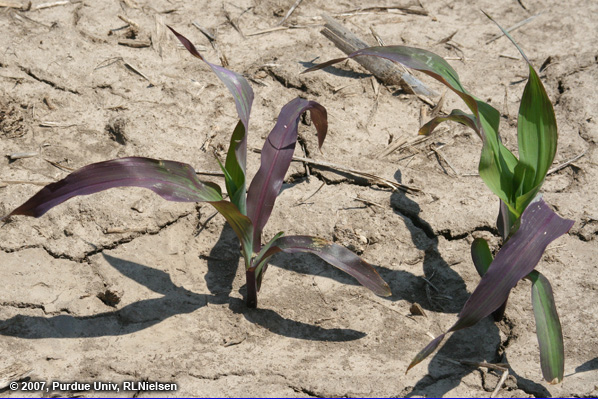
If the main cause is the combination of bright, sunny days and cool nights, then the purpling will disappear as the plants develop further with no effects on yield. If the stress of restricted root systems is a major contributor to the purpling, then the potential effects on yield depend on whether the root restriction is temporary (e.g., cool temperatures & wet soils) or more protracted (e.g., soil compaction, herbicide injury). Plants can recover from temporary root restrictions with little to no effect on yield. If the root stress lingers longer, the purpling may continue for some time and some yield loss may result if the plants become stunted.
Related References
Chalker-Scott, Linda. 1999. Environmental Significance of Anthocyanins in Plant Stress Responses. Photochemistry and Photobiology 70(1): 1–9.
Christie, P.J., Alfenito, M.R., and Walbot, V. (1994). lmpact of low- temperature stress on general phenylpropanoid and anthocyanin pathways: Enhancement of transcript abundance and anthocyanin pigmentation in maize seedlings. Planta 194: 541-549.
Dixon, Richard A. and Nancy L. Paiva. 1995. Stress-lnduced Phenylpropanoid Metabolism. The Plant Cell 7:1085-1097. American Society of Plant Physiologists. [On-Line]. Available at <http://www.plantcell.org/cgi/reprint/7/7/1085>. [URL accessed 5/19/08].
Kim, Jae Hak. 1998. Maize Anthocyanin Pathway. Pennsylvania State Univ. [On-Line]. Available at <http://scripts.cac.psu.edu/courses/plphy597_hef1/mpath.html>. [URL accessed 5/19/08]. Editorial note: This link is for biochemistry fans!