


Pest & Crop Newsletter, Entomology Extension, Purdue University

- Black Cutworm Moth Catches Increase
- Alfalfa Weevil Management Guidelines and Control Products
- Armyworm Moth Flights
- Black Cutworm Adult Pheromone Trap Report
- Black Light Trap Catch Report

Black Cutworm Moth Catches Increase
- (Christian Krupke, John Obermeyer, and Larry Bledsoe)- Arriving moths are looking for egg laying sites (e.g., weedy fields, fields with extensive ground cover, etc.).
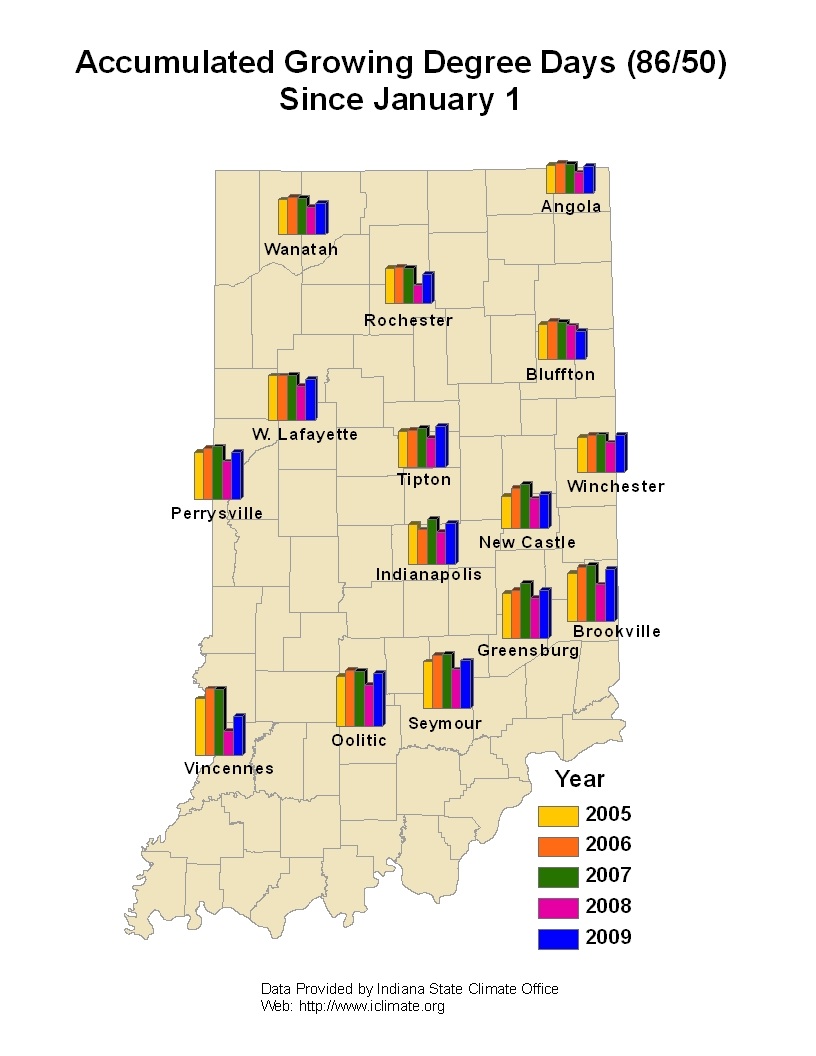
- Accumulations of approximately 300 heat units (base 50°F) needed before crop damage will be noted.
- Follow-up scouting is imperative.
Up until this past week, black cutworm moth catches in pheromone traps throughout the state were at low levels (see “Black Cutworm Adult Pheromone Trap Report”). However, with the storm fronts and warmer temperatures, trap catches increased in several areas over the past week. Although the numbers are not alarmingly high, it does signal that we may see some feeding activity this growing season. This will be especially true if producers’ fields remain wet and weed control activities are delayed, and if moth flights into the state continue. It looks like the first of these conditions are almost certain to be met, as it has been raining steadily over much of the state this week.
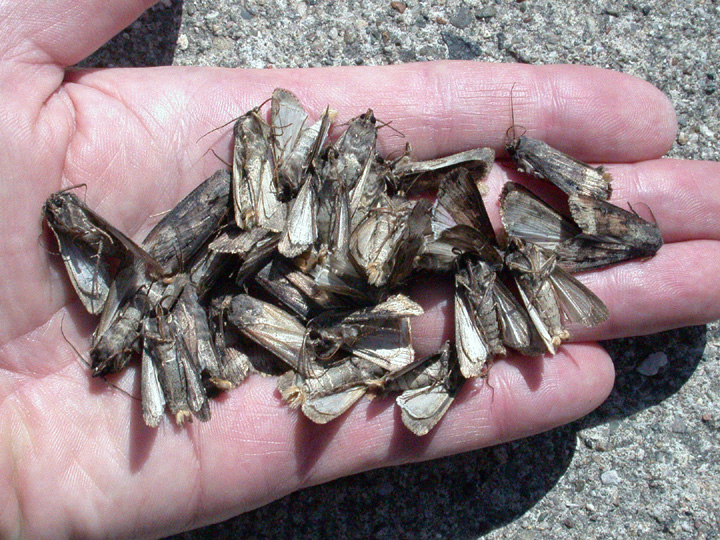
Handful of weary black cutworm moths from the South.
Predictions as to when cutting by black cutworm larvae may first be noted are based on the accumulation of 300 heat units (base 50°F) following any two-day period when a total of 9 or more moths are caught in pheromone traps. Based on moth trappings during the past week, we are projecting first cutting of corn (if present) on approximately May 10. Remember, the date may change depending on what happens to temperatures over the next two weeks. Also, the projection for first cutting does not mean that cutworms will be of economic importance or widespread at that time. This advisory is only intended to alert you as to the approximate time of cutworm activity. When and if the time comes for cutworm feeding, it will be extremely important that fields, whether they have been planted or not, are immediately scouted to determine if cutworms are present and, if so, the level of infestation. Remember, based on past history, most fields in the state will see little or no activity.
Cutworms can be managed very effectively through timely field monitoring to determine if and when an insecticide is needed. Chances are, an insecticide will not be needed. In addition, insecticides can be applied to protect against potential cutworm problems. These “insurance” treatments are seldom very cost-effective, however, because cutworms are a very sporadic problem and most fields treated would not suffer any economic damage even if left untreated. Furthermore, these preventative treatments may not provide acceptable control of heavy infestations of cutworms, necessitating a rescue treatment.

Alfalfa Weevil Management Guidelines and Control Products
– (Christian Krupke and Larry Bledsoe)- Alfalfa weevil damage has intensified, scout now in southern Indiana.
- Rain is complicating management of this pest.
- Management guidelines and recommended insecticides appear below.
Pest managers in southern Indiana should now be scouting their alfalfa for leaf feeding from weevil larva as the weekend temperatures have accelerated their development and damage. Reports from David Trotter, Clark County CES, and Randy Schelle, Falmouth Farm Supply in Fayette County, indicate that fields are at treatable levels. This pest is often overlooked during the early spring planting season. The wet weather certainly is not helping those wanting to apply treatments.
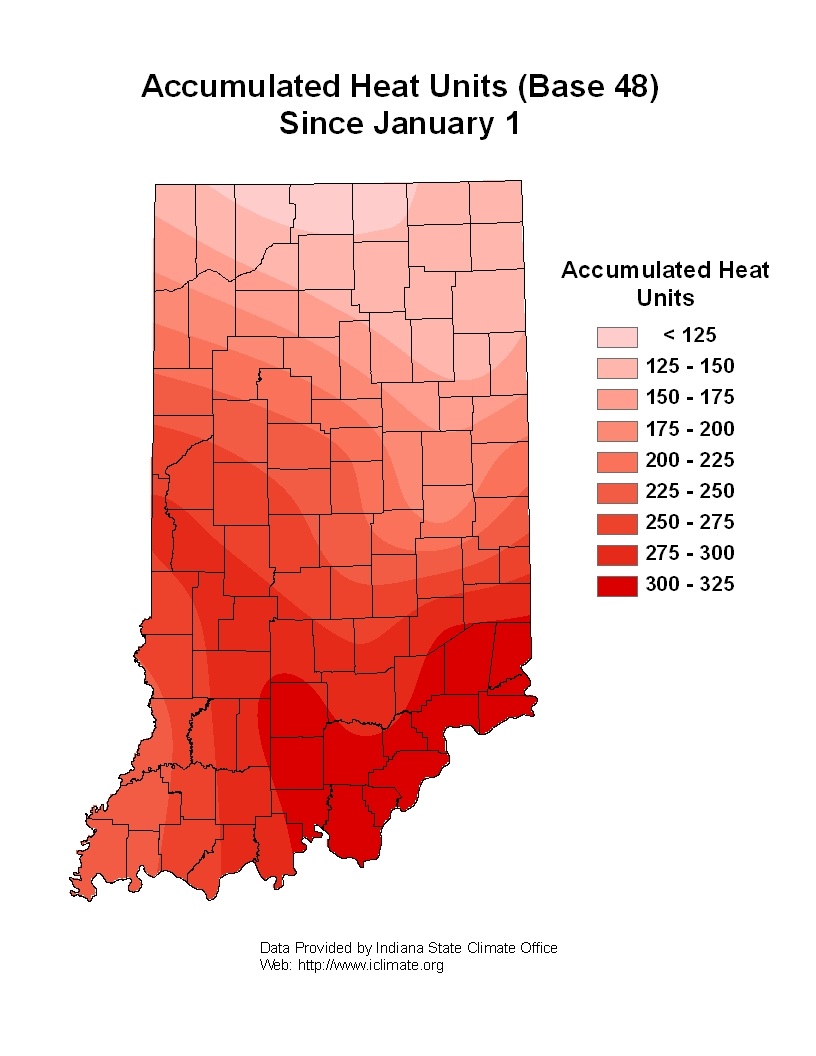
Producers can manage this pest most effectively by utilizing heat unit accumulations data (base 48°F) to determine when sampling should begin and when an action should be taken, The management guidelines listed below should be used to determine when alfalfa weevil should be controlled in southern Indiana. Refer to the following heat unit map to track weevil development in your area.
| Alfalfa Weevil Management Guidelines, 2009 Southern Indiana |
||
Heat units |
% Tip feeding |
Advisory |
200 |
Begin sampling. South facing sandy soils should be monitored earlier | |
300 |
25 |
Re-evaluate in 7-10 days using the appropriate HU or treat immediately with a residual insecticide if 3 or more larvae are noted per stem and % tip feeding is above 50%. |
400 |
50 |
Treat immediately with a residual insecticide. |
500 |
75 |
Treat immediately. |
600 |
75+ |
If cutting delayed more than 5 days, treat immediately. |
750 |
If harvested or harvesting shortly, return to the field in 4-5 days after cutting and spray if 1) there is no regrowth and weevil larvae are present OR 2) feeding damage is apparent on 50% of the stubble and weevil larvae are present. | |
Insecticides For Alfalfa Weevil Larval Control |
||
| Insecticide | Formulation and Amount Per Acre |
Harvest Or Pasture Restriction |
| carbofuran (Furadan)1,2 | 1/2 pt. 4F 1 pt. 4F 2 pt. 4F |
7 days 14 days 28 days |
| chlorpyrifos (Lorsban)1,2 | 1 pt. 4E 2 pt. 4E |
14 days 21 days |
| chlorpyrifos & gamma-cyhalothrin (Cobalt)1,2 | 19 - 26 fl. oz. EC |
14 days 21 days |
| cyfluthrin (Baythroid XL)1,2 | 1.6 - 2.8 fl. oz. EC |
7 days |
gamma-cyhalothrin (Proaxis)1,2 |
2.6 - 3.8 fl. oz. EC |
1 day-forage 7 days-hay |
| lambda-cyhalothrin (Warrior )1,2 | 2.6 - 3.8 fl oz. CS |
1 day-forage 7 days-hay |
| permethrin (Ambush)1,2 (Pounce)1,2 |
12.8 oz. 2 EC 8 oz. 3.2 EC |
14 days |
| zeta-cypermethrin (Mustang Max)1,2 | 2.2 – 4.0 fl. oz. EW |
3 days |
| 1Restricted use pesticide. 2Highly toxic to bees. |
||
Armyworm Moth Flights
- (Christian Krupke and John Obermeyer)- Armyworm moths being captured in black light traps.
- Crop scouting will be emphasized in the next couple weeks!
Our black light trapping at the Purdue Agricultural Research Centers, which began last week, have been catching a fair number of armyworm moths, the next several weeks of black light catches will be important to watch. In the meantime, grassy crops in extreme southern Indiana should be monitored in a couple weeks for leaf defoliation and small armyworm larvae hiding under the soil surface residues during the day. This is especially true where grass-hay and wheat are thick and lush, a favorite egg-laying location for moths. Stay tuned and happy scouting!
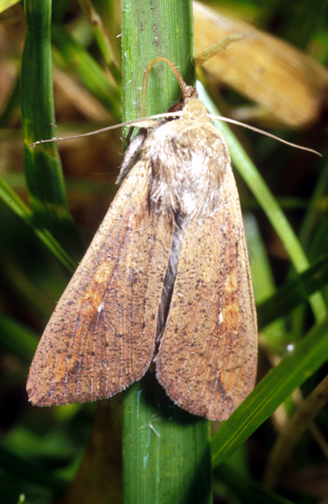
Armyworm moth
Click here to view the Black Cutworm Adult Pheromone Trap Report
Click here to view the Black Light Trap Catch Report

Sugar Maple in No-Till Fields
– (Glenn Nice and Bill Johnson)
No-till fields sometimes have problems with perennial weeds like common pokeweed, Johnsongrass, and on occasion tree species. One species that we have noticed in several no-till fields over the past couple of years is sugar maple (Acer saccharum Marsh) seedlings (Figure 1).
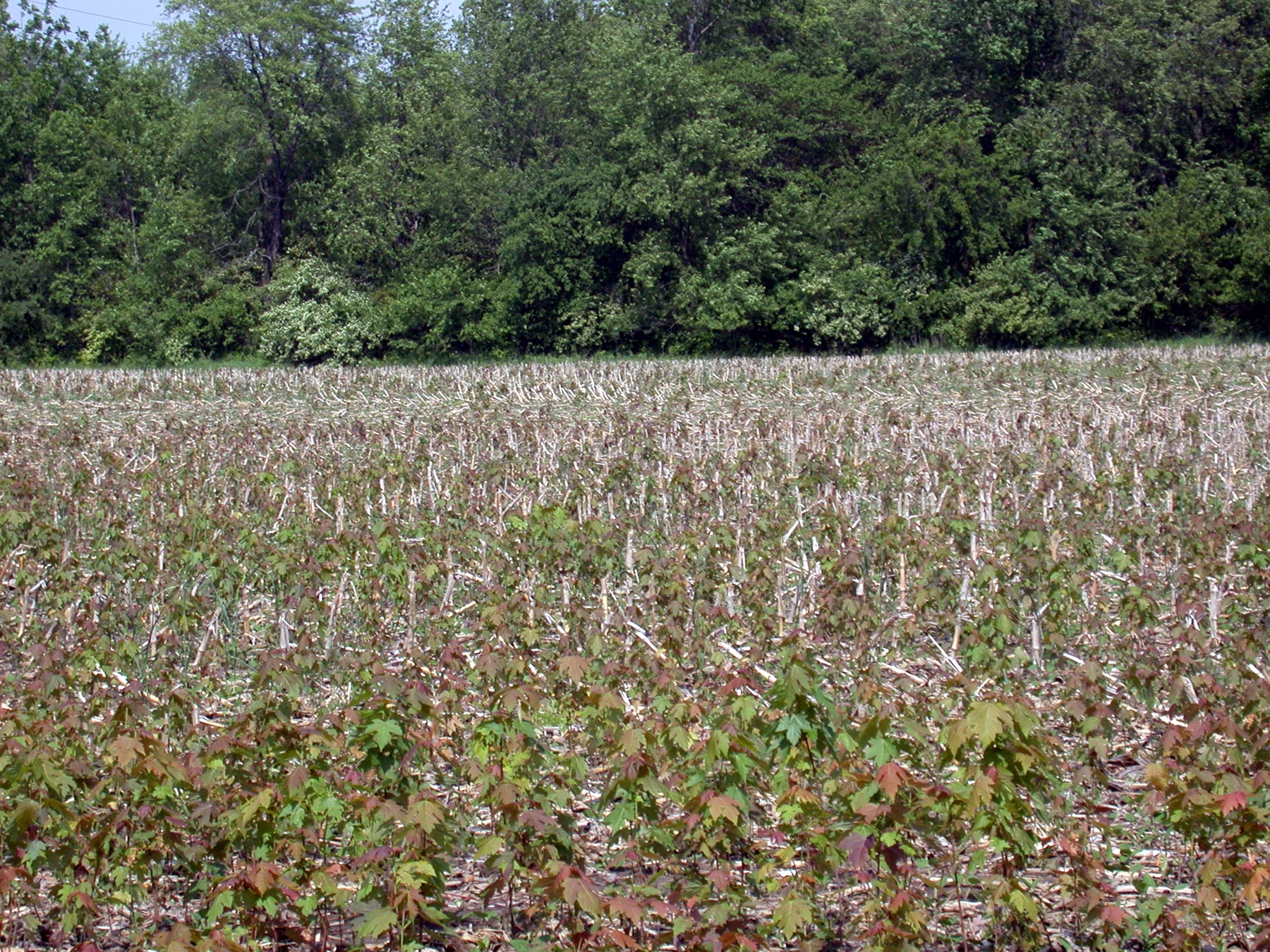
Sugar maple seedlings in a no-till field.
The sugar maple is a native of Eastern US that has been planted as an ornamental in many yards and along roads. Its fame comes from using its sap for maple syrup, but it has also been used for its wood. For Canadians it is significant in the fact that it is a major component of the Canadian flag. It grows to be a large tree of 100 to 150 ft tall with a trunk diameter up to 2.5 to 3.5 ft. It has a typical maple leaf 3 to 6 inches long with 3 to 7 lobes (Figure 2). Leaves are generally dark green on the top and light green on the underside. Sugar maples flower in April to May. Their flowers are greenish yellow and droop on hairy pedicels. Even at a small size the seedling will show the typical leaf shape.
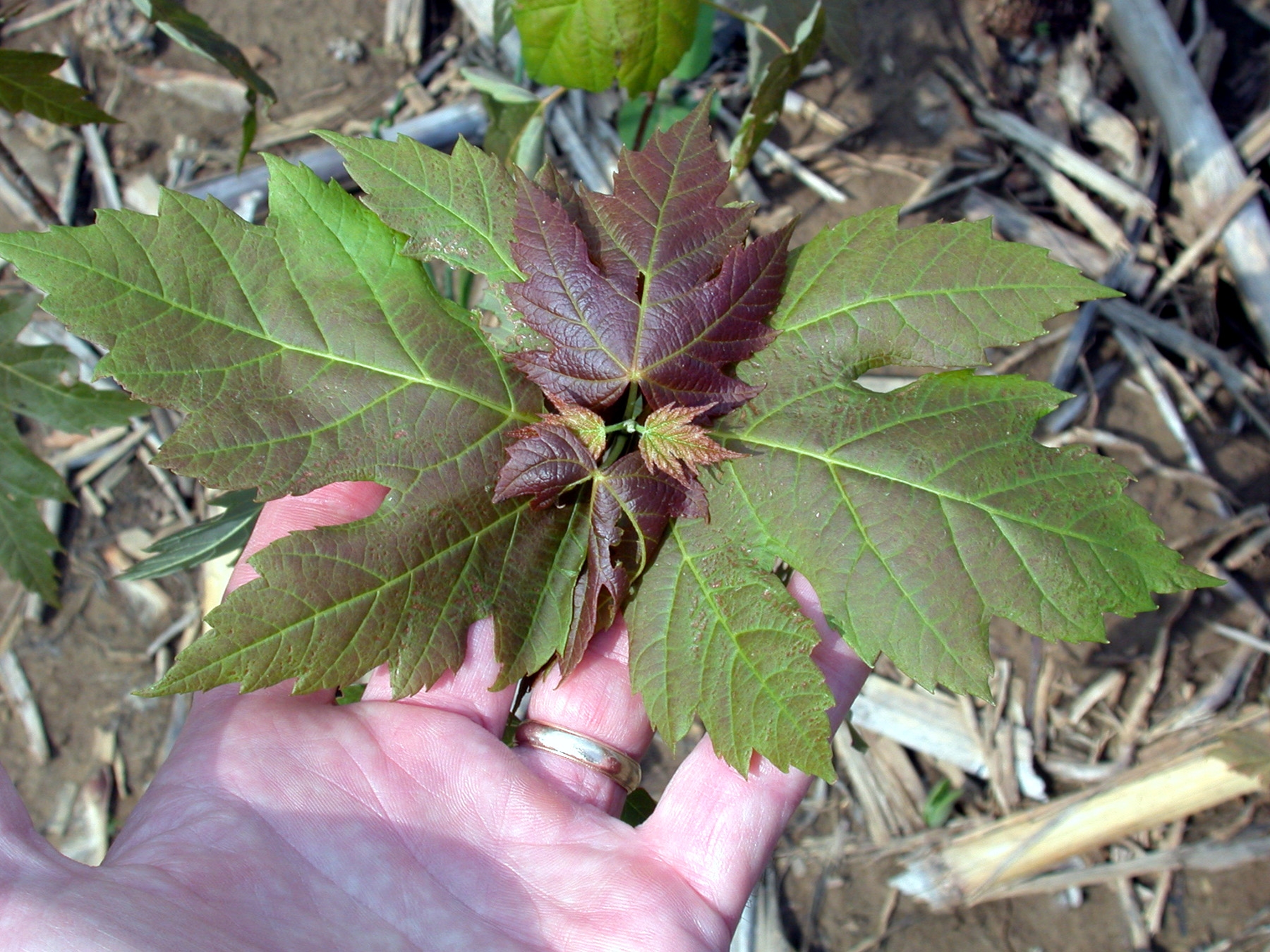
Close-up of a sugar maple seedling.
Although these are beautiful trees they are generally not welcome in a soybean or corn field. If allowed to persist they become more troublesome to control in a row crop field. The papery wings of the seed can carry seed over 300 feet from the parent tree, easily across a road or into your field. Seedlings can germinate and do well in either shade or full light, emerging in April and May. When seedlings emerge, much of the season’s growth occurs with 24 days of emergence.
Information for the control of sugar maple tends to revolve the control of the small or large trees in a forestry setting. When doing a search of labeled products in corn or soybean, generally only glyphosate products appeared to be labeled to control sugar maple. The recommendations on most labels refer to a spot treatment when at least 50 percent of the leaves are present. These applications are applied using a 0.75 to 1.5 (rates vary depending on label) percent solution and a hand held back pack sprayer. Some dicamba (Banvel) labels address cut surface and stump applications for the control of maples and Clarity’s label has maple as a control species. However, information to the specific control of sugar maple seedlings in corn or soybean was not fully addressed. Considering the above mentioned products do have activity on larger mature trees, we suspect that both glyphosate (Roundup) and dicamba (Banvel, Clarity, Distinct products) are effective on sugar maple seedlings, but one thing is for sure, the topic is definitely open for some investigation. Our recommendations would be to use the highest allowable rates of these products in the burndown or postemergence in the crop. If they are established in a long-term no-till field, consider aggressive tillage of the specific area where the trees are growing or fall mowing and cut stump treatments if tillage is not desirable.
What Do We Do About the Yellow Fields?
– (Bill Johnson and Glenn Nice)There are a lot of yellow fields out there, especially in the southern half of Indiana. The weed species is cressleaf groundsel, aka, ragwort, butterweed, senecio, “that mustard thing” (Figure 1). See a related article for more information on the biology and identification of this weed.

Fig. 1. Yellow fields in Indiana with cressleaf groundsel.
Glenn and I have received a number of questions about control of this weed this past week because the recent wet spell did not allow burndown applications to be made in a timely manner during late April. Now we have fields with groundsel, plus chickweed, henbit, deadnettle, and winter annual grass in the seed set stage, and summer annuals that have started to emerge such as giant foxtail, giant ragweed, common lambsquarters, black nightshade, pigweeds and waterhemp and bolting horseweed (marestail) that emerged in the fall and seedling horseweed that emerged this spring. So what do we do? There are a couple of different herbicide programs to consider. In all cases, it is going to be best to add some 2,4-D to the mix to improve control of groundsel, bolting horseweed, and the summer annual broadleaf weeds. The chickweed and other winter annuals won’t be controlled well by anything since they are in the seed set stage, but they could be desiccated more rapidly if a paraquat-based program is used. Control of groundsel will also be a challenge since it is large, flowering and many of the lower leaves have fallen off of the plant, so herbicide uptake is limited by lack of leaf area.
Key Considerations. If flowering (Figure 2) groundsel is the primary target, you can use glyphosate + 2,4-D or 2,4-D + paraquat + Sencor (beans) or atrazine (corn) if you desire more rapid desiccation of weed biomass. In the glyphosate-based program, use the 1.5 lb ae/A rate with 1 pt/A of 2,4-D. Most labels require you to wait 7 days before planting corn or soybean with this rate of 2,4-D. In the paraquat-based program, use the upper end of the rate range for more effective control of large weeds. In our research, these programs have usually provided about 85 to 90% control of large, flowering groundsel. However, if the weather stays cool and wet, expect some regrowth of groundsel with either herbicide program that can be cleaned up with various postemergence treatments in corn or soybean.
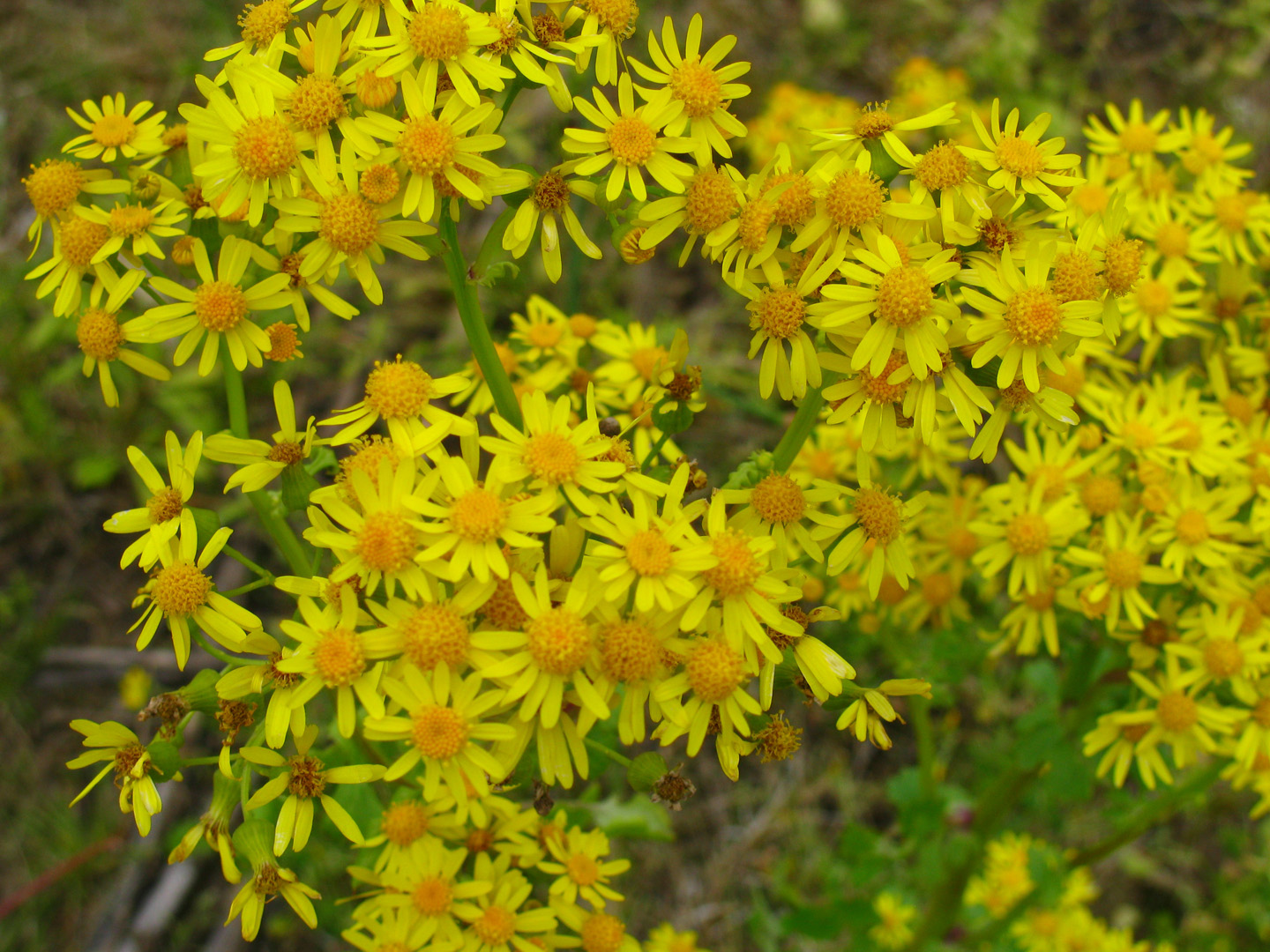
Fig. 2. Flowering cressleaf groundsel.
How to Prevent this from Happening Next Year. This situation is a good educational opportunity to see the value of fall applied herbicides for managing groundsel. Groundsel is primarily a winter annual and fall applied treatments containing glyphosate and/or 2,4-D are very effective in reducing infestations. In Figure 3 (taken May 6, 2006) at the Southeast Purdue Ag Center, the field on the left was sprayed with glyphosate in the fall, the field on the right was not treated. Although we do not have 100% control of all weeds on this date,

Fig. 3. Fall applications of glyphosate were applied on the left field, the right field did not receive a fall application.
the field on the left is noticeably drier and will be planted 1-3 days earlier than the field on the right. Our recommendations would be to start with a clean field in both cases, so the weeds present in both fields should be controlled before planting with tillage or a burndown herbicide. If no-till practices are used, the field on the left could be managed effectively with the 0.75 lb ae/A rate of glyphosate alone. Because the field is in southeast Indiana and glyphosate-resistant horseweed is widespread in this area, so, we would also recommend using 2,4-D with glyphosate or a paraquat-based program with 2,4-D and a triazine. A low rate of paraquat could be used in this field compared to the field on the right. For the field on the right, we would recommend using a 1.5 lb ae/A rate of glyphosate with 2,4-D or a paraquat-based program mentioned above. The paraquat rate would need to be towards the upper end of the labeled rate range. If conventional-till practices are used, the field on the left will likely require at least 1 less field preparation pass with a field cultivator that the field on the right. The field on the right will likely need to be disked which would create large clods (Figure 4 and 5), allowed to dry, and then field cultivated before planting – an investment of time and labor and potentially a practices that leads to excess soil compaction.

Fig. 4. Conventional tillage practiced in the field on the left.
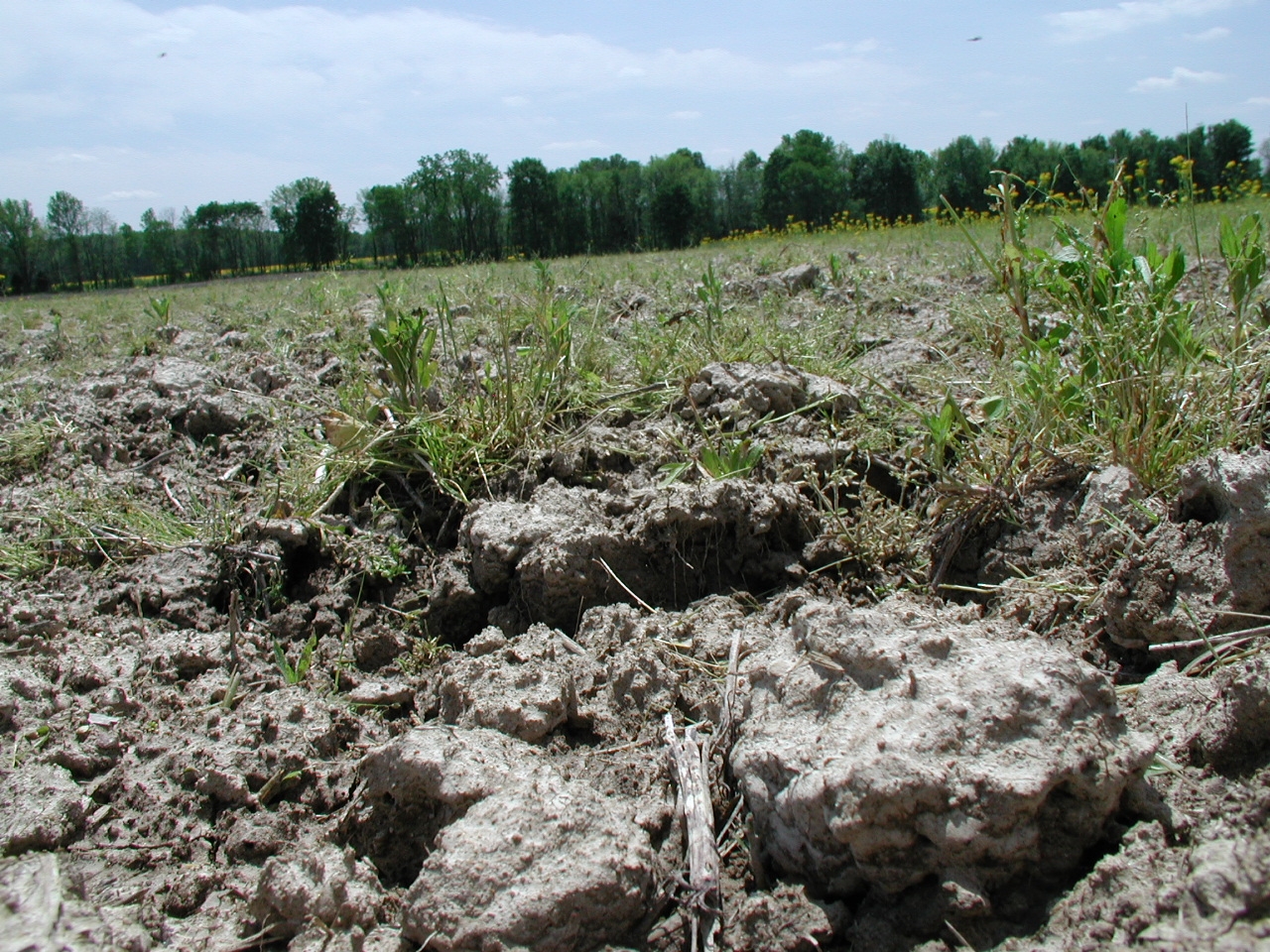
Fig. 5. Large clods from disking.
This image shows what a fall applied treatment of glyphosate + 2,4-D + Canopy EX looks like on May 6, 2006 (Figure 6). Notice that all of the winter vegetation is controlled by the addition of Canopy EX to the mixture. A field with this type of control could be planted into without additional soil preparation or spring applied herbicides.
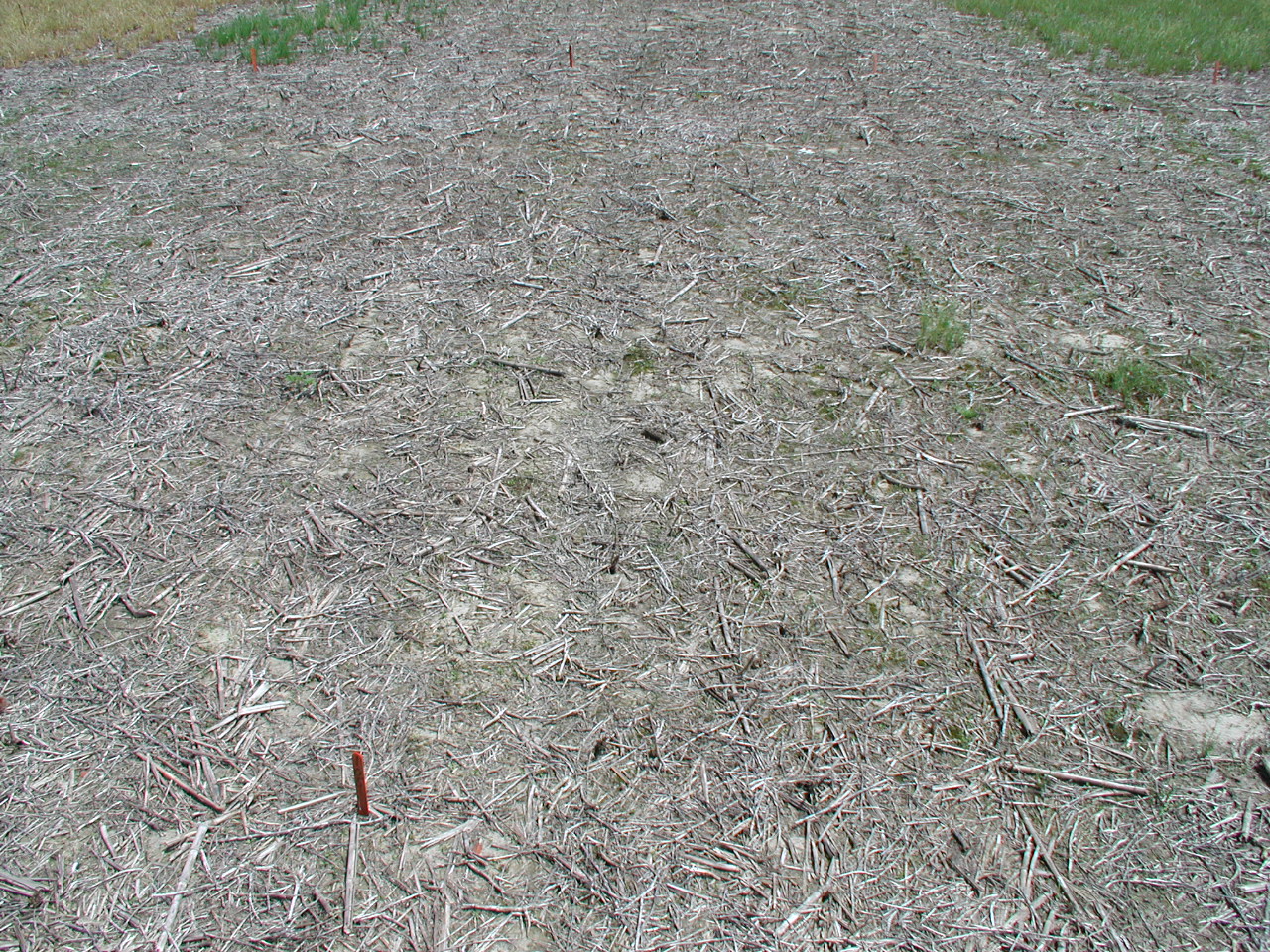
Fig. 6. Fall applications of glyphosate + 2,4-D Canopy Ex. Taken May 6, 2006.
As a final note, use of fall applied herbicides are not the solution to all spring problems, particularly horseweed. Since we have a lot of summer emerging horseweed in southern Indiana, use of fall applied herbicides is not the most effective technique for managing horseweed unless products with significant residual activity are used in the fall. I will discuss that in more detail later in the summer as we begin planning fall herbicide applications.

Predicting Risk of Fusarium Head Blight (Scab) in Wheat — (Kiersten Wise)
Wheat growth stages across Indiana range from head emergence (Feekes growth stage 10.5) in far southern Indiana to jointing (Feekes growth stage 6) or earlier in northern Indiana. As wheat approaches flowering (Feekes growth stage 10.5.1, Figure 1) in the coming weeks, it is important to consider the risk of Fusarium head blight (FHB), or scab, development.
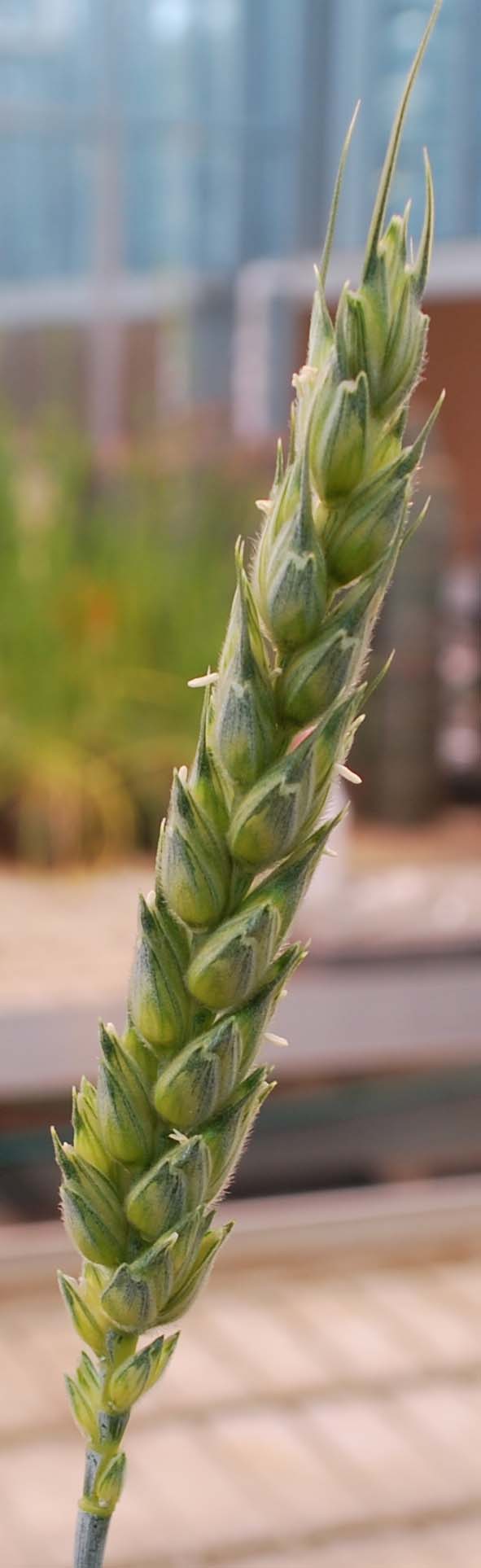
Fig. 1. Feekes growth stage 10.5.1.
The fungus that causes head scab, Fusarium graminearium, infects the wheat plant during flowering, or Feekes growth stage 10.5.1. Rainy, warm, and humid weather conditions favor disease development. Symptoms include bleached spikelets on the head (Figure 2), and small or shriveled grain kernels, commonly called “tombstones”. The fungus also produces hazardous toxins, such as deoxynivalenol, or DON, which can accumulate in the infected grain. DON is toxic to livestock, especially swine, and grain with DON levels between 1 and 3 ppm can reduce weight gain in animals. DON-infected grain may also be subjected to dockage or refusal, depending on the grain buyer.
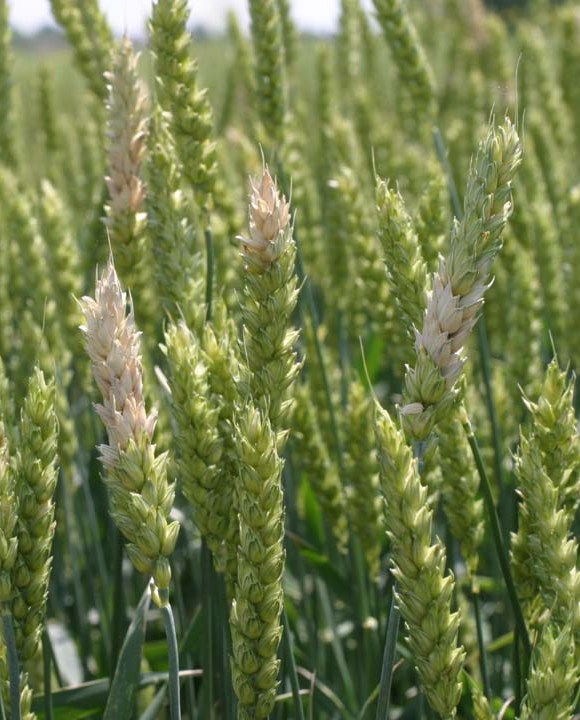
Fig. 2. Bleached spikelets on the head of wheat (Photo courtesy of G. Shaner).
Crop rotation and selection of partially resistant varieties can help prevent Fusarium head blight development, but timely fungicide applications may be needed to prevent or manage the disease in-season. There are several good fungicides available for Fusarium head blight control, and these are listed in the foliar fungicide efficacy table developed by the North Central Regional Committee on Management of Small Grain Diseases or NCERA-184 committee: <http://www.ppdl.purdue.edu/ppdl/wise/NCERA_184wheatfungicides.pdf>.
Applications of fungicide prior to head emergence, such as those applied at jointing or flag leaf emergence may not reduce FHB infection. Also, some research has shown that fungicides containing strobilurin modes of action(Headline, Quadris, Quilt, Stratego, Twinline, etc.) increase the level of DON accumulation in FHB infected wheat (1,2). Therefore, we do not recommend applying strobilurin fungicides for Fusarium head blight control. Also, be sure to follow label restrictions on how many days must pass between fungicide application and harvest.
Fungicides are an additional input into wheat production, and are not always necessary, especially if the risk of Fusarium head blight infection is low. Fusarium head blight has not been as problematic in Indiana over the last several years; however, the frequent rains and warmer temperatures could increase the chances of Fusarium head blight development in 2009. There is an excellent risk model tool available for growers to use to assess the risk of Fusarium head blight infection in Indiana. This model can be accessed through the following link: <http://www.wheatscab.psu.edu/>.
At this site there are several links that explain how the model was developed, and links providing additional information about Fusarium head blight on wheat. To access the model directly, click on the link marked “Risk Map Tool.” The first screen will explain how to use the model. This model requires that you know the approximate flowering date of your wheat variety, and after reading the initial screen, you can click on calendar to input the date that your variety is expected to flower. At this point, if you click on the state map of Indiana, it will take you to the local scab forecast, and you can calculate the Fusarium head blight risk level for that specific area (Figure 3).
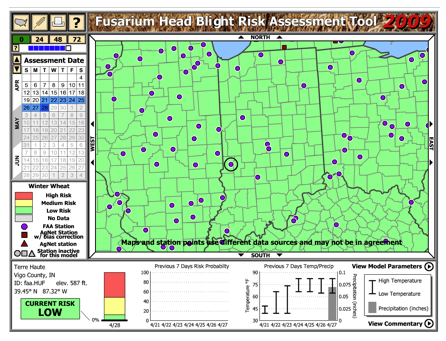
Fig. 3. Check the website to calculate Fusarium head blight.
This model uses weather information including temperature, rainfall, and relative humidity to calculate risk levels for Fusarium head blight. Although it is a good tool for predicting risk, it has an estimated accuracy level of 80%. Keep in mind that the model does not provide a guaranteed prediction for whether or not scab will occur in individual fields.
References:
C.A. Bradley, E. Adee, S. Ebelhar, and B. Young. 2008. Fungicide control of Fusarium head blight on soft red winter wheat in Illinois. In: Proceedings of the United States Wheat and Barley Scab Initiative 2008 National Fusarium Head Blight Forum p. 10. Online at: <http://www.scabusa.org/pdfs/forum08_proc_complete.pdf>.
C.R. Hollingsworth and C.D. Motteberg. 2008. Determining potentials for DON accumulation from prehead timing of fungicide application on spring wheat and 6-rowed malting barley in Minnesota. In: Proceedings of the United States Wheat and Barley Scab Initiative 2008 National Fusarium Head Blight Forum p. 26. Online at: <http://www.scabusa.org/pdfs/forum08_proc_complete.pdf>.
Wind Damage in Wheat can Mimic Disease - (Kiersten Wise)
It has been a relatively quiet year so far for wheat diseases throughout the state. However, with all of the rain we have had over the last week we may start to see more foliar diseases in the coming weeks.
In fact, we had a wheat disease look-alike reported in several fields in northern Indiana this week. The wheat samples in question (Figure 1) had gray to brown flecking on the leaves that resembled powdery mildew. After careful inspection, the cause of the leaf flecking was ruled to be wind damage rather than disease. The strong winds over the last week may have damaged plants in some fields, giving the leaves a “sand-blasted” appearance that can be confused with powdery mildew (Figure 2).
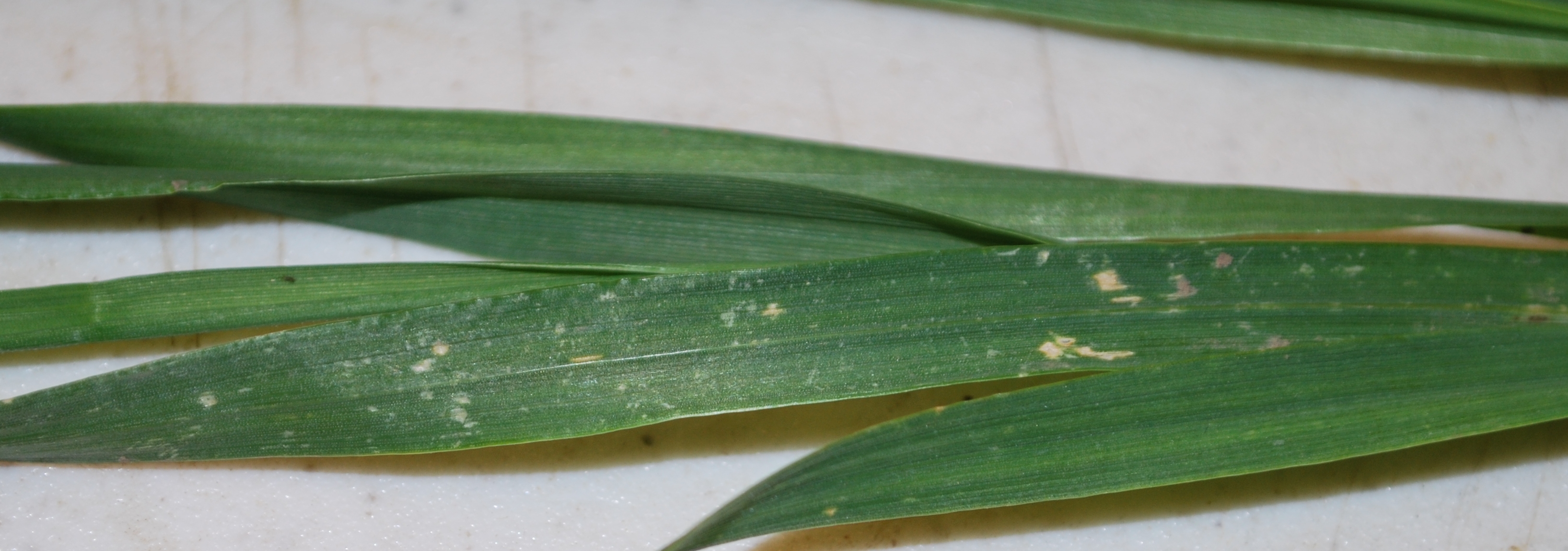
Fig. 1. Wind damage on wheat.

Powdery mildew on wheat (Photo courtesy G. Shaner).
Inspecting wheat leaves with a hand lens can help determine if the spots on the leaves are caused by a fungus. The fungus that causes powdery mildew will produce white fluffy strands of fungal growth, known as mycelia, on the leaf tissue. The mycelia will be noticeable with a hand lens. These white patches may turn gray or brown as the season progresses and dark round structures, known as cleistothecia, can form in the center of the patches. The fungus survives from year-to-year on wheat residue as cleistothecia.
If powdery mildew is the culprit, there are resistant varieties available that can help manage the disease. Fungicides are also available that can provide in-season control of powdery mildew. It is important to time the application so that the flag leaf is protected. Fungicide efficacy against powdery mildew can be found on the following table: <http://www.ppdl.purdue.edu/ppdl/wise/NCERA_184wheatfungicides.pdf>.

Corkscrewed Corn Seedlings - (Bob Nielsen)
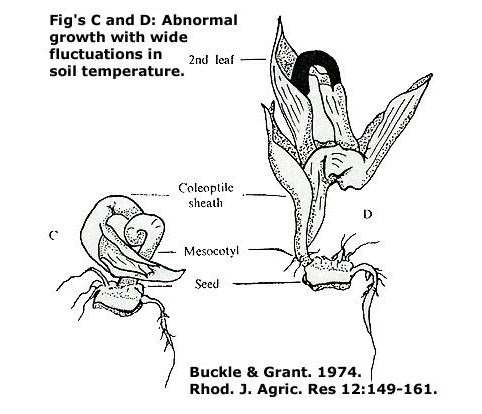
Emergence of a corn seedling occurs by the elongation of the mesocotyl that elevates the coleoptile or spike to the soil surface. The mesocotyl is the white tubular stem-like plant part located between the kernel and the crown of the coleoptile.
Mesocotyl elongation of early-planted corn occasionally veers from its usual upwardly mobile path and instead corkscrews below ground. The end result of such spiraling sub-surface seedlings is either underground leaf emergence or eventual death of the seedling. The good news is that the extent of the problem is usually limited to a few fields each year and a relatively small number of plants within an affected field.
As is usual with crop problems, several possible causes of corkscrewed seedlings exist. The challenge is to identify which is the most likely cause for any given situation.
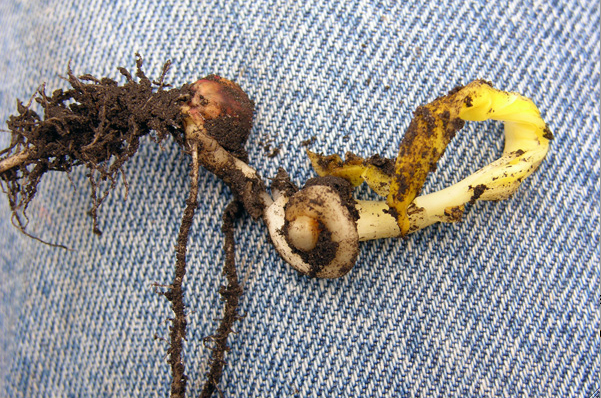
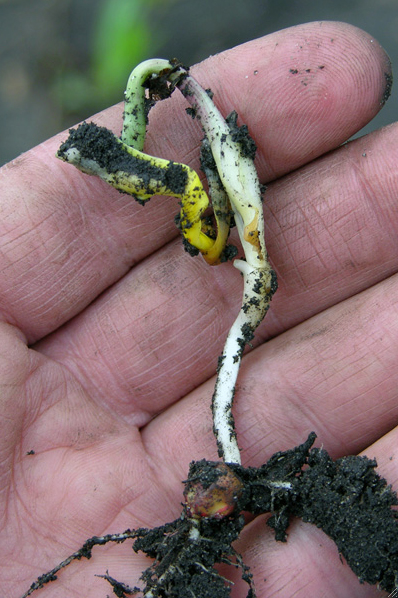
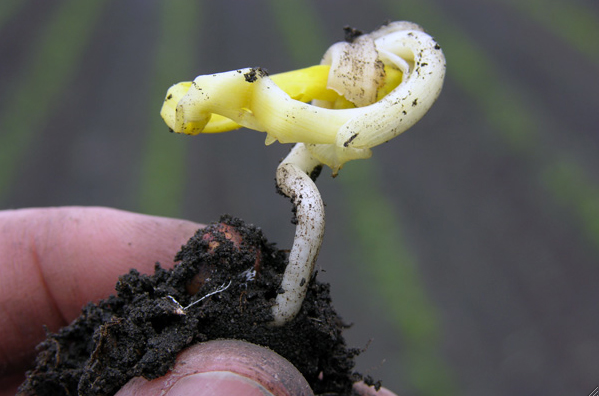
Restricted Emergence: Corkscrewed mesocotyl/coleoptile development can result when the coleoptile encounters resistance as the mesocotyl elongates. Severe soil crusting or otherwise dense soil surface and cloddy soil surfaces can cause such resistance. A combination of severe sidewall compaction plus press wheel compaction over the furrow can also restrict coleoptile emergence and force the mesocotyl to elongate in unusual directions.
Kernel Position in Furrow: The position of the kernel in the furrow with respect to the embryo face directly influences the initial location where the coleoptile emerges. The coleoptile, the protective covering for the plumule leaves, emerges from the embryo side of the kernel and moves toward the dent end of the kernel by virtue of the elongation of the mesocotyl. If the kernel lands with the embryo face down in the furrow, the coleoptile emerges on the bottom side of the kernel, elongates horizontally until the mesocotyl “clears” the end of the kernel, then finally begins its upward ascent. Such an “upside-down” beginning might contribute to a seedling’s susceptibility to other corkscrewing causal factors.
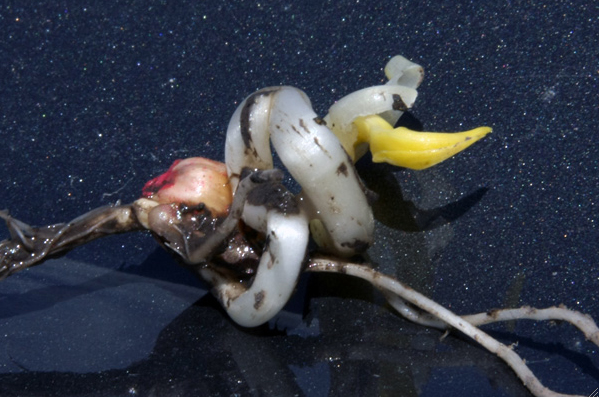
Herbicide Injury: Certain herbicides, notably cell growth inhibitors, can affect seedling shoot development especially if weather or soil conditions are not conducive for rapid growth. Quite often when herbicide is part of the blame, cool soils and significant soil crusting are also contributing factors.
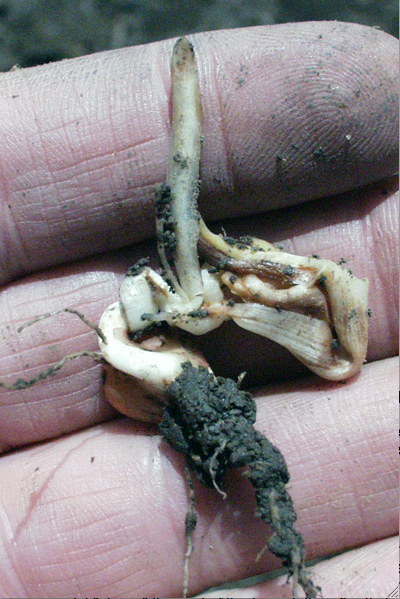
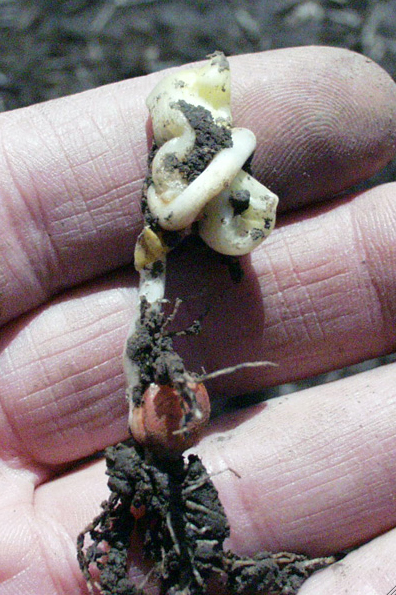
Temperature Response: Some years ago, I came across an article from Rhodesia (Buckle & Grant. 1974. Rhod. J. Agric. Res. 12: 149-161) that described the same phenomenon and attributed it to large fluctuations between day and night soil temperatures. In their research, abnormal mesocotyl and/or coleoptile development occurred most frequently when soil temperatures fluctuated from daytime highs of about 80°F to nighttime lows of about 55°F. The data also suggested that extended periods of cold temperatures stunted and distorted seedling growth.

Related References
Bradley, Kevin. 2009. Cool, Wet Soils Can result in More Corn Injury from Preemergence Residual Herbicides. Integrated Pest & Crop Management Newsletter, Univ. of Missouri. [on-line]. Available at <http://ppp.missouri.edu/newsletters/ipcm/archives/fullissue/v19n8.pdf> [URL accessed 4/28/09].
Nielsen, RL (Bob). 2009. The Emergence Process in Corn. Corny News Network, Purdue Univ. [on-line] Available at <http://www.kingcorn.org/news/timeless/Emergence.html> [URL accessed 4/28/09].
Late Planting & Relative Hybrid Maturity Decisions - (Bob Nielsen)
- Corn planting is off to a slow start in Indiana.
- Don’t worry about switching to earlier hybrids until late May.
- Use your best judgement as to when to begin pestering your seed dealers.
Indiana’s corn planting progress is barely on the “radar screen” as of April 26 (USDA-NASS, 27 Apr 2009) as a result of frequent rains that have prevented soils from drying enough to allow for spring tillage and planting. The pace of planting, at the moment, is slower than the extremely slow planting season of 2002 (Fig. 1).
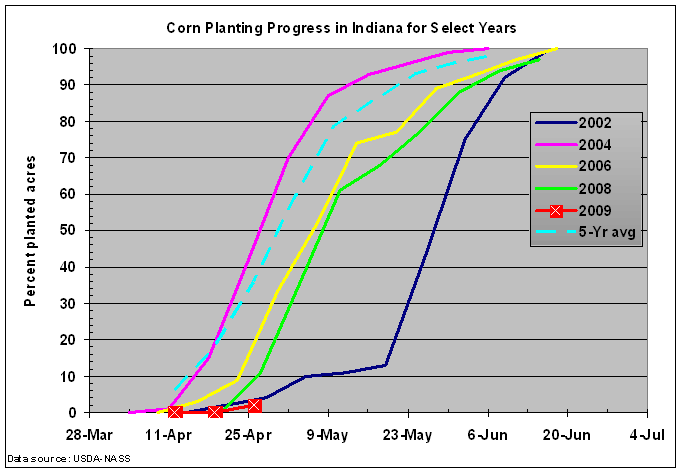
Fig. 1. Corn planting progress in Indiana for 2002 (slowest pace in recent history), 2004 (fastest pace in recent history), 2006 and 2008 (relative slow planting progress years), and to date (26 Apr) for 2009. [Source: USDA-NASS]
Some of the locals who frequent the Chat’n Chew Caf are beginning to question when they should consider replacing their full-season corn hybrids with shorter-season versions. They worry that, after some point on the calendar, full-season hybrids may not mature safely before the first killing fall frost. After all, they argue, hybrid maturity ratings are closely associated with the accumulation of Growing Degree Days (GDDs) after planting (Fig. 2) and there are only so many GDDs available in a given growing season prior to killing fall frosts.
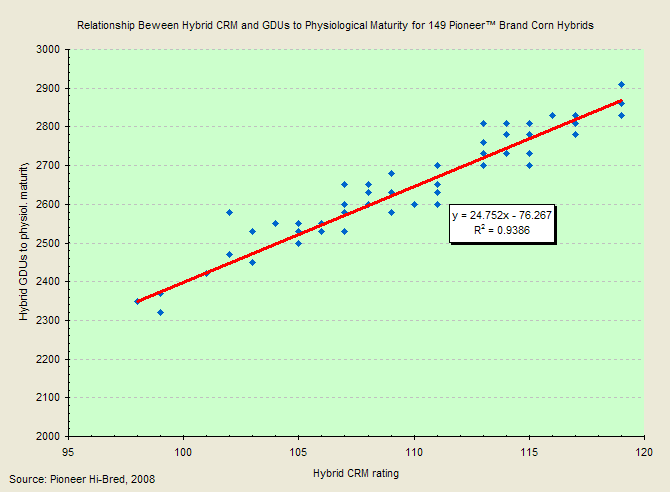
Fig. 2. Relationship between hybrid relative maturity (CRM) ratings and heat unit (GDU) accumulation from planting to physiological maturity. [Source: Pioneer Hi-Bred, 2008]
Fortunately, we know from previous research (Nielsen et al., 2002) that corn hybrids reduce their GDD needs as planting is delayed. This means that late-planted hybrids mature in fewer than expected GDDs from planting. The number of GDDs required from planting to physiological maturity in corn decreases nearly 7 GDDs per day of delayed planting after May 1. For example, a hybrid planted June 1 will mature approximately 210 GDDs sooner than it would if planted May 1 (30 days times 7 GDDs per day of delayed planting).
The bottom line from this research is that a given hybrid maturity can be planted later than we once thought possible and still mature safely before a killing fall frost. Nevertheless, at some point on the calendar, growers eventually need to consider switching to earlier maturity hybrids to minimize the risk of frost damage in the fall.
The tables that follow summarize the delayed planting effect on hybrid GDD requirements and present the results in terms of “safe” hybrid maturities for a range of delayed planting dates (see Nielsen & Thomison, 2003, for more information). Both tables assume “normal” GDD accumulations for the remainder of the growing season and a fall frost date that is based on a 50% risk of frost occurring by a given date for individual crop reporting districts around the state (Indiana State Climate Office, <http://iclimate.org>).
Table 1 targets physiological maturity occurring the same week that a killing frost is expected to occur. Table 2 targets physiological maturity occurring the week before a killing frost is expected to occur. The “safe” hybrid maturities listed in Table 2, therefore, are a bit less risky relative to maturation and killing fall frosts.
The hybrid maturities listed in the tables are described in terms of “CRM” or comparative relative maturity ratings as defined by Pioneer Hi-Bred (2008). Pioneer publishes relative maturity data for hybrids in terms of both CRM ratings and GDDs from planting to physiological maturity. Such data can be used to define the relationship between CRM ratings and GDD requirements (Fig. 2). That relationship coupled with our previous research on the effects of delayed planting on GDD requirements allow me to estimate “safe” hybrid maturities for a range of planting dates (Tables 1 & 2).
DISCLAIMER: I am NOT suggesting that Pioneer hybrid maturity definitions are the industry standard. Nor am I promoting Pioneer hybrids. I work with Pioneer’s hybrid maturity data because a) many farmers and consultants can relate to Pioneer hybrid maturity ratings and b) I cannot easily find similar on-line datasets for the complete hybrid lineup for any other major seed corn supplier.
BOTTOM LINE: The good news is that growers in the central and westcentral Indiana plus the entire southern third of Indiana could continue to plant full-season hybrid maturities through at least the end of May. Growers in the northern third of the state and eastcentral Indiana who routinely “push the limits” of adapted hybrid maturity may want to consider switching to something less than 110 day hybrids before the end of May. In addition to managing the risk of not maturing prior to a killing fall frost, the eventual agronomic decision to switch to earlier maturity hybrids with delayed planting should result in drier grain at harvest (approximately one-half percentage point of grain moisture difference per “day” difference in hybrid relative maturity) and thus lower grain drying costs and less risk of low test weight grain.
Related References
National Weather Service. 2008. Precipitation Analysis. [On-line]. Available at <http://www.srh.noaa.gov/rfcshare/precip_analysis_new.php>. [URL accessed 5/11/08].
Nielsen, R.L. (Bob). 2008. Heat Unit Concepts Related to Corn Development. Corny News Network,
Purdue Univ. [On-line]. Available at <http://www.kingcorn.org/news/timeless/HeatUnits.html>.
[URL accessed 4/28/09].
Nielsen, R.L. (Bob). 2009. Corn Planting Date is Important, But..... Corny News Network, Purdue Univ.
[On-line]. Available at <http://www.kingcorn.org/news/timeless/PltDateCornYld.html>. [URL accessed 4/28/09].
Nielsen, R.L. (Bob) and Peter Thomison. 2003. Delayed Planting & Hybrid Maturity Decisions.
Purdue Univ. Cooperative Extension Publication AY-312-W. [On-line]. Available at <http://www.agry.purdue.edu/ext/pubs
/AY-312-W.pdf> [URL accessed 4/28/09].
Nielsen, Robert L., Peter R. Thomison, Gregory A. Brown, Anthony L. Halter, Jason Wells, and Kirby L. Wuethrich. 2002. Delayed Planting Effects on Flowering and Grain Maturation of Dent Corn. Agron. J. 94:549-558.
Pioneer Hi-Bred. 2008. Pioneer® Brand Products. [On-line]. Available at <https://www.pioneer.com/growingpoint/product_info/catalog/PrdSelection.jsp>
[URL accessed 4/28/09] [NOTE: The Pioneer GrowingPoint Web site requires a login; either as a
current Pioneer customer or as a guest. After you’ve completed the Web site registration process
you will be routed to the “Search Products & Traits” Web page. From here, select “Corn grain”
from the “Product Line” dropdown menu and click “Enter”.]
USDA-NASS. 2009. Indiana Crop & Weather Report (27 May 2009). Indiana office of USDA’s National
Ag. Statistics Service. [On-line]. Available at <http://www.nass.usda.gov/Statistics_by_State/Indiana/Publications/
Crop_Progress_&_Condition/2009/wc042609.pdf> [URL accessed 4/27/09].