Common Name: House fly
Scientific Name: Muscidae: Musca domestica
Status: A nuisance pest of homes and farms
Damaging Stage: Adult and larval
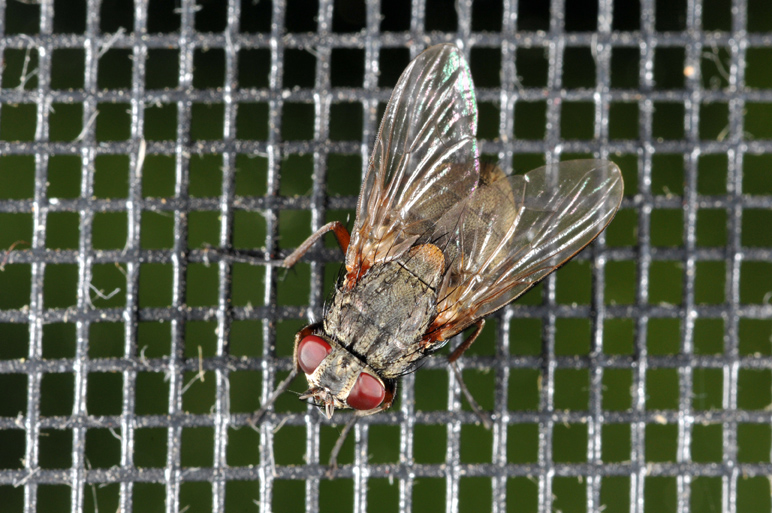
Biology: Adults are �-inch long and they have a gray thorax with four dark longitudinal lines on the back. The undersides of their abdomens are yellow and their bodies are covered with hair. They have red compound eyes. Females lay their eggs singly in moist environments.
House fly larvae (maggots) are cream or white colored and cone-shaped. The head contains one pair of dark hook-like mouthparts.
Maggots develop over two weeks and the pupal stage lasts less than one week. Adults may live for two months. There can be as many as 12 generations per year.
Injury: Female house flies lay large numbers of eggs near suitable larval food sources (garbage, animal excrement or decomposing plant material). Human health problems can occur with the movement of flies from animal or human feces to food made for human consumption. House flies can be responsible for transmitting pathogens such as Salmonella, Shigella, Enterococcus and Chlamydia.
Action Threshold: In homes, the threshold for house flies is very low, not only because these are an annoyance but also because of potential disease transmission. In food plants or medical care facilities, the threshold may be even one fly. On the other hand, in animal breeding facilities or waste management sites, the threshold is much higher, for example 150 flies per flypaper per 30 minutes.
Management: The most effective way to control house fly populations is to implement good sanitation and exlusion. Food should be kept in sealed containers and spoiled food should be properly disposed of. Screens and airdoors can prevent flies from entering buildings. Indoors, sticky traps and electrocuter traps can be effective. Specific pesticides can be used with caution, especially around humans or human foods.
|