Pest & Crop Newsletter



 |
||||||||||||||||||||||||||||||||||||||||||||||||||||||||||||||||||||||||||||||||||||||||||||||||||||||||||||||||||||||||||||||||||||||||||||
|
||||||||||||||||||||||||||||||||||||||||||||||||||||||||||||||||||||||||||||||||||||||||||||||||||||||||||||||||||||||||||||||||||||||||||||
 |
||||||||||||||||||||||||||||||||||||||||||||||||||||||||||||||||||||||||||||||||||||||||||||||||||||||||||||||||||||||||||||||||||||||||||||
Late Seasons Bean Leaf Beetle Pod Feeding– (John Obermeyer and Larry Bledsoe)
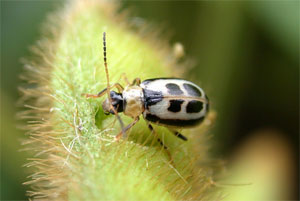
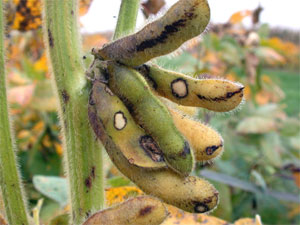
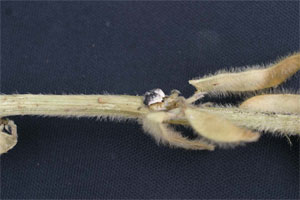
While sweeping soybean fields for western corn rootworm beetles over the past several weeks, we saw varying numbers of bean leaf beetles. Overall the bean leaf beetle numbers are low and of little concern to commercial production fields. Soybeans grown for seed should be monitored as leaves begin to yellow and pods remain green. Bean leaf beetles scar the surface of pods, but only occasionally feed through the pod to the developing beans. During pod maturation, this scar often cracks leaving an entry hole for air borne plant pathogens that may cause discolored, moldy, shriveled, and/or diseased beans. It is important for pest managers to be able to predict whether economic damage will occur based on the types and numbers of beetles that are present and the stage of pod development (i.e., green, yellow, yellow-brown, or brown pods). Once the pods turn yellow to yellow-brown, they become less attractive and less susceptible to damage. Control is normally not warranted from this point on (see the following table). Randomly select 2 plants in each of 5 areas of the field and count the number of pods per plant and the number that show damage (10 total plants). Figure the percentage of damaged pods per plant for the field as a whole. Note if the pods are green, beginning to turn yellow, or are yellow/brown. Also determine the number of beetles per sweep using an insect sweep net. Take 5 sets of 20 sweeps in the field. Determine the number of bean leaf beetles per sweep. Additionally, note whether beetles are still actively feeding while surveying the field. There has been considerable interest in bean leaf beetle and its association with bean pod mottle virus. Bean leaf beetle is one of major beetle-vectors of this disease. They spread the virus by feeding on infected plants, ingesting the virus with plant tissue, and then regurgitating gut content after moving to and feeding on an uninfected plant. Bean pod mottle virus symptoms at harvest include green stem and hilum bleeding. Treatment for bean leaf beetle to reduce bean pod mottle virus this time of the year is not recommended, as most disease transmission occurs early in the season. Use the following table to determine when a treatment may be necessary.
Harvest Restrictions for Soybean Insecticides– (John Obermeyer and Larry Bledsoe) The following listing includes many of the insecticides registered for soybean insect control, including rate per acre and harvest restrictions. Refer to the label for insects controlled and specific rates and application information.
Preliminary Soybean Sweep Counts of Western Corn Rootworm Beetles– (John Obermeyer and Larry Bledsoe)
Sweep net samples taken from soybean fields from Indiana counties is nearing completion. The intent of this survey is to compare relative numbers of western corn rootworm beetles throughout the state and then assign regional estimated risks to the following year’s rotated corn. This survey has been ongoing since 1997 and it certainly has been interesting to compare beetle numbers throughout the years, and areas of the state. The following table is a portion of this year’s samples, tabulated to date, and compared to last year’s numbers by county. Understand that these numbers are preliminary and many more samples are to be analyzed. As indicated in previous issues of the Pest&Crop, beetle numbers are higher than ever in counties south of Interstate 70. Those that have been trapping with yellow sticky cards in soybean fields have been reporting more beetles than last year. Further updates and information is forthcoming in future issues of the Pest&Crop.
Click for Table.
|
||||||||||||||||||||||||||||||||||||||||||||||||||||||||||||||||||||||||||||||||||||||||||||||||||||||||||||||||||||||||||||||||||||||||||||
 |
||||||||||||||||||||||||||||||||||||||||||||||||||||||||||||||||||||||||||||||||||||||||||||||||||||||||||||||||||||||||||||||||||||||||||||
Northern Corn Leaf Blight on Corn– (Gregory Shaner)
Northern corn leaf blight is one of several diseases that kill corn leaves prematurely. Northern corn leaf blight can be found some fields nearly every year, but usually it is not severe enough to be of concern. This year I have seen, and have received several reports of extensive blighting of leaves on some corn hybrids due to northern corn leaf blight. Lesions of northern corn leaf blight on a susceptible hybrid are fairly easy to recognize. They are large—up to 6 inches or more long and 1 inch wide—and taper at each end. They are tan, but when air is humid may have a dull green cast. Like several other common leaf blighting diseases of corn, the northern corn leaf blight fungus, Exserohilum turcicum, overwinters in residue of corn infected the previous year. In the spring and early summer, the fungus produces spores on this residue. Wind blows these spores around and those that land on growing corn can infect and cause disease. Initial lesions develop on lower leaves. Once a dead lesion develops on a leaf, the fungus will produce spores there, and these can infect more leaf tissue. Over time, the disease progresses up the plant, killing tissue on leaves above the ear. The dull green cast on lesions is because of the spores of the fungus on the lesion surface. Moderate temperatures (65 to 80 ∞F) and long dew periods favor infection. Most hybrids have a partial resistance to northern corn leaf blight that restricts lesion size and reduces the number of spores the fungus can produce on a lesion. This slows down the spread of the blight so that the amount of leaf tissue destroyed is not enough to reduce yield much if any. This is why, even though the fungus is widespread in Indiana, we don’t usually see much damage from northern corn leaf blight. This year, a lot of leaf tissue on some hybrids, particularly in central and northern Indiana, is blighted. These hybrids evidently do not have enough resistance to retard the spread of the disease. If grain in these fields is now in the dough stage, the reduction in yield may not be great, but there will probably be some loss. Damage from northern corn leaf blight depends on how much leaf tissue is destroyed at a given stage of kernel development. Kernels on severely affected plants may not fill completely. It’s far too late to consider any remedial action, i.e., application of a fungicide. Nonetheless, growers should check their fields for leaf blight. If it is severe and if yield and grain quality are not what would be expected, a grower might want to use a more resistant hybrid in the future. It is impossible to say whether northern corn leaf blight will be a problem next year, but if a field is severely diseased this year, there will be a lot of overwintering fungus, and so a lot of inoculum next year.
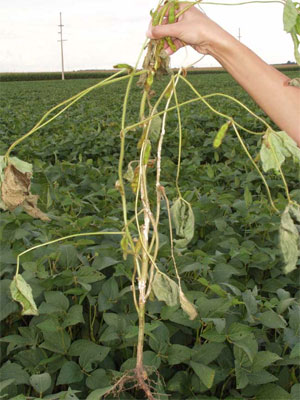
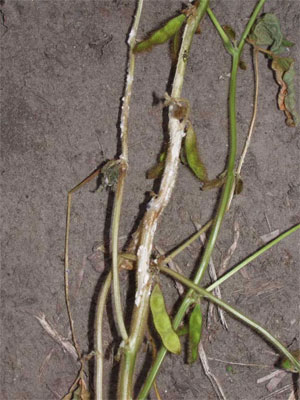
White Mold in Soybean – (Andreas Westphal, Gregory Shaner, and Scott Abney) Full-season soybean crops around Indiana are approaching maturity. Late season diseases show-up at this time. These include sudden death syndrome, brown stem rot, Phytophthora stem rot, damage by plant-parasitic nematodes, and white mold. White mold, also called Sclerotinia stem rot, is mainly a problem in northern Indiana. White mold is first evident as scattered wilting plants among healthy plants. Leaves of infected plants are entirely wilted, but remain attached to the stem (Fig. 1). The soybean stem will have bleached lesions 1 to 5 inches long, often centered on lower nodes (Fig. 2). These lesions are often covered with cottony mycelium of the fungus. Embedded within this mycelium are sclerotia—hard, black structures of 0.1 to 1 inch long (Fig. 3). Greater numbers of sclerotia may be found within the stem. These sclerotia can survive in soil for several years. They are also an important means of dispersal.
Yield reduction depends on when white mold first affects a soybean plant. A girdling stem lesion largely prevents movement of water and nutrients from the root system to the foliage. If the soybean has not matured by the time a girdling stem lesion develops, seeds may remain small and be lost during harvest. Seed of plants affected later may be of more normal size. Yield loss is related to time of infection and how much of a field is affected. A fungus known as Sclerotinia sclerotiorum causes white mold. The pathogen may be introduced into previously non-infested fields with soybean seed contaminated with sclerotia. Sclerotia are similar to soybean seed in size and density, and can be mixed with seed from infested fields when harvesters do not separate them from the seed. Modern seed cleaning equipment does a good job of removing sclerotia. The fungus can be spread within a field during harvest, when sclerotia are blown out the back of the combine with chaff. Sclerotia in the top inch of soil will germinate under favorable conditions. A fruiting structure termed an apothecium emerges from the sclerotium and rises slightly above the soil surface. The apothecium resembles a small golf tee. Within its cupped surface, it produces spores. Wind disperses these spores. Spores that land on soybean plants will infect and cause white mold. Don’t confuse apothecia of Sclerotinia with the fruiting bodies of bird’s nest fungi. Bird’s next fungi are common in corn and soybean fields. They produce a small, leathery cup. They grow on dead plant residue and do not cause disease on soybean. Most spores of Sclerotinia sclerotiorum land close to where they were produced. When apothecia develop within a field of soybean, many spores will land on the base of plants. There, they can germinate and infect. Infection seems to occur most readily from spores that land on senescing flower petals. From there they infect the stem and causes its typical lesions. While the exact conditions necessary for the pathogen to infect are not known in detail the disease is often observed in the northern Indiana. Cool temperatures and extended periods of leaf wetness during the early stages of flowering are critical for infection and disease development. These conditions are more common in the northern part of the state, especially in narrow-row beans that reach canopy closure by the time flowering begins. The year 2004 has been much cooler than usual and leaf wetness periods during flowering may have been conducive in more areas of Indiana than in previous years. It may be worthwhile to inspect early dying soybean fields for white mold. An infested field needs special management considerations. If there are only a few affected areas in a field, it might be better to not harvest these, to avoid dispersing sclerotia. The number of viable sclerotia in a field will decline over time if there are no susceptible hosts in a field. However, sclerotia can survive for several years. Corn and small grains are not hosts for this fungus, but many broadleaf weeds can be infected. These include pigweeds, ragweeds, and several mustards. Therefore, good weed control, regardless of the crop in a field, is necessary. Many vegetable crops are also susceptible, which may also be why the disease is more common on soybean in northern Indiana, where susceptible vegetables are produced. Wider row spacing (30 inches) may reduce severity of white mold. This is because at the time flowering begins, the canopy has not closed, so microclimate conditions at the soil surface may be less conducive for production of apothecia and spores, and for infection. A grower should choose a less susceptible soybean cultivar for production in high-risk fields.
|
||||||||||||||||||||||||||||||||||||||||||||||||||||||||||||||||||||||||||||||||||||||||||||||||||||||||||||||||||||||||||||||||||||||||||||
 |
||||||||||||||||||||||||||||||||||||||||||||||||||||||||||||||||||||||||||||||||||||||||||||||||||||||||||||||||||||||||||||||||||||||||||||
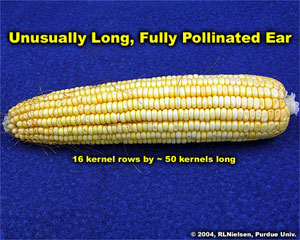
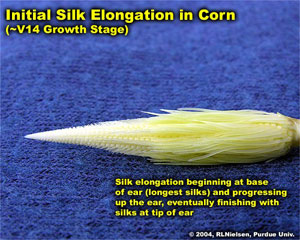
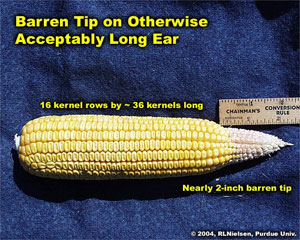
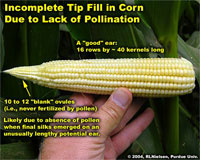
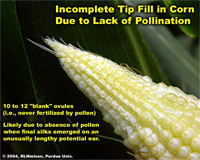
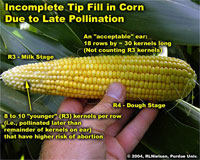
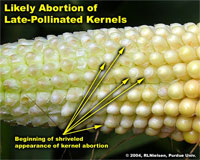
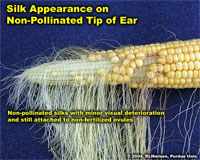
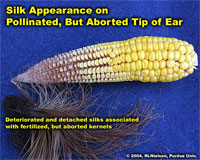
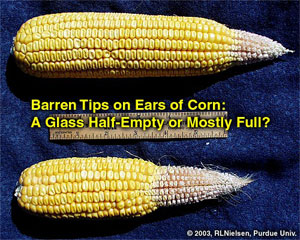
Long Ears, Blank Tips - (Bob Nielsen) Seems like everybody and their brother is talking about the potential for record or near-record corn yields this year (USDA-NASS, 2004). If the current speculation becomes reality at harvest, one of the factors contributing to the high yield will be unusually long ears (i.e., many kernels per row). Potential ear size (ovule number) is determined prior to pollination (Nielsen, 2003a). Of the two ear size components, length (ovules per row) is more easily influenced by growing conditions than is number of ovule rows. Ample moisture and non-stressful temperatures back in June resulted in unusually lengthy potential ears going into pollination. Indeed, reports down at the Chat ‘n Chew Cafe indicate actual kernel numbers as high as 40 to 45 kernels per row, with some patrons bragging as high as 50 kernels per row. A common side effect of unusually lengthy potential ears is delayed or incomplete tip fill. Remember that silk emergence on an ear is sequential. Typically, the butt silks emerge first, followed by the remainder of the silks, and finishing with the tip silks (Nielsen, 2003b). The final tip silks of unusually lengthy ears often emerge after pollen shed is already complete. Without available pollen, the ovules connected to the final tip silks are not fertilized, therefore kernels never develop, and barren cob tips result. On the other hand, if pollen shed is still occurring when the tip silks of lengthy ears finally emerge, fertilization can occur but the resulting kernels are dramatically “younger” than the remainder of the kernels on the cob. Such late fertilized tip kernels are especially vulnerable to abortion if severe photosynthetic stress develops in the first few weeks after pollination. The consequences of either scenario are incomplete tip fill and grower complaints. The importance of the distinction between non-pollination or kernel abortion as the cause of barren tips may be moot to the grower, but the symptoms are different. Non-pollinated ovules rarely exhibit any evidence of kernel development. Within the husk leaves, the non-pollinated silks will appear reasonably “fresh” and remain attached to the ovules until they finally wither away. Aborted kernels, on the other hand, are evident by their aborted, shriveled development. In addition, the silks associated with these kernels (as with any developing kernel) will exhibit their expected discolored, deteriorated, detached appearance. Recognize that other possible causes of incomplete tip fill due to pollination failure include severe silk clipping by insects (corn rootworm or Japanese beetles) during the final stages of pollination, delayed silk emergence or deterioration of exposed silks due to excessive heat or drought conditions, silk emergence failure due to silk balling near the tip of ear, and lack of viable pollen due to excessive heat or drought conditions. Diagnosing the exact cause late in the grain fill period can be challenging. Yield Consequence Obviously, absent kernels translate to lost yield potential. Mathematically, for every absent kernel per row on 18-row ears of corn (assuming a final ear count of 28,000 ears per acre), the lost yield potential equals about 6 bushels per acre. Yes, yield loss can mount quickly as a consequence of barren tips. But, it is also important to make sure you put the problem into perspective. Before you complain about barren tips to your seed rep, first evaluate the remainder of the cob. Typical kernel count for harvested ears of many hybrids is approximately 600. Hybrids whose ears are typically 16 rows in girth tend to set about 36 - 40 kernels on each row, while those that typically develop 20 rows of kernels tend to set closer to 30 kernels per row. The point here is that if potential ear size (number of ovules) was quite large heading into pollination (favorable pre-pollination conditions) but failed to pollinate the tip silks, the resulting ears may still exhibit 30 – 40 kernels per row even though there may be one to two inches of barren tips on the ears. In other words, harvested ear size will still average about 600 kernels and ultimate grain yield will be average to above average. On the other hand, if kernel counts show only 20 to 25 kernels per row with lengthy barren cob tips, then that indeed indicates that the crop suffered significant stress conditions probably more than once during the season. Kernel counts per ear will be much less than 600 and ultimate grain yield in this latter example will likely be less than average for that field and/or hybrid. Related References: Nielsen, R.L. (Bob). 2003a. Ear Initiation & Size Determination in Corn. Purdue Univ. Corny News Network. Available online at www.kingcorn.org/news/articles.03/EarSize-0609.html. [URL verified 8/12/04]. Nielsen, R.L. (Bob). 2003b. Silk Emergence. Purdue Univ. Corny News Network. Available online at www.kingcorn.org/news/articles.03/Silks-0716.html. [URL verified 8/12/04]. Nielsen, R.L. (Bob). 2004a. Estimating Corn Grain Yield Prior to Harvest. Purdue Univ. Corny News Network. Available online at www.kingcorn.org/news/articles.04/YieldEst-0718.html. [URL verified 8/12/04]. Nielsen, R.L. (Bob). 2004b. Yield Loss Potential During Grain Fill. Purdue Univ. Corny News Network. Available online at www.kingcorn.org/news/articles.04/GrainFillStress-0705.html. [URL verified 8/12/04]. USDA-NASS. 2004 (Aug 12). Crop Production. National Agricultural Statistics Service (NASS), Agricultural Statistics Board, U.S. Department of Agriculture. Available online at usda.mannlib.cornell.edu/reports/nassr/field/pcp-bb/2004/crop0804.pdf. (URL verified 8/14/04). For other Corny News Network articles, browse through the CNN Archives at www.kingcorn.org/news/index-cnn.html. For other information about corn, take a look at the Corn Growers’ Guidebook at www.kingcorn.org.
|
||||||||||||||||||||||||||||||||||||||||||||||||||||||||||||||||||||||||||||||||||||||||||||||||||||||||||||||||||||||||||||||||||||||||||||
 |
||||||||||||||||||||||||||||||||||||||||||||||||||||||||||||||||||||||||||||||||||||||||||||||||||||||||||||||||||||||||||||||||||||||||||||
|
||||||||||||||||||||||||||||||||||||||||||||||||||||||||||||||||||||||||||||||||||||||||||||||||||||||||||||||||||||||||||||||||||||||||||||