Pest & Crop Newsletter



 |
|||||
|
|||||
 |
|||||
Think Like a Rootworm Beetle... Pollen and Soybean– (John Obermeyer and Larry Bledsoe)
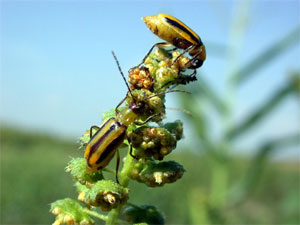
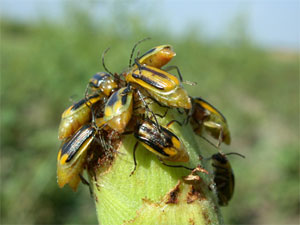
We continue to receive reports about various situations that have attracted tremendous numbers of western corn rootworm beetles. This includes late-planted/replanted corn and weed escapes through the soybean canopy. Remember, the rootworm beetles are pollen feeders, and not just corn pollen (e.g., foxtails, ragweeds, lambsquarters, pigweeds, etc.). Numerous beetles that converge on these “trap” crops will likely encourage significant egg laying for next year’s corn roots. Investigations of these areas during August will help one make informed decisions for next year, i.e., rootworm insecticides. Because of the rapid growth and maturity of this year’s corn crop, it seems that the variant western corn rootworm beetle is moving to soybean fields earlier than normal. Ultimately this means that more mating and egg-laying than previous years may be occurring for a given area of the state. This was reported in last week’s Pest&Crop concerning west central Indiana counties south of Interstate 70. We continue to encourage pest managers to observe for the beetle’s presence in their soybean fields, and not rely solely on our county sweep survey for next year’s insect management decisions.
Soybean Aphid Update– (John Obermeyer, Larry Bledsoe, and Bob O'Neil) No news continues to be GOOD news. Though soybean aphid can be found in many soybean fields in northern counties, densities remain very low. We are aware of one soybean seed field that was treated in Marshall County over a week ago, however the numbers were far below the threshold of 250 aphids/plant. Considering that much of the same is occurring throughout the Midwest, we have very little concern about an influx of aphids carried on weather fronts. Soybean growth and development continues to make excellent progress and moisture doesn’t appear to be a limiting factor for the crop. Though we are not completely out of the woods for this season,the clearing is in sight. What a contrast from last year!
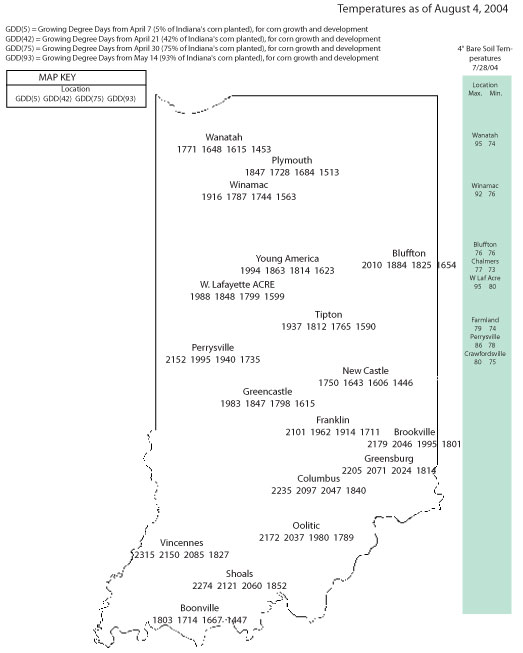
Click for Table.
|
|||||
 |
|||||
|
|||||