Pest & Crop Newsletter



 |
||||||||||||||||||||||||||||||||||||||||||||||||||||||||||||||||||||||||||||||||||||||||||||||||||||||||
|
||||||||||||||||||||||||||||||||||||||||||||||||||||||||||||||||||||||||||||||||||||||||||||||||||||||||
 |
||||||||||||||||||||||||||||||||||||||||||||||||||||||||||||||||||||||||||||||||||||||||||||||||||||||||
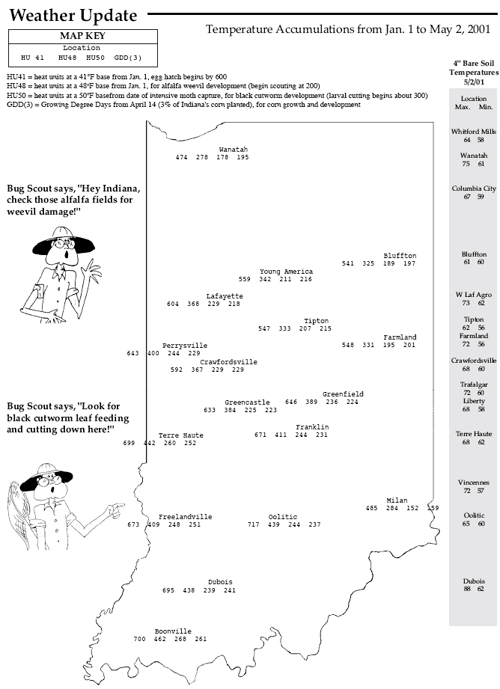
Black Cutworm Damage Noted in Southern Indiana– (John Obermeyer, Rich Edwards, and Larry Bledsoe)
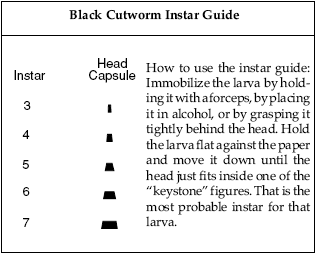
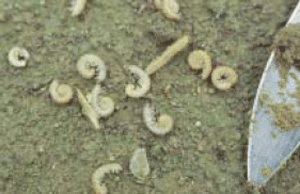
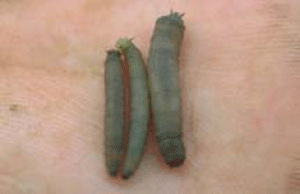
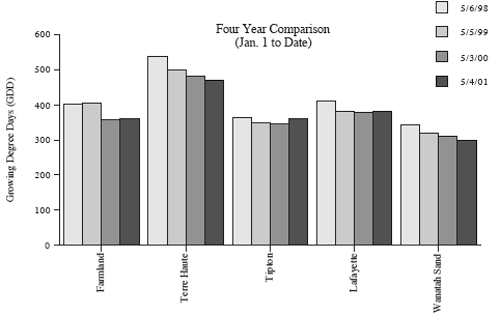
Gary Michel, Warrick County CES, and Gene Flaningam, southwestern Indiana consultant, informed us on May 1 that small black cutworm are beginning to damage corn. This signals the beginning of the cutworm season for Indiana and as heat units accumulate and cutworm development progresses the potential for damage will move northward. The early arriving moths (March) and subsequent flights apparently survived the frosts, were able to established in weedy fields, and are now feeding. The underlying theme of all this is that it is now time to scout for cutworms in southern and central Indiana. Black cutworm moths are particularly fond of winter annuals, such as chickweed and mustards, for egg laying. Fields that were weedy before or at planting are at the highest risk for cutworm damage. This includes fields that were treated at planting with a soil insecticide. Remember, corn and soybean are not the preferred food of the black cutworm. It just so happens, these are normally the only plant remaining by the time the larvae have hatch. Scout by inspecting 20 consecutive plants in each of 5 areas of a field (100 plants) for cutworms and feeding activity. Count and record the number of plants cut or damaged and determine the percentage of plants affected. Also collect black cutworm larvae and determine the average instar stage. While sampling, also record how many leaves are fully unrolled (the collar of the leaf is visible on a fully unrolled leaf). Control of black cutworm may be necessary if 3 to 5% of the plants are damaged and the average larval instar is from 4 to 6. Use the following management guidelines and instar guide. Suggested foliar insecticides for control of economic infestations are listed below. To increase the probability that adequate control will be achieved when dry soil conditions are noted, a rotary hoe may prove useful. This should stir up the soil and increase the likelihood that the cutworms will come into contact with the insecticide. Additionally, the use of a higher rate of the insecticide in 20 gallons or more water per acre may help the level of control. On no-till fields, where hoeing is not possible, applying the insecticide in the early evening may increase control, as the worms more toward the soil surface during the nighttime hours.
Armyworm Can March Through Corn– (John Obermeyer, Rich Edwards, and Larry Bledsoe)
For the last couple of weeks, several pest managers have noticed armyworm moths flying at night. Black light traps have confirmed these observations, identifying some heavy catches. Because spring flying armyworm moths prefer to lay their eggs on dense grassy vegetation, special attention should be given to corn no-tilled into “grassy” fields. Corn that has been no-tilled into or is growing adjacent to a grass cover crop (especially rye) should be inspected immediately for armyworm feeding. Larvae will move from the dying grasses to emerging/emerged corn. Armyworm feeding gives corn a ragged appearance, feeding from the leaf margin toward the midrib. Damage may be so extensive that most of the plant, except the midrib and stalk, is consumed. A severely damaged plant may recover if the growing point has not been destroyed. As their name implies, the larvae can appear to march in unison like an army across a field while devouring plants. If more than 50% of the plants show armyworm feeding and live larvae less than 1-1/4 inches long are numerous in the field, a control may be necessary. Larvae greater than 1-1/4 inches will soon be pupating and controls are futile since the damage has already been done. If armyworms are detected migrating from border areas or waterways within fields, spot treatments in these areas are possible if the problem is identified early enough.
Severe Alfalfa Weevil Feeding Damage Continues in Northern Indiana– (John Obermeyer, Rich Edwards, and Larry Bledsoe) Surveys of northern Indiana counties on May 2 show that alfalfa weevil feeding continues at high levels. Tip feeding percentages reached as high as 100% (range 40 to 100%). Refer to the “Alfalfa Weevil Larval Survey.” Pest managers in all areas of northern Indiana should be evaluating their alfalfa fields, if they have not already done so, as soon as possible. Accelerated heat unit accumulations over the last week have really boosted this pest’s development and subsequent damage. At this time, alfalfa fields with an average of 60% or greater tip feeding should be treated with an insecticide. Refer to Pest&Crop #5, for insecticides to control alfalfa weevil. Careful consideration should be given to days of residual needed and/or harvest restrictions of products when choosing products and rates to apply.
Bean Leaf Beetle– (John Obermeyer) Although we haven’t received any calls concerning this soybean pest, we know the beetles are now active. As soybean emerges, pest managers should be on the lookout for this insect. Please refer to Pest&Crop # 2 for the article, “Potential for Problems with Bean Leaf Beetle Highly Variable.”
|
||||||||||||||||||||||||||||||||||||||||||||||||||||||||||||||||||||||||||||||||||||||||||||||||||||||||
 |
||||||||||||||||||||||||||||||||||||||||||||||||||||||||||||||||||||||||||||||||||||||||||||||||||||||||
Wheat Condition Update– (Charles W. Mansfield and Ellsworth P. Christmas)
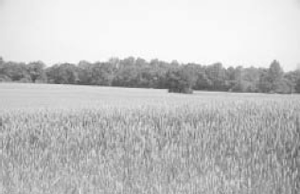
Two weeks have now past since the cold temperatures of April 17 and 18 and it is evident that some damage did occur to wheat in southern Indiana. We do not think that the damage is widespread but is isolated to those varieties that broke dormancy first and/or to the low areas within a field. The symptoms present in the fields typical of the freeze injury described in the April 20 issue (No. 5) of the Pest&Crop newsletter. Additionally, some wheat fields, on the sands in the Vincennes area, are showing symptoms of moisture stress as a result low rainfall in the past month. Other problems with wheat identified in the last two weeks include severe heaving in some fields, nitrogen deficiency, and one or more of the viral diseases.
|
||||||||||||||||||||||||||||||||||||||||||||||||||||||||||||||||||||||||||||||||||||||||||||||||||||||||
 |
||||||||||||||||||||||||||||||||||||||||||||||||||||||||||||||||||||||||||||||||||||||||||||||||||||||||
Is That a Cutworm?– (John Obermeyer, Rich Edwards, and Larry Bledsoe)
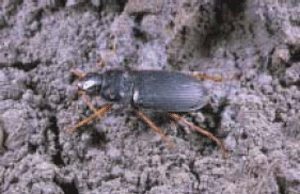
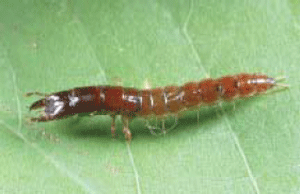
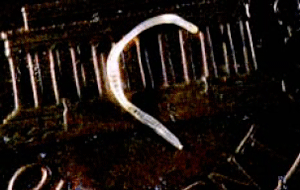
Often when pest managers are in hot pursuit of black cutworm larvae they dig up a variety of critters, most being innocuous. There is no comprehensive picture journal to reference these “bugs,” although the Field Crops Pest Management Manual (IPM-1)* covers many of them. The difficulty is that there are hundreds upon thousands of animal species that may utilize the soil of a cornfield for all or a short period of their life. Most have nothing to do with the growing of corn. Listed below are some possibilities as you dig this spring. Millipedes: These multi-legged, two pair of legs per body segment, wireworm-like arthropods have become more prevalent with the adoption of no-till. When found, their numbers are often high. Millipedes typically feed as scavengers, feeding on dead or decaying matter. Occasionally they have been documented as pests of corn. If very dry conditions exist early in the season, millipedes will feed on corn seedlings, apparently seeking moisture. Ground beetles: If it’s fast moving and shiny, chances are that you’ve seen a ground beetle scurry by. These beetles range in size from about 1/4 to 1 inch long. Their color is typically light brown to black. The darker colored beetles will appear bright green to blue as sunshine reflects off their hardened outer wings. Fortunately, nearly all ground beetles are beneficial, feasting on many critters in the field. One exception, the seedcorn beetle, will feed on corn seed and seedlings. Usually this is only a problem when the seed sits for long periods of time in cold, wet soils before emerging. Ground beetle larvae: Yes, these are the immatures of the ground beetle. They are often confused with wireworm. However, unlike the wireworm they move quickly on the ground and through the soil. Closer inspection, if you are fast enough to catch one, will reveal well developed and sharp mouth parts. Yes, you guessed it again, these larvae are beneficial, feeding most often on soft bodied insects. Even the immature of the seedcorn beetle is a beneficial. Crane fly larvae: Often referred to as “leatherjackets,” these strange looking, overgrown maggots are often confused with the black cutworm. They are the immatures of the crane fly, the one often miss identified as “giant mosquitoes.” Pest managers can easily distinguish them from cutworms by their legless bodies. These maggots are harmless to the corn. They feed on decaying plant matter in the soil. Juvenile earthworms: Experienced and inexperienced field personnel alike are not surprised to find earthworms in the soil. However, when one sees “baby” earthworms for the first time it can be confusing. Small, skinny, and almost translucent, these juvenile earthworms are often referred to as “giant nematodes.” Where there is one, there are often many. Obviously, their presence is a sign of good soil health. This list could go on. The important thing for pest managers is not so much that they can identify the obscure critters, but rather the actual pests and their damage. Happy Scouting! *Order information for IPM-1: Agricultural Communication Service, Media Distribution Center, 301 S 2nd Street, Lafayette, IN 47901-1232, PH: 1-888-398-4636.
|
||||||||||||||||||||||||||||||||||||||||||||||||||||||||||||||||||||||||||||||||||||||||||||||||||||||||
 |
||||||||||||||||||||||||||||||||||||||||||||||||||||||||||||||||||||||||||||||||||||||||||||||||||||||||
|
||||||||||||||||||||||||||||||||||||||||||||||||||||||||||||||||||||||||||||||||||||||||||||||||||||||||